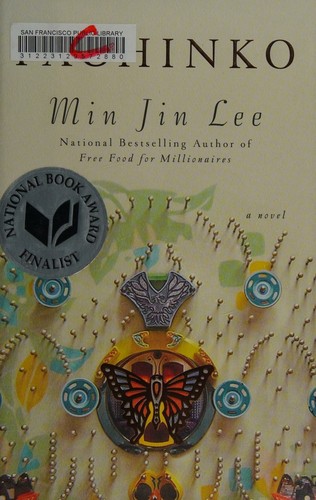
Pachinko by Min Jin Lee is a 2017 historical fiction book about generational trauma, identity and belonging, discrimination and perseverance. The novel shows how discrimination operates not just through violence but through exclusion — from professions, from legal belonging, from ordinary social dignity.
Summary
Pachinko follows four generations of a Korean family from a small fishing village in early twentieth-century Korea to Osaka and Yokohama in postwar Japan. It begins with Sunja, a young woman who becomes pregnant by a married man and escapes scandal by marrying a kind but sickly minister named Isak who is traveling to Japan. The family she builds there — through hardship, war, displacement, and decades of grinding discrimination — is the novel's subject from 1910 to 1989.
The central fact of the novel is the position of ethnic Koreans in Japan: Zainichi Koreans, who have lived in Japan for generations, remained legally and socially excluded — required to carry foreigner registration cards, barred from many professions, subject to routine contempt. Lee researched this history for thirty years, and the novel's power comes partly from the precision with which it documents a discrimination that is largely unknown outside Korea and Japan. The pachinko parlors of the title are not simply a business — they are one of the few industries that Koreans were not legally excluded from, and they become a symbol of the family's survival, the way a community makes a life in the space that prejudice leaves open.
Lee writes in a clean, spare style that prioritizes character over style. The novel is not formally adventurous — it's built on accumulated scenes across decades, and the compression of eighty years into a single volume means individual chapters sometimes read as summary. But the accumulation is the point: you feel the weight of each generation's sacrifice landing on the next. Sunja's silent endurance, her son Mozasu's pragmatic resilience, her grandson Solomon's collision with the limits of assimilation — each generation's story recontextualizes the others.
Pachinko is a big, generous, accessible novel — closer to the great European family sagas than to the more hermetic American literary tradition. Readers who bounced off difficult modernist prose will find this welcoming. Readers who want formal experimentation will find it plain. Its ambition is moral and historical rather than stylistic: it wants to make Zainichi Korean history visible to readers who have never encountered it, and in that it succeeds with unusual force.
Talk to Pachinko like its author wrote you back.
Get the ideas that fit your life — not generic summaries.
- Chat with the book
- Audiobook-style main ideas
- Adapts to your life and goals
- Helps you take action
Key takeaways
- 1.
The novel shows how discrimination operates not just through violence but through exclusion — from professions, from legal belonging, from ordinary social dignity.
- 2.
Sunja's decision in the opening pages — to accept Isak's proposal — shapes every life that follows. The novel is built on the weight of that one choice.
- 3.
Each generation adapts differently to being outsiders: Sunja through endurance, Noa through flight and assimilation, Mozasu through pragmatic acceptance, Solomon through attempted integration that fails.
- 4.
Pachinko parlors as symbol: the business that prejudice allowed becomes both survival and stigma — the way communities make lives in the margins society offers.
- 5.
The novel argues that history is not past — that the decisions and wounds of one generation are structurally present in the next, not as melodrama but as material fact.
- 6.
Isak is one of the most quietly remarkable characters in the novel — a man whose goodness is genuine and who pays for it, without the narrative making his suffering heroic.
- 7.
The Japanese characters Lee includes are not simple villains; the discrimination they participate in is shown as structural and social, not purely individual.
- 8.
The 1989 ending circles back to Sunja in a way that measures everything that has been lost and preserved across eight decades.
Discussion questions
Use these on your own, with a book club, or as chat starters in Superbook. Book club version, ready to copy or print →
- 1.
Sunja's original sin — becoming pregnant by Hansu — shadows the whole novel. Does the novel judge her? Does it ask us to?
- 2.
Noa discovers his parentage and walks away from his family entirely. Is that defensible? How does the novel want us to read that choice?
- 3.
Hansu is one of the most morally complex characters — a man who helps the family while never fully entering it. Is he a villain, a benefactor, or something the novel refuses to resolve?
- 4.
The novel spans 80 years across four generations. What is gained and what is lost by that scale compared to a novel that stays close to one character?
- 5.
Pachinko is largely unknown outside Korea and Japan. Does reading this novel feel like receiving a history, or like being given a story that stands apart from its historical context?
- 6.
Solomon tries hardest to integrate into mainstream Japanese society and fails most visibly. What does the novel say about assimilation as a strategy?
- 7.
The women in the novel — Sunja, Kyunghee, Etsuko — carry much of the moral weight. How does Lee handle gender alongside ethnicity in the novel's treatment of oppression?
- 8.
The title is both literal (the pachinko industry) and figurative (the random, chaotic nature of the balls). Does that metaphor earn its place, or is it too neat?
- 9.
Lee spent thirty years researching and writing this novel. Does the weight of that research show in the reading, and is that a strength or a burden?
- 10.
Compare the generational structure of Pachinko with another multigenerational novel you've read. What does spanning generations allow that a single-life narrative can't?
- 11.
The discrimination the Zainichi Koreans face is persistent, legal, and mundane — not the dramatic violence of some historical fiction. Does that ordinariness make the novel more or less affecting?
- 12.
The novel ends in 1989 but the situation it describes persists into the present. Does knowing that change how the ending lands?
Themes
Frequently asked questions
-
Is Pachinko worth reading?
Yes, particularly if you're interested in history the Western canon has largely ignored. The Zainichi Korean experience is rendered with unusual specificity and human complexity. It's long but accessible, the kind of novel that earns its length by the end.
-
How long does it take to read Pachinko?
At average pace, roughly eleven to twelve hours — it's a substantial novel at around 500 pages. But the prose is clear and the chapters move quickly. Most readers report that it's hard to put down despite the length.
-
What is Pachinko about, briefly?
Four generations of a Korean family living as ethnic minorities in Japan, from 1910 to 1989. It's about what discrimination does to people across time, and how families carry and transform the wounds each generation inherits.
-
Do I need to know Korean or Japanese history to read it?
No. Lee provides context naturally within the narrative. Basic awareness that Japan colonized Korea and that Koreans have faced discrimination in Japan helps, but the novel doesn't require historical expertise.
-
Is there a TV adaptation?
Yes — Apple TV+ released Pachinko as a series beginning in 2022, starring Lee Min-ho and Youn Yuh-jung. The adaptation covers multiple generations simultaneously using a nonlinear structure that diverges somewhat from the novel.
Similar books

A Long Way Gone: Memoirs of a Boy Soldier
Ishmael Beah
The Warmth of Other Suns
Isabel Wilkerson
Sapiens: A Brief History of Humankind
Yuval Noah Harari

Killers of the Flower Moon
David Grann
