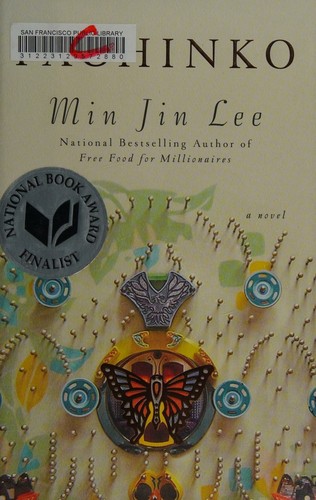
Talk to Pachinko like its author wrote you back.
Get the ideas that fit your life — not generic summaries.
- Chat with the book
- Audiobook-style main ideas
- Adapts to your life and goals
- Helps you take action
What it argues
Pachinko follows four generations of a Korean family from a small fishing village in early twentieth-century Korea to Osaka and Yokohama in postwar Japan. It begins with Sunja, a young woman who becomes pregnant by a married man and escapes scandal by marrying a kind but sickly minister named Isak who is traveling to Japan. The family she builds there — through hardship, war, displacement, and decades of grinding discrimination — is the novel's subject from 1910 to 1989.
The central fact of the novel is the position of ethnic Koreans in Japan: Zainichi Koreans, who have lived in Japan for generations, remained legally and socially excluded — required to carry foreigner registration cards, barred from many professions, subject to routine contempt. Lee researched this history for thirty years, and the novel's power comes partly from the precision with which it documents a discrimination that is largely unknown outside Korea and Japan. The pachinko parlors of the title are not simply a business — they are one of the few industries that Koreans were not legally excluded from, and they become a symbol of the family's survival, the way a community makes a life in the space that prejudice leaves open.
What it gets right
- 1.
The novel shows how discrimination operates not just through violence but through exclusion — from professions, from legal belonging, from ordinary social dignity.
- 2.
Sunja's decision in the opening pages — to accept Isak's proposal — shapes every life that follows. The novel is built on the weight of that one choice.
- 3.
Each generation adapts differently to being outsiders: Sunja through endurance, Noa through flight and assimilation, Mozasu through pragmatic acceptance, Solomon through attempted integration that fails.
What it covers
Who wrote it
Min Jin Lee is a Korean American novelist born in Seoul and raised in New York City. She researched Pachinko for nearly three decades, including living in Japan to understand the Zainichi Korean community firsthand. Pachinko was a finalist for the National Book Award for Fiction in 2017 and was named a New York Times Top 10 Book of the Year. It was adapted as an Apple TV+ series beginning in 2022. Her debut novel, Free Food for Millionaires, was published in 2007.
