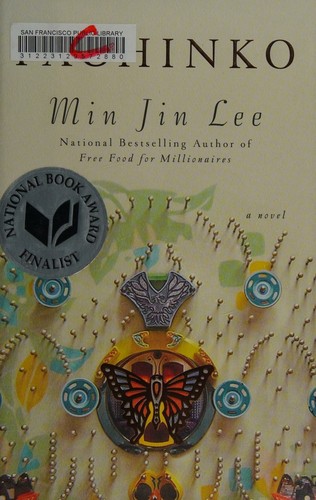
Talk to Pachinko like its author wrote you back.
Get the ideas that fit your life — not generic summaries.
- Chat with the book
- Audiobook-style main ideas
- Adapts to your life and goals
- Helps you take action
Pachinko, in detail
Pachinko follows four generations of a Korean family from a small fishing village in early twentieth-century Korea to Osaka and Yokohama in postwar Japan. It begins with Sunja, a young woman who becomes pregnant by a married man and escapes scandal by marrying a kind but sickly minister named Isak who is traveling to Japan. The family she builds there — through hardship, war, displacement, and decades of grinding discrimination — is the novel's subject from 1910 to 1989.
The central fact of the novel is the position of ethnic Koreans in Japan: Zainichi Koreans, who have lived in Japan for generations, remained legally and socially excluded — required to carry foreigner registration cards, barred from many professions, subject to routine contempt. Lee researched this history for thirty years, and the novel's power comes partly from the precision with which it documents a discrimination that is largely unknown outside Korea and Japan. The pachinko parlors of the title are not simply a business — they are one of the few industries that Koreans were not legally excluded from, and they become a symbol of the family's survival, the way a community makes a life in the space that prejudice leaves open.
Lee writes in a clean, spare style that prioritizes character over style. The novel is not formally adventurous — it's built on accumulated scenes across decades, and the compression of eighty years into a single volume means individual chapters sometimes read as summary. But the accumulation is the point: you feel the weight of each generation's sacrifice landing on the next. Sunja's silent endurance, her son Mozasu's pragmatic resilience, her grandson Solomon's collision with the limits of assimilation — each generation's story recontextualizes the others.
Pachinko is a big, generous, accessible novel — closer to the great European family sagas than to the more hermetic American literary tradition. Readers who bounced off difficult modernist prose will find this welcoming. Readers who want formal experimentation will find it plain. Its ambition is moral and historical rather than stylistic: it wants to make Zainichi Korean history visible to readers who have never encountered it, and in that it succeeds with unusual force.
The big ideas
- 1.
The novel shows how discrimination operates not just through violence but through exclusion — from professions, from legal belonging, from ordinary social dignity.
- 2.
Sunja's decision in the opening pages — to accept Isak's proposal — shapes every life that follows. The novel is built on the weight of that one choice.
- 3.
Each generation adapts differently to being outsiders: Sunja through endurance, Noa through flight and assimilation, Mozasu through pragmatic acceptance, Solomon through attempted integration that fails.
