Economics · Book club
Panic: The Story of Modern Financial Insanity book club questions
Here are 12 book club questions for Panic: The Story of Modern Financial Insanity by ed. Michael Lewis, ordered to open easily and end somewhere worth arguing about. Copy them, print them, or bring them up one at a time.
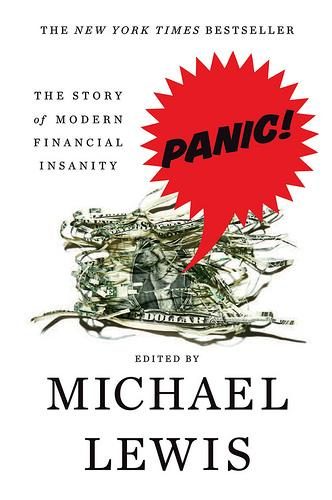
Panic is an anthology edited by Michael Lewis, collecting journalism, essays, and firsthand accounts about five major financial crises from 1987 to 2007: the Black Monday crash, the emerging markets panics of the 1990s, the Long-Term Capital Management collapse, the dot-com bust, and the early signals of the subprime mortgage crisis.
ed. Michael Lewis · 2008 · 4h 45m
Full summary and key takeaways →The 12 questions
- 1.
Lewis frames five crises as the same story told five times with minor variations. Do you find that framing persuasive, or does it understate the distinctive features of each crisis?
- 2.
The anthology was published weeks after Lehman failed. How does reading it in 2026 — nearly twenty years later — change which sections feel most prescient?
- 3.
The recurring figure in these accounts is someone who sees the bubble but participates anyway because the cost of standing aside is immediate and certain while the cost of participating is deferred and uncertain. Would you have done the same?
- 4.
LTCM employed some of the most sophisticated financial mathematicians in the world, including Nobel laureates. What does their failure say about the limits of quantitative models in financial markets?
- 5.
Lewis argues that the complexity of modern financial instruments is itself a kind of fraud — not because anyone intended to deceive, but because no one fully understood the exposure they were accumulating. Is that a reasonable charge?
- 6.
Several contributors describe watching a crisis build for months before it collapsed, without being able to act on that knowledge effectively. What does that immobility tell you about the incentive structures involved?
- 7.
The currency crises of the 1990s devastated developing economies while the wealthy countries that created the financial conditions for them were largely insulated. What does that asymmetry imply for how we should regulate global finance?
- 8.
Herding behavior is consistently described as understandable at the individual level. Does that explanation actually reduce the moral responsibility of the participants?
- 9.
Lewis includes himself as a writer-participant in some sections. Does his presence as narrator add or reduce credibility?
- 10.
The dot-com section captures the peculiar psychology of a period when implausible valuations were widely accepted. Do any aspects of that psychology seem familiar in markets today?
- 11.
The book does not offer regulatory prescriptions. Is that restraint appropriate or a missed opportunity?
- 12.
After reading five crises in sequence, what single change to how financial markets are structured or regulated would you make?
How to run the discussion
- Pick six to eight, not all of them. An hour of real discussion covers fewer questions than anyone expects, and racing the list is what makes a book club feel like homework.
- Open with what people noticed, not what they concluded. Asking for a verdict first hardens opinions before anyone has heard each other.
- Let the disagreement run. The questions below that split a room are the ones worth the time; the ones everyone answers the same way can be skipped.
- Ask the quiet person a specific question. A direct, narrow question is far easier to answer than an open invitation to contribute.
Themes worth steering toward
If the conversation stalls, these are the threads that usually restart it.
Common questions
What are good book club questions for Panic: The Story of Modern Financial Insanity?
Here are 12 book club questions for Panic: The Story of Modern Financial Insanity by ed. Michael Lewis, ordered to open easily and end somewhere worth arguing about. The strongest openers ask what each reader noticed rather than what they concluded, and the discussion usually turns on financial crises, market psychology, panic.
How long should a book club discussion of Panic: The Story of Modern Financial Insanity last?
Most groups run 60 to 90 minutes of actual discussion. That is roughly six to eight questions, not all of them, so pick the ones that suit your group rather than working down the list in order.
What are the main themes in Panic: The Story of Modern Financial Insanity?
Financial crises, Market psychology, Panic, Risk, History. Those are the threads most likely to divide a room, which makes them the useful places to steer a discussion that has gone quiet.
Picking the next one? See books like Panic: The Story of Modern Financial Insanity or questions for other book club picks.
