Classics · Book club
Père Goriot book club questions
Here are 12 book club questions for Père Goriot by Honoré de Balzac, ordered to open easily and end somewhere worth arguing about. Copy them, print them, or bring them up one at a time.
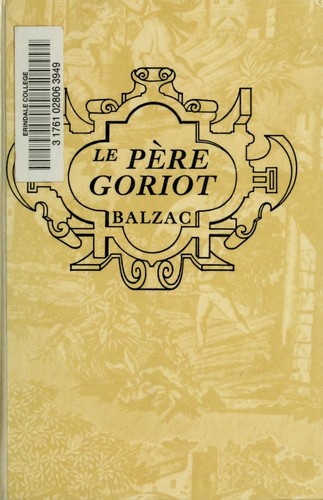
Père Goriot is the novel where Balzac's Human Comedy — his vast project of interlocking stories about French society — finds its moral and architectural center.
Honoré de Balzac · 1835 · 7h 45m
Full summary and key takeaways →The 12 questions
- 1.
Is Goriot a tragic figure, a foolish one, or both? Does your reading of him change by the final chapters?
- 2.
Rastignac arrives in Paris as a reasonably decent young man and leaves as something else. At what point did you feel him cross an irreversible line?
- 3.
Vautrin offers Rastignac a deal that would make him rich through crime and asks him to be honest about what he'd be willing to do to get what he wants. Is Vautrin wrong about anything?
- 4.
Goriot's daughters aren't given much interiority. Does the novel invite us to condemn them, understand them, or both — and is there a gendered logic to their treatment?
- 5.
Balzac's Paris feels as much like a character as any individual. What does the city want from its inhabitants — what does it require them to become?
- 6.
The novel was part of an enormous project (the Human Comedy, 90+ linked works). Does knowing that change how you read it, or does it work fine as a standalone?
- 7.
Madame de Beauséant, Rastignac's aristocratic cousin, gives him his first lesson in how the world works. Is her advice cynical or simply realistic?
- 8.
How does the treatment of money and class in Père Goriot compare to The Red and the Black? Both are set in roughly the same period — what does each author seem most interested in?
- 9.
Goriot's love for his daughters is often described as a kind of addiction or pathology. Do you read it that way, or as simply the most powerful feeling in the novel?
- 10.
The boarding house residents include characters of vastly different backgrounds and means. What does their cohabitation under one roof let Balzac do that a single-class setting wouldn't?
- 11.
Balzac described himself as 'the secretary of French society.' Do you think Père Goriot reads as description, criticism, or both?
- 12.
What would Rastignac look like today — what profession would he enter, what city would he conquer, and would the corruption look the same or different?
How to run the discussion
- Pick six to eight, not all of them. An hour of real discussion covers fewer questions than anyone expects, and racing the list is what makes a book club feel like homework.
- Open with what people noticed, not what they concluded. Asking for a verdict first hardens opinions before anyone has heard each other.
- Let the disagreement run. The questions below that split a room are the ones worth the time; the ones everyone answers the same way can be skipped.
- Ask the quiet person a specific question. A direct, narrow question is far easier to answer than an open invitation to contribute.
Themes worth steering toward
If the conversation stalls, these are the threads that usually restart it.
Common questions
What are good book club questions for Père Goriot?
Here are 12 book club questions for Père Goriot by Honoré de Balzac, ordered to open easily and end somewhere worth arguing about. The strongest openers ask what each reader noticed rather than what they concluded, and the discussion usually turns on money and class, parental devotion, corruption and ambition.
How long should a book club discussion of Père Goriot last?
Most groups run 60 to 90 minutes of actual discussion. That is roughly six to eight questions, not all of them, so pick the ones that suit your group rather than working down the list in order.
What are the main themes in Père Goriot?
Money and class, Parental devotion, Corruption and ambition, Paris as a predatory system, Disillusionment. Those are the threads most likely to divide a room, which makes them the useful places to steer a discussion that has gone quiet.
Picking the next one? See books like Père Goriot or questions for other book club picks.
