Père Goriot by Honoré de Balzac is a 1835 classics book about money and class, parental devotion, corruption and ambition. Goriot's parental devotion, portrayed without irony or sentimentality, functions as a kind of moral absolute in the novel — the one form of love that isn't performing or calculating — which is precisely why the world destroys him.
Summary
Père Goriot is the novel where Balzac's Human Comedy — his vast project of interlocking stories about French society — finds its moral and architectural center. Set in a Parisian boarding house in 1819, it follows two characters: old Goriot, a retired pasta merchant who has sacrificed everything for his ungrateful daughters, and Eugène de Rastignac, a young law student from the provinces who arrives in Paris with virtuous intentions and watches himself slowly surrender them. The famous final scene, in which Rastignac stands over Goriot's pauper grave and declares war on Paris, is one of the defining gestures of French realism.
The book is as much about Balzac's Paris as it is about any individual. The boarding house, the salons, the debts, the marriages of convenience — all are shown as components of a single system in which money is the only real language. Goriot's love for his daughters is genuine and extreme and entirely irrelevant to that system; his sacrifice has purchased their social advancement and their contempt in equal measure. Rastignac's education is watching what happens to Goriot while simultaneously accepting the logic that destroyed him. The character Vautrin, a criminal mastermind who boards in the same house, functions as a kind of devil's advocate who articulates the novel's darkest thesis: society is a system of organized predation, and the only question is whether you're honest about it.
Balzac's prose is energetic, dense, and occasionally overwhelming — he loves to inventory rooms, catalogues of furniture and wallpaper that tell you everything about who lives there and why they're stuck. This tendency can feel slow to modern readers, but it's deliberate; Balzac is arguing that the material world encodes social reality. The novel's interweaving of plot threads is managed with impressive confidence for a work written at such speed (Balzac worked in legendary marathons). Once the pieces lock into place around chapter three, it moves very quickly.
Readers drawn to novels about ambition, social machinery, and moral compromise will find this essential. Those who prefer clean moral categories — villains who are unambiguously villainous, heroes who remain heroic — will find Balzac frustrating. His sympathy is distributed strangely: Goriot is pitiable but also absurd; Rastignac is compromised but also our guide; Vautrin is monstrous but also the most perceptive character in the book. That ambiguity is the point.
Talk to Père Goriot like its author wrote you back.
Get the ideas that fit your life — not generic summaries.
- Chat with the book
- Audiobook-style main ideas
- Adapts to your life and goals
- Helps you take action
Key takeaways
- 1.
Goriot's parental devotion, portrayed without irony or sentimentality, functions as a kind of moral absolute in the novel — the one form of love that isn't performing or calculating — which is precisely why the world destroys him.
- 2.
Rastignac's arc is the classic Bildungsroman run through acid: the education he receives in Paris is an education in corruption, and by the end he is a willing student.
- 3.
Vautrin is one of fiction's great cynics — he articulates the predatory logic of capitalist society with more clarity than any 'respectable' character, which is why he's terrifying.
- 4.
Balzac's descriptive method — exhaustive inventories of rooms, clothes, and objects — is not padding; it's his argument that material conditions encode social position and psychic state.
- 5.
The boarding house functions as a microcosm: every social class is represented, and watching how they interact tells you everything about how the larger system operates.
- 6.
Goriot's daughters are not simply ungrateful children; they are products of a social system that taught them that their value depended on social advancement, which they correctly understood required erasing their origins.
- 7.
Money in the novel is not simply wealth; it is the medium through which every human relationship is expressed and every moral claim is valued or discounted.
- 8.
The final lines — Rastignac's 'now it's between us two' challenge to Paris — are both triumphant and damning; he has become what the city required of him.
Discussion questions
Use these on your own, with a book club, or as chat starters in Superbook. Book club version, ready to copy or print →
- 1.
Is Goriot a tragic figure, a foolish one, or both? Does your reading of him change by the final chapters?
- 2.
Rastignac arrives in Paris as a reasonably decent young man and leaves as something else. At what point did you feel him cross an irreversible line?
- 3.
Vautrin offers Rastignac a deal that would make him rich through crime and asks him to be honest about what he'd be willing to do to get what he wants. Is Vautrin wrong about anything?
- 4.
Goriot's daughters aren't given much interiority. Does the novel invite us to condemn them, understand them, or both — and is there a gendered logic to their treatment?
- 5.
Balzac's Paris feels as much like a character as any individual. What does the city want from its inhabitants — what does it require them to become?
- 6.
The novel was part of an enormous project (the Human Comedy, 90+ linked works). Does knowing that change how you read it, or does it work fine as a standalone?
- 7.
Madame de Beauséant, Rastignac's aristocratic cousin, gives him his first lesson in how the world works. Is her advice cynical or simply realistic?
- 8.
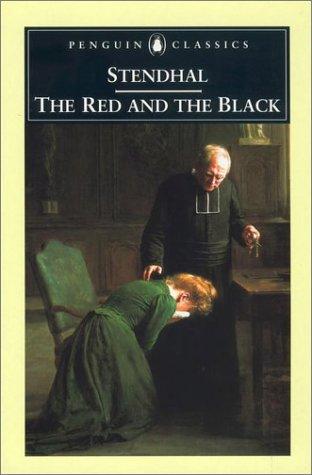
How does the treatment of money and class in Père Goriot compare to The Red and the Black? Both are set in roughly the same period — what does each author seem most interested in?
- 9.
Goriot's love for his daughters is often described as a kind of addiction or pathology. Do you read it that way, or as simply the most powerful feeling in the novel?
- 10.
The boarding house residents include characters of vastly different backgrounds and means. What does their cohabitation under one roof let Balzac do that a single-class setting wouldn't?
- 11.
Balzac described himself as 'the secretary of French society.' Do you think Père Goriot reads as description, criticism, or both?
- 12.
What would Rastignac look like today — what profession would he enter, what city would he conquer, and would the corruption look the same or different?
Themes
Frequently asked questions
-
Is Père Goriot worth reading?
Yes, particularly if you're interested in how social systems shape individual character. It's one of the most economically precise novels ever written, and Balzac's sympathy for all of his characters — even the unpleasant ones — makes it richer than simple moral fable. The descriptive passages slow things down early but pay off.
-
Do I need to read other Balzac novels first?
No. Père Goriot works perfectly as a standalone and is generally considered the best entry point into the Human Comedy. Rastignac appears in many other novels, but this is his origin story — it makes more sense to start here.
-
What is Père Goriot about, without spoilers?
A young man arrives in Paris hoping to make his way in society and boards in a cheap rooming house where he encounters, among others, a ruined old man who has sacrificed everything for daughters who barely acknowledge him. The novel follows both as Paris gradually teaches the young man what success requires.
-
Why is Père Goriot considered a masterpiece?
It manages to be simultaneously a social panorama, a moral fable, and a precise psychological study. The plot is genuinely gripping by the second half, and the ending is one of the most resonant in French literature. Balzac understood money and class with an almost sociological precision that feels modern.
-
Who should not read Père Goriot?
Readers who want a redemptive arc for their protagonists. Rastignac's development runs in the wrong direction, and the novel is not primarily interested in consoling the reader. If you find the idea of watching a decent person become a cynic depressing rather than illuminating, this will not be an enjoyable experience.