History · Book club
Perfecting Sound Forever book club questions
Here are 11 book club questions for Perfecting Sound Forever by Greg Milner, ordered to open easily and end somewhere worth arguing about. Copy them, print them, or bring them up one at a time.
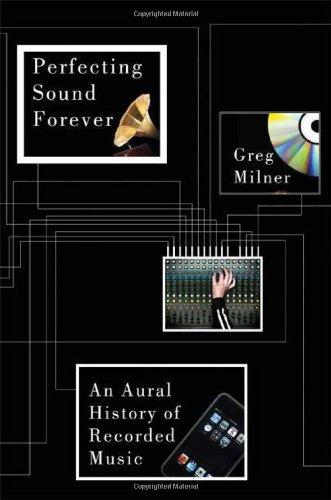
Perfecting Sound Forever is Greg Milner's history of recorded music as a technology — and an argument about what that technology has cost.
Greg Milner · 2009 · 6h 20m
Full summary and key takeaways →The 11 questions
- 1.
Milner argues that every recording is a construction, not a capture. Does knowing this change how you listen to music you love?
- 2.
The loudness war compressed dynamic range to hold attention in noisy environments. What other design choices in modern media reflect the same imperative, and what do they cost?
- 3.
Where do you stand on the analog versus digital audio debate? Is the audiophile case for analog a principled position, nostalgia, or something in between?
- 4.
Auto-tune is now so common as to be nearly invisible. Is the widespread use of pitch correction a problem, a neutral technical fact, or simply the latest in a long series of acceptable manipulations?
- 5.
Milner traces how recording technology separated performance from document, allowing music to be made that could never be performed live. What has that freed artists to do, and what has it cost?
- 6.
The phonograph was initially presented as a device for preserving the voices of the dying. How much of the appeal of recorded music is still connected to the desire for a form of immortality or presence?
- 7.
The MP3 discards audio information your brain is unlikely to notice. Is the information that gets discarded important? What criterion would you use to decide?
- 8.
Perfecting Sound Forever focuses heavily on American and European popular music. How might the story look different from the perspective of musical traditions where live performance has a different relationship to recorded document?
- 9.
Milner treats the loudness war as a cultural pathology. Is that too strong, or does the destruction of dynamic range in commercial music have consequences for listeners that justify the criticism?
- 10.
What is the relationship between technological idealism — the pursuit of the 'perfect' recording — and the repeated production of something that doesn't sound like music?
- 11.
Since Milner published the book in 2009, streaming has become the dominant format. How has streaming changed the dynamics he describes around loudness, compression, and the economics of audio quality?
How to run the discussion
- Pick six to eight, not all of them. An hour of real discussion covers fewer questions than anyone expects, and racing the list is what makes a book club feel like homework.
- Open with what people noticed, not what they concluded. Asking for a verdict first hardens opinions before anyone has heard each other.
- Let the disagreement run. The questions below that split a room are the ones worth the time; the ones everyone answers the same way can be skipped.
- Ask the quiet person a specific question. A direct, narrow question is far easier to answer than an open invitation to contribute.
Themes worth steering toward
If the conversation stalls, these are the threads that usually restart it.
Common questions
What are good book club questions for Perfecting Sound Forever?
Here are 11 book club questions for Perfecting Sound Forever by Greg Milner, ordered to open easily and end somewhere worth arguing about. The strongest openers ask what each reader noticed rather than what they concluded, and the discussion usually turns on music recording, technology, authenticity.
How long should a book club discussion of Perfecting Sound Forever last?
Most groups run 60 to 90 minutes of actual discussion. That is roughly six to eight questions, not all of them, so pick the ones that suit your group rather than working down the list in order.
What are the main themes in Perfecting Sound Forever?
Music recording, Technology, Authenticity, Sound, Cultural history. Those are the threads most likely to divide a room, which makes them the useful places to steer a discussion that has gone quiet.
Picking the next one? See books like Perfecting Sound Forever or questions for other book club picks.
