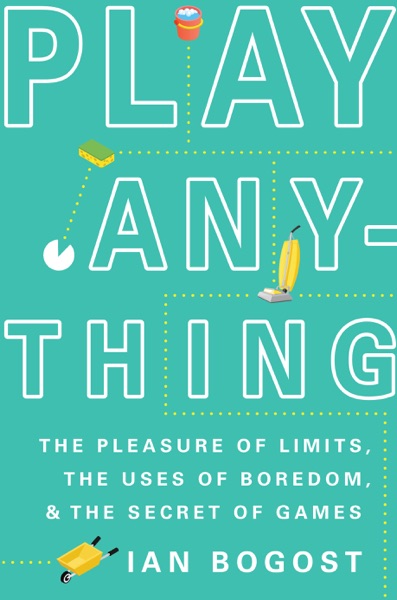
Talk to Play Anything like its author wrote you back.
Get the ideas that fit your life — not generic summaries.
- Chat with the book
- Audiobook-style main ideas
- Adapts to your life and goals
- Helps you take action
Play Anything, in detail
Play Anything is Ian Bogost's argument that play is not something we bring to enjoyable activities — it's something we do with things, including tedious and unpleasant things, by paying them closer attention. Bogost is a game designer and media theorist at Georgia Tech, and his starting point is a challenge to the intuitive view that fun comes from freedom or personal satisfaction. Fun, he argues, is a byproduct of engaging closely with constraints, not escaping them.
The book's central term is "irony" in a philosophical rather than literary sense. Bogost means the gap between what we expect from the world and what we actually encounter — the ways things resist us and fail to match our demands. Most people experience this gap as frustration. Play, in Bogost's account, is the deliberate decision to explore that gap rather than close it: to be interested in the thing on its own terms rather than annoyed that it isn't what you wanted.
The argument runs through a series of case studies: a parking lot, a children's soccer game, the game of golf, shopping at Target, a lawn sprinkler. The point is not that these are secretly fun. It's that close attention to any system — its constraints, its logic, its internal coherence — can produce engagement that resembles what we normally call play. Bogost calls this "ludic" attention: attending to the world as a set of structures to explore rather than experiences to consume.
The prose is dense and occasionally difficult. Bogost is a philosophy-trained academic writing for a general audience, and the balance between intellectual precision and readability tips toward precision more often than most readers might prefer. The book rewards patience. Its central idea — that boredom is not a property of activities but of attention, that almost anything becomes interesting when you pay it the right kind of attention — is one of those ideas that changes what you do with idle time after you've absorbed it.
The big ideas
- 1.
Play is not something we bring to enjoyable activities — it's a mode of attention we can direct at almost anything, including tedious or ordinary things.
- 2.
Fun is a byproduct of engaging with constraints, not escaping them. The game of golf is interesting because of the rules, not despite them.
- 3.
Bogost's 'irony' is the gap between what we expect from the world and what we encounter. Play is the decision to explore that gap rather than be frustrated by it.
