Philosophy · Book club
Point and Line to Plane book club questions
Here are 11 book club questions for Point and Line to Plane by Wassily Kandinsky, ordered to open easily and end somewhere worth arguing about. Copy them, print them, or bring them up one at a time.
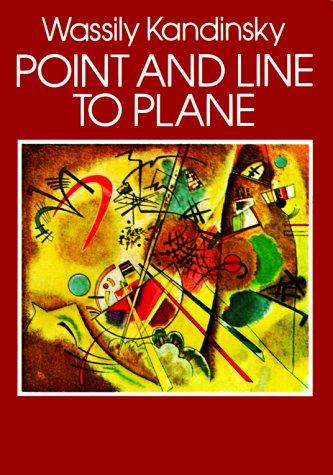
Point and Line to Plane is Wassily Kandinsky's systematic attempt to build a grammar of visual art from the ground up.
Wassily Kandinsky · 1926 · 3h 0m
Full summary and key takeaways →The 11 questions
- 1.
Kandinsky argues that a point on a canvas has emotional temperature independent of what it represents. Do you find this convincing when you look at abstract paintings?
- 2.
He treats diagonal lines as inherently more dynamic than horizontal or vertical ones. Can you think of examples in design or photography where this holds — or fails to hold?
- 3.
The book claims that the upper portion of a canvas feels lighter than the lower. Does this match your experience as a viewer, and what implications does it have for composition?
- 4.
Kandinsky wanted painting to work like music — directly, without representation. What would be lost in an art world where all painting was purely abstract?
- 5.
Point and Line to Plane was written as pedagogical material at the Bauhaus. Does it read differently knowing it was meant to teach working designers, not just fine artists?
- 6.
The book draws on synesthesia — the feeling that colors are warm or cool, that shapes have emotional weight. How much of this do you think is universal versus culturally conditioned?
- 7.
How useful is Kandinsky's vocabulary of points, lines, and planes when analyzing a piece of work you admire — a film, a photograph, a building, or a poster?
- 8.
Kandinsky's systematic approach to art theory is very different from more expressive or intuitive accounts of creativity. What are the costs and benefits of treating visual form as a grammar?
- 9.
The book was published in 1926 in German. Has its core argument aged well, or do contemporary understandings of perception and design supersede it?
- 10.
Kandinsky distinguishes between the geometric and the graphic — the abstract and the visual. Where does that distinction break down for you?
- 11.
If you were designing a page, a poster, or a room, which of Kandinsky's principles would you actually apply? Which feel too theoretical to be practical?
How to run the discussion
- Pick six to eight, not all of them. An hour of real discussion covers fewer questions than anyone expects, and racing the list is what makes a book club feel like homework.
- Open with what people noticed, not what they concluded. Asking for a verdict first hardens opinions before anyone has heard each other.
- Let the disagreement run. The questions below that split a room are the ones worth the time; the ones everyone answers the same way can be skipped.
- Ask the quiet person a specific question. A direct, narrow question is far easier to answer than an open invitation to contribute.
Themes worth steering toward
If the conversation stalls, these are the threads that usually restart it.
Common questions
What are good book club questions for Point and Line to Plane?
Here are 11 book club questions for Point and Line to Plane by Wassily Kandinsky, ordered to open easily and end somewhere worth arguing about. The strongest openers ask what each reader noticed rather than what they concluded, and the discussion usually turns on visual form, abstraction, artistic theory.
How long should a book club discussion of Point and Line to Plane last?
Most groups run 60 to 90 minutes of actual discussion. That is roughly six to eight questions, not all of them, so pick the ones that suit your group rather than working down the list in order.
What are the main themes in Point and Line to Plane?
Visual form, Abstraction, Artistic theory, Composition, Perception. Those are the threads most likely to divide a room, which makes them the useful places to steer a discussion that has gone quiet.
Picking the next one? See books like Point and Line to Plane or questions for other book club picks.
