Talk to Point and Line to Plane like its author wrote you back.
Get the ideas that fit your life — not generic summaries.
- Chat with the book
- Audiobook-style main ideas
- Adapts to your life and goals
- Helps you take action
Point and Line to Plane, in detail
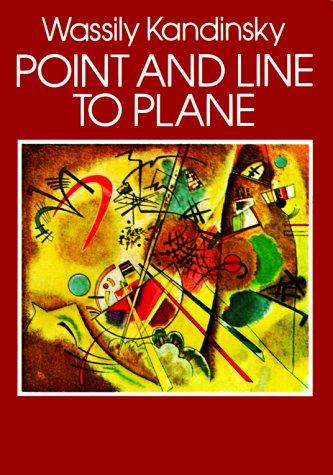
Point and Line to Plane is Wassily Kandinsky's systematic attempt to build a grammar of visual art from the ground up. Written while he was teaching at the Bauhaus in Weimar and Dessau, the book treats the point, line, and plane not as geometrical abstractions but as living elements with psychological and emotional weight. A single point on a blank canvas creates tension; a line carries direction and force; a plane exerts pressure. Kandinsky wanted painting to have the same internal logic that music has — not representational meaning, but a direct, structured effect on feeling.
The book divides into two main sections. The first dissects the point: its size, its color, its relationship to the plane it occupies. Kandinsky distinguishes the geometric point from the painted point, noting that a small circle on canvas has warmth, temperature, and dramatic potential that a mathematical dot does not. Even the typographic period, as punctuation, carries a kind of terminal force. From this beginning the analysis gradually expands to lines — both straight and curved, thick and thin — treating each variation as expressive in a specific direction.
The second part turns to the picture plane itself: its edges, its corners, the different emotional weight carried by the upper and lower portions of a canvas, the tension created when elements approach the borders. Kandinsky draws on synesthetic experience throughout — the sensation that certain colors feel warm or cool, that diagonal lines are more dynamic than horizontal ones, that the upper portion of a canvas feels lighter. These are treated not as personal metaphors but as shared perceptual facts grounded in the structure of human attention.
The book is dense and requires patience. Kandinsky's prose is painstaking and sometimes dry. But for anyone serious about visual composition — whether in painting, graphic design, typography, or filmmaking — the underlying framework remains genuinely useful. It teaches a way of seeing that goes below subject matter to ask: what does this element do to the viewer's attention, and why?
The big ideas
- 1.
The point, line, and plane are not neutral geometrical facts but charged elements that create tension, movement, and emotional tone in visual composition.
- 2.
A painted point is categorically different from a mathematical one. Its size relative to the canvas, its color, and its position each carry distinct expressive properties.
- 3.
Lines have personality: horizontal lines are calm and cold, vertical lines are warm and still, diagonal lines carry the most dynamic tension.
