Thriller · Book club
Presumed Innocent book club questions
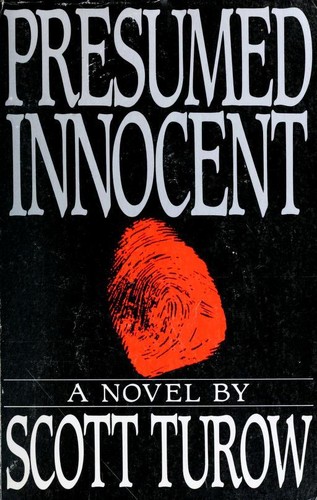
Here are 12 book club questions for Presumed Innocent by Scott Turow, ordered to open easily and end somewhere worth arguing about. Copy them, print them, or bring them up one at a time.
Rusty Sabich is the chief deputy prosecutor in a fictional Midwestern city, a competent, serious man trusted by his boss and respected by his colleagues.
Scott Turow · 1987 · 9h 45m
Full summary and key takeaways →The 12 questions
- 1.
Rusty is our only narrator. By the end, how much do you trust him? Did your level of trust change, and when?
- 2.
Turow maintains ambiguity about Rusty's guilt until very late. Does that ambiguity function as suspense, as psychology, or as a philosophical argument about knowledge?
- 3.
The twist ending is controversial. Does it feel earned by the novel's setup, or does it feel like Turow pulling a trick?
- 4.
Carolyn Polhemus is the murder victim, but she's also a fully realized character. How does Turow's treatment of her compare to how women are typically handled in crime fiction?
- 5.
Rusty's obsession with Carolyn is presented as real but not admirable. Is he a sympathetic character? Does the novel want you to sympathize with him?
- 6.
The legal system in this novel determines an outcome. Is that outcome justice? Does Turow want you to feel the difference between the two?
- 7.
Barbara Sabich is nearly invisible for most of the novel and then central at the end. Did that feel inevitable looking back, or contrived?
- 8.
The novel argues, in effect, that the courtroom is a theater where lawyers compete rather than a machine for finding truth. Do you agree with that characterization?
- 9.
Rusty's boss uses the prosecution partly for political reasons. How does that motive change the moral valence of what happens to Rusty?
- 10.
If you were on the jury in this novel, with only the evidence presented at trial, what would you have decided?
- 11.
How does this compare to Grisham's legal thrillers in terms of what it asks of the reader? What does Turow do that Grisham doesn't?
- 12.
The novel was published in 1987. How does the legal world Turow depicts compare to your sense of how courts actually work today?
How to run the discussion
- Pick six to eight, not all of them. An hour of real discussion covers fewer questions than anyone expects, and racing the list is what makes a book club feel like homework.
- Open with what people noticed, not what they concluded. Asking for a verdict first hardens opinions before anyone has heard each other.
- Let the disagreement run. The questions below that split a room are the ones worth the time; the ones everyone answers the same way can be skipped.
- Ask the quiet person a specific question. A direct, narrow question is far easier to answer than an open invitation to contribute.
Themes worth steering toward
If the conversation stalls, these are the threads that usually restart it.
Common questions
What are good book club questions for Presumed Innocent?
Here are 12 book club questions for Presumed Innocent by Scott Turow, ordered to open easily and end somewhere worth arguing about. The strongest openers ask what each reader noticed rather than what they concluded, and the discussion usually turns on guilt and innocence, institutional betrayal, obsession and desire.
How long should a book club discussion of Presumed Innocent last?
Most groups run 60 to 90 minutes of actual discussion. That is roughly six to eight questions, not all of them, so pick the ones that suit your group rather than working down the list in order.
What are the main themes in Presumed Innocent?
Guilt and innocence, Institutional betrayal, Obsession and desire, Legal system as theater, Marriage and secrets. Those are the threads most likely to divide a room, which makes them the useful places to steer a discussion that has gone quiet.
Picking the next one? See books like Presumed Innocent or questions for other book club picks.
