Religion & Spirituality · Book club
Radical Acceptance book club questions
Here are 12 book club questions for Radical Acceptance by Tara Brach, ordered to open easily and end somewhere worth arguing about. Copy them, print them, or bring them up one at a time.
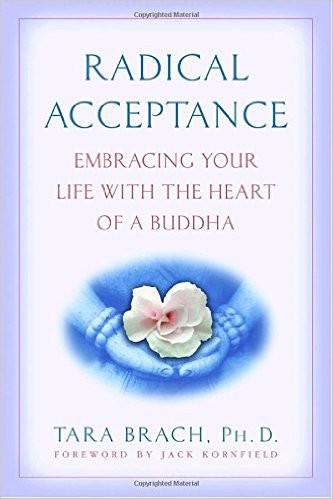
Tara Brach, a psychologist and Buddhist meditation teacher, wrote Radical Acceptance as a response to what she calls the trance of unworthiness — the pervasive background feeling that something is fundamentally wrong with us, that we are not enough.
Tara Brach · 2003 · 6h 15m
Full summary and key takeaways →The 12 questions
- 1.
Brach describes the 'trance of unworthiness' as widespread. Does that resonate with your own inner experience, or does it feel like an overstatement?
- 2.
What's the difference between accepting a painful emotion and giving in to it? Have you ever confused the two?
- 3.
Brach draws heavily on Buddhist concepts without requiring religious belief. Does the Buddhist framing enhance the book's usefulness for you, or does it introduce unnecessary distance?
- 4.
Which part of the RAIN practice — Recognize, Allow, Investigate, or Nourish — do you think you would find most difficult in practice?
- 5.
The book argues that self-criticism is not the same as taking responsibility, and may actually undermine it. Does that distinction feel true in your own experience?
- 6.
Brach says the desire to fix, change, or escape our experience is itself often the source of suffering. Is there a situation in your life right now where that might be true?
- 7.
What does treating yourself with compassion actually look like in practice? Is there a situation where you've done it successfully?
- 8.
Brach uses clinical case studies throughout. Did any of them feel close to your own experience? How does that affect how you read the book?
- 9.
Radical acceptance requires slowing down enough to actually feel what is happening. What makes that difficult in ordinary daily life?
- 10.
Is there a relationship between self-acceptance and taking meaningful action? Brach argues yes — does that track with your experience?
- 11.
The book treats shame as a particularly central obstacle to wellbeing. Do you think shame is more or less prevalent now than it was twenty years ago?
- 12.
If you tried the RAIN practice on one recurring difficulty in your life — not a trauma, just a pattern you find frustrating — what would you choose and what do you think you'd find?
How to run the discussion
- Pick six to eight, not all of them. An hour of real discussion covers fewer questions than anyone expects, and racing the list is what makes a book club feel like homework.
- Open with what people noticed, not what they concluded. Asking for a verdict first hardens opinions before anyone has heard each other.
- Let the disagreement run. The questions below that split a room are the ones worth the time; the ones everyone answers the same way can be skipped.
- Ask the quiet person a specific question. A direct, narrow question is far easier to answer than an open invitation to contribute.
Themes worth steering toward
If the conversation stalls, these are the threads that usually restart it.
Common questions
What are good book club questions for Radical Acceptance?
Here are 12 book club questions for Radical Acceptance by Tara Brach, ordered to open easily and end somewhere worth arguing about. The strongest openers ask what each reader noticed rather than what they concluded, and the discussion usually turns on self-compassion, mindfulness, buddhism.
How long should a book club discussion of Radical Acceptance last?
Most groups run 60 to 90 minutes of actual discussion. That is roughly six to eight questions, not all of them, so pick the ones that suit your group rather than working down the list in order.
What are the main themes in Radical Acceptance?
Self-compassion, Mindfulness, Buddhism, Shame, Healing. Those are the threads most likely to divide a room, which makes them the useful places to steer a discussion that has gone quiet.
Picking the next one? See books like Radical Acceptance or questions for other book club picks.
