Self-help · Book club
Raising Girls book club questions
Here are 11 book club questions for Raising Girls by Steve Biddulph, ordered to open easily and end somewhere worth arguing about. Copy them, print them, or bring them up one at a time.
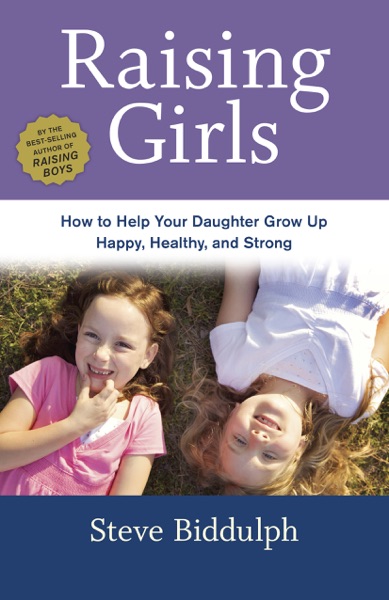
Raising Girls is Steve Biddulph's guide to the specific challenges of raising daughters in the contemporary world.
Steve Biddulph · 2013 · 4h 20m
Full summary and key takeaways →The 11 questions
- 1.
Biddulph organizes the book around five developmental stages. Looking back at your own childhood or the childhood of girls you know, does the stage framework reflect what you observed?
- 2.
He argues that the father-daughter relationship has a specific influence on daughters' self-worth that mothers can't replicate. Is that claim supported by what you've seen, or does it feel overstated?
- 3.
The book is critical of smartphones for children under fourteen. Where do you draw the line in your own household or in families you know, and how did you arrive at that position?
- 4.
Biddulph says girls' social cruelty — exclusion, gossip, relational aggression — requires a different response than physical aggression. What response does he recommend, and does it match your experience or intuition?
- 5.
He argues that girls need at least one trusted adult outside the immediate family — a mentor, aunt, teacher, coach. Was there such a person in your own life, and what role did they play?
- 6.
The book was published in 2013. Social media platforms have changed significantly since then. Which of Biddulph's observations about digital media do you think still apply, and which have been overtaken by events?
- 7.
Biddulph is writing specifically about girls, but some of his developmental framework seems like it would apply to children generally. Where does the gender-specific framing add the most value, and where does it seem to over-separate?
- 8.
He is concerned about early sexualization of girls in commercial culture. Is this concern well-founded, or does it risk over-protecting girls in ways that limit their autonomy?
- 9.
The book's recommendations for early adolescence — delayed smartphones, maintained family meals, monitored friendships — require significant parental involvement. How realistic are these for families with limited time or resources?
- 10.
Biddulph is prescriptive about what good parenting looks like. How do you distinguish clinical guidance from values preferences in books like this?
- 11.
If you were to add a sixth developmental stage to cover adulthood (eighteen and beyond), what do you think daughters most need from their parents during that phase?
How to run the discussion
- Pick six to eight, not all of them. An hour of real discussion covers fewer questions than anyone expects, and racing the list is what makes a book club feel like homework.
- Open with what people noticed, not what they concluded. Asking for a verdict first hardens opinions before anyone has heard each other.
- Let the disagreement run. The questions below that split a room are the ones worth the time; the ones everyone answers the same way can be skipped.
- Ask the quiet person a specific question. A direct, narrow question is far easier to answer than an open invitation to contribute.
Themes worth steering toward
If the conversation stalls, these are the threads that usually restart it.
Common questions
What are good book club questions for Raising Girls?
Here are 11 book club questions for Raising Girls by Steve Biddulph, ordered to open easily and end somewhere worth arguing about. The strongest openers ask what each reader noticed rather than what they concluded, and the discussion usually turns on parenting, adolescence, gender.
How long should a book club discussion of Raising Girls last?
Most groups run 60 to 90 minutes of actual discussion. That is roughly six to eight questions, not all of them, so pick the ones that suit your group rather than working down the list in order.
What are the main themes in Raising Girls?
Parenting, Adolescence, Gender, Identity, Wellbeing. Those are the threads most likely to divide a room, which makes them the useful places to steer a discussion that has gone quiet.
Picking the next one? See books like Raising Girls or questions for other book club picks.
