Philosophy · Book club
Rationality: From AI to Zombies book club questions
Here are 12 book club questions for Rationality: From AI to Zombies by Eliezer Yudkowsky, ordered to open easily and end somewhere worth arguing about. Copy them, print them, or bring them up one at a time.
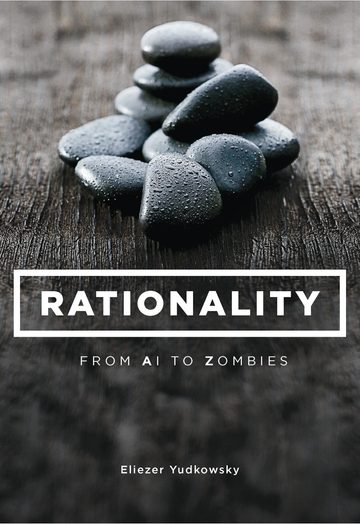
Rationality: From AI to Zombies is a collection of Eliezer Yudkowsky's essays from LessWrong, organized into six books covering the theory and practice of thinking clearly.
Eliezer Yudkowsky · 2015 · 39h 15m
Full summary and key takeaways →The 12 questions
- 1.
Yudkowsky argues that holding a belief with 99% confidence rather than certainty is not a weakness but a sign of intellectual honesty. Do you find that comfortable or unsettling, and why?
- 2.
He distinguishes rationalizing from reasoning by whether you would update the belief on contrary evidence. Pick a strong belief you hold — is there any evidence that would cause you to abandon it?
- 3.
The book advocates Bayesian probability as the correct way to reason. What would it mean in your daily life to actually attach numbers to beliefs, and where would that break down?
- 4.
Yudkowsky claims most people's beliefs are heavily shaped by their social environment, not by evidence. Where in your own intellectual life do you see that pattern?
- 5.
The 'map is not the territory' metaphor is central to the book. Where have you most recently been surprised to find that your mental model was wrong in an important way?
- 6.
He argues that intelligence is not enough for good reasoning — that bright people often are just better at rationalizing. Does your experience support that claim?
- 7.
The later books on metaethics argue that moral reasoning is a domain where the same epistemic standards apply. Does that seem right to you, or is ethics different in kind?
- 8.
What is a cached thought — a belief you adopted without examining — that you are aware of holding right now? What would it take to actually re-examine it?
- 9.
Yudkowsky is explicit that this project is motivated partly by concerns about AI safety. Does the AI connection strengthen or weaken the book's appeal to you as a guide to personal reasoning?
- 10.
His tone is often combative and self-assured. How much does authorial voice affect your ability to learn from a book? Did it help or hinder here?
- 11.
The book is nearly 600,000 words. Given what you read, was the length justified? What could have been cut without losing the core argument?
- 12.
He argues that building rationalist communities matters as much as individual practice. What does a community that supports better thinking actually look like?
How to run the discussion
- Pick six to eight, not all of them. An hour of real discussion covers fewer questions than anyone expects, and racing the list is what makes a book club feel like homework.
- Open with what people noticed, not what they concluded. Asking for a verdict first hardens opinions before anyone has heard each other.
- Let the disagreement run. The questions below that split a room are the ones worth the time; the ones everyone answers the same way can be skipped.
- Ask the quiet person a specific question. A direct, narrow question is far easier to answer than an open invitation to contribute.
Themes worth steering toward
If the conversation stalls, these are the threads that usually restart it.
Common questions
What are good book club questions for Rationality: From AI to Zombies?
Here are 12 book club questions for Rationality: From AI to Zombies by Eliezer Yudkowsky, ordered to open easily and end somewhere worth arguing about. The strongest openers ask what each reader noticed rather than what they concluded, and the discussion usually turns on rationality, cognitive bias, epistemology.
How long should a book club discussion of Rationality: From AI to Zombies last?
Most groups run 60 to 90 minutes of actual discussion. That is roughly six to eight questions, not all of them, so pick the ones that suit your group rather than working down the list in order.
What are the main themes in Rationality: From AI to Zombies?
Rationality, Cognitive bias, Epistemology, Bayesian reasoning, Self-improvement. Those are the threads most likely to divide a room, which makes them the useful places to steer a discussion that has gone quiet.
Picking the next one? See books like Rationality: From AI to Zombies or questions for other book club picks.
