Memoir · Book club
Reading Lolita in Tehran: A Memoir in Books book club questions
Here are 12 book club questions for Reading Lolita in Tehran: A Memoir in Books by Azar Nafisi, ordered to open easily and end somewhere worth arguing about. Copy them, print them, or bring them up one at a time.
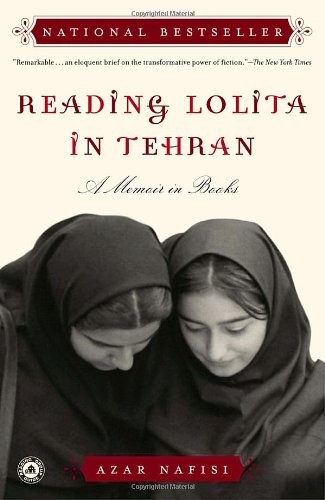
Azar Nafisi spent years teaching literature at universities in Tehran before the restrictions on what she could teach — and who she could teach — became intolerable.
Azar Nafisi · 2003 · 7h 40m
Full summary and key takeaways →The 12 questions
- 1.
Nafisi argues that literature is a form of resistance. Does that claim hold outside the specific context of life under a theocratic government?
- 2.
Each section is named for a Western author. Is the book's dependence on the Western literary canon a strength or a limitation? What would the book look like organized around Iranian literature?
- 3.
How do Nafisi's students' responses to the books differ from each other, and what do those differences reveal about the variety of women's experience in Tehran?
- 4.
Humbert Humbert is a manipulative, self-serving narrator. Nafisi insists that reading him carefully is a form of moral practice. Do you agree?
- 5.
The veil appears throughout the book as a symbol, a legal imposition, and a daily reality. How does Nafisi's treatment of it compare to how Western observers typically discuss it?
- 6.
What does it mean that the most intimate conversations in the book happen in a private apartment over literature rather than in any institutional setting?
- 7.
Nafisi is from an educated, relatively privileged family. How does that background shape what she sees and what she misses in the society she describes?
- 8.
The book was published in English for a Western audience. Does that change how you read it? What is Nafisi asking Western readers to understand?
- 9.
Which of the four authors — Nabokov, Fitzgerald, James, Austen — seems most alive to you in Nafisi's reading? Why?
- 10.
Nafisi leaves Iran near the end. Is her departure a form of defeat or survival, and how does the book frame it?
- 11.
How does the experience of the book club differ from any reading group you have been part of, and what accounts for the difference?
- 12.
What would you put on the syllabus for a secret book club convened in conditions of political repression? How does that thought experiment reveal what you value in literature?
How to run the discussion
- Pick six to eight, not all of them. An hour of real discussion covers fewer questions than anyone expects, and racing the list is what makes a book club feel like homework.
- Open with what people noticed, not what they concluded. Asking for a verdict first hardens opinions before anyone has heard each other.
- Let the disagreement run. The questions below that split a room are the ones worth the time; the ones everyone answers the same way can be skipped.
- Ask the quiet person a specific question. A direct, narrow question is far easier to answer than an open invitation to contribute.
Themes worth steering toward
If the conversation stalls, these are the threads that usually restart it.
Common questions
What are good book club questions for Reading Lolita in Tehran: A Memoir in Books?
Here are 12 book club questions for Reading Lolita in Tehran: A Memoir in Books by Azar Nafisi, ordered to open easily and end somewhere worth arguing about. The strongest openers ask what each reader noticed rather than what they concluded, and the discussion usually turns on literature, resistance, women's rights.
How long should a book club discussion of Reading Lolita in Tehran: A Memoir in Books last?
Most groups run 60 to 90 minutes of actual discussion. That is roughly six to eight questions, not all of them, so pick the ones that suit your group rather than working down the list in order.
What are the main themes in Reading Lolita in Tehran: A Memoir in Books?
Literature, Resistance, Women's rights, Identity, Totalitarianism. Those are the threads most likely to divide a room, which makes them the useful places to steer a discussion that has gone quiet.
Picking the next one? See books like Reading Lolita in Tehran: A Memoir in Books or questions for other book club picks.
