Memoir · Book club
Rebel Without a Crew book club questions
Here are 12 book club questions for Rebel Without a Crew by Robert Rodriguez, ordered to open easily and end somewhere worth arguing about. Copy them, print them, or bring them up one at a time.
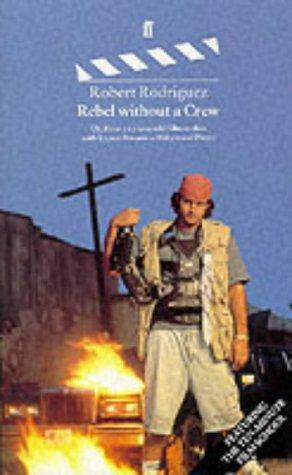
Robert Rodriguez made El Mariachi in 1992 for $7,000, shooting on 16mm in a Mexican border town with a cast of non-actors, no permits, borrowed equipment, and no film crew — just himself operating the camera, directing, and handling most of the technical work.
Robert Rodriguez · 1995 · 4h 45m
Full summary and key takeaways →The 12 questions
- 1.
Rodriguez argues that having no money forced him to be more creative. Do you believe limitations genuinely improve creative work, or is that a post-hoc story people tell about their constraints?
- 2.
He shot the film alone and handled almost every technical role himself. What was gained by that? What might have been lost by not having collaborators on set?
- 3.
The book describes a specific pre-digital era of filmmaking — 16mm, physical editing, festival submissions by mail. How much of his approach still applies in a world of smartphone cameras and streaming?
- 4.
Rodriguez enrolled in a drug trial to raise production money. That's an extreme form of commitment to a project. What's the most extreme thing you've done or would consider doing for a creative goal?
- 5.
His Ten-Minute Film School boils his experience down to a set of principles. Pick one of those principles and test it against a creative project you know — does it hold?
- 6.
The book is partly about entering a closed industry from the outside. Are there other creative or professional fields where the same kind of end-run is possible — where the gatekeepers can be bypassed by making something?
- 7.
Rodriguez is dismissive of formal film school. Is the learn-by-doing argument compelling for disciplines that require technical skill, or does it underestimate what structured education provides?
- 8.
El Mariachi was made in Spanish with no stars. Rodriguez didn't try to look like Hollywood — he leaned into what he was and where he was. What does that mean for creative work that aspires to enter mainstream markets?
- 9.
The diary section of the book is detailed and honest about waiting, uncertainty, and small problems. Do you find that texture useful? Or does it make the story less inspiring?
- 10.
Rodriguez went from $7,000 to Columbia Pictures in less than a year. How much of that trajectory was skill, how much was luck, and does the answer matter?
- 11.
What's the contemporary equivalent of making El Mariachi — the low-barrier-to-entry creative project that could launch a career if done with Rodriguez's intensity and resourcefulness?
- 12.
The book influenced a generation of independent filmmakers. Can a book about one person's singular experience actually be a useful guide for others, or is it more useful as inspiration than instruction?
How to run the discussion
- Pick six to eight, not all of them. An hour of real discussion covers fewer questions than anyone expects, and racing the list is what makes a book club feel like homework.
- Open with what people noticed, not what they concluded. Asking for a verdict first hardens opinions before anyone has heard each other.
- Let the disagreement run. The questions below that split a room are the ones worth the time; the ones everyone answers the same way can be skipped.
- Ask the quiet person a specific question. A direct, narrow question is far easier to answer than an open invitation to contribute.
Themes worth steering toward
If the conversation stalls, these are the threads that usually restart it.
Common questions
What are good book club questions for Rebel Without a Crew?
Here are 12 book club questions for Rebel Without a Crew by Robert Rodriguez, ordered to open easily and end somewhere worth arguing about. The strongest openers ask what each reader noticed rather than what they concluded, and the discussion usually turns on independent filmmaking, creative resourcefulness, entrepreneurship.
How long should a book club discussion of Rebel Without a Crew last?
Most groups run 60 to 90 minutes of actual discussion. That is roughly six to eight questions, not all of them, so pick the ones that suit your group rather than working down the list in order.
What are the main themes in Rebel Without a Crew?
Independent filmmaking, Creative resourcefulness, Entrepreneurship, Filmmaking process, Low-budget production. Those are the threads most likely to divide a room, which makes them the useful places to steer a discussion that has gone quiet.
Picking the next one? See books like Rebel Without a Crew or questions for other book club picks.
