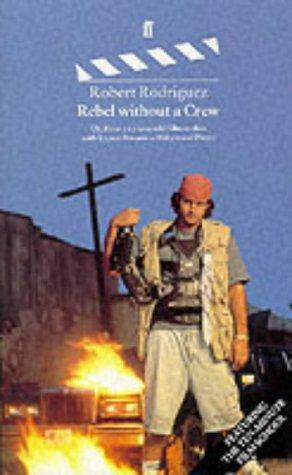
Rebel Without a Crew by Robert Rodriguez is a 1995 memoir book about independent filmmaking, creative resourcefulness, entrepreneurship. Rodriguez shot El Mariachi entirely alone — no crew — which forced him to make decisions instantly and move at a pace that a conventional production could not have matched.
Summary
Robert Rodriguez made El Mariachi in 1992 for $7,000, shooting on 16mm in a Mexican border town with a cast of non-actors, no permits, borrowed equipment, and no film crew — just himself operating the camera, directing, and handling most of the technical work. The film was picked up by Columbia Pictures and led to a career that includes Desperado, From Dusk Till Dawn, and the Spy Kids franchise. Rebel Without a Crew is the diary of how it happened and the manual Rodriguez assembled from the experience.
The book is structured in two parts. The first is the diary he kept during the ten-month period from his clinical trial — he enrolled in a pharmaceutical research study to raise the $7,000 — through shooting, to the moment he got the call from the Hollywood agent who would transform his life. The diary is specific and unglamorous: troubleshooting camera malfunctions on set, negotiating for locations, cutting the film on a borrowed editing system, and navigating the uncertainty of not knowing if anyone would ever see it. Rodriguez is a clear-eyed narrator who doesn't romanticize the experience but also doesn't complain about it.
The second part is what he calls the Ten-Minute Film School — a direct, practical distillation of the lessons he took from making El Mariachi. The advice is specific to low-budget filmmaking: learn to love limitations, solve problems with creativity not money, shoot on location with available light, write characters for actors you already know, and never wait until you're ready because ready never comes. These principles have circulated widely in indie film culture and echo in the approach of many low-budget filmmakers who followed him.
What makes the book valuable beyond its direct filmmaking instruction is its argument about constraints as creative fuel. Rodriguez made a virtue of having nothing: no crew meant he could move fast, shoot without permits, and make decisions without negotiation. The book is a case study in a particular philosophy of creative work — start now, use what you have, figure the rest out as you go — that applies well beyond film.
Talk to Rebel Without a Crew like its author wrote you back.
Get the ideas that fit your life — not generic summaries.
- Chat with the book
- Audiobook-style main ideas
- Adapts to your life and goals
- Helps you take action
Key takeaways
- 1.
Rodriguez shot El Mariachi entirely alone — no crew — which forced him to make decisions instantly and move at a pace that a conventional production could not have matched.
- 2.
Limitations are not a problem to solve before you start; they are the conditions under which creativity happens. Rodriguez wrote characters for specific locations and props he already had access to.
- 3.
The $7,000 budget came from enrolling in a pharmaceutical clinical trial — not unusual for broke filmmakers in the early 1990s. The book is honest about how unglamorous the financing was.
- 4.
Learning a craft in public, by making something real, beats waiting until you're trained or ready. El Mariachi was Rodriguez's film school.
- 5.
Write for the resources you have, not the resources you wish you had. Rodriguez built scenes around a guitar case, a bus, and a bar because he had access to them — not because they served an abstract story idea.
- 6.
The Ten-Minute Film School captures his core philosophy: shoot often, cut yourself, learn the whole process, and never be precious about individual frames or scenes.
- 7.
Hollywood can be entered from the outside. Rodriguez submitted El Mariachi to festivals with no industry connections; the film found its own audience and its own path.
- 8.
The diary format is the book's real contribution: it shows the actual texture of making something from nothing, month by month, including the setbacks, doubts, and small victories.
Discussion questions
Use these on your own, with a book club, or as chat starters in Superbook. Book club version, ready to copy or print →
- 1.
Rodriguez argues that having no money forced him to be more creative. Do you believe limitations genuinely improve creative work, or is that a post-hoc story people tell about their constraints?
- 2.
He shot the film alone and handled almost every technical role himself. What was gained by that? What might have been lost by not having collaborators on set?
- 3.
The book describes a specific pre-digital era of filmmaking — 16mm, physical editing, festival submissions by mail. How much of his approach still applies in a world of smartphone cameras and streaming?
- 4.
Rodriguez enrolled in a drug trial to raise production money. That's an extreme form of commitment to a project. What's the most extreme thing you've done or would consider doing for a creative goal?
- 5.
His Ten-Minute Film School boils his experience down to a set of principles. Pick one of those principles and test it against a creative project you know — does it hold?
- 6.
The book is partly about entering a closed industry from the outside. Are there other creative or professional fields where the same kind of end-run is possible — where the gatekeepers can be bypassed by making something?
- 7.
Rodriguez is dismissive of formal film school. Is the learn-by-doing argument compelling for disciplines that require technical skill, or does it underestimate what structured education provides?
- 8.
El Mariachi was made in Spanish with no stars. Rodriguez didn't try to look like Hollywood — he leaned into what he was and where he was. What does that mean for creative work that aspires to enter mainstream markets?
- 9.
The diary section of the book is detailed and honest about waiting, uncertainty, and small problems. Do you find that texture useful? Or does it make the story less inspiring?
- 10.
Rodriguez went from $7,000 to Columbia Pictures in less than a year. How much of that trajectory was skill, how much was luck, and does the answer matter?
- 11.
What's the contemporary equivalent of making El Mariachi — the low-barrier-to-entry creative project that could launch a career if done with Rodriguez's intensity and resourcefulness?
- 12.
The book influenced a generation of independent filmmakers. Can a book about one person's singular experience actually be a useful guide for others, or is it more useful as inspiration than instruction?
Themes
Frequently asked questions
-
Is Rebel Without a Crew worth reading in 2026?
Yes, especially for anyone thinking about making something with limited resources. The specific filmmaking details are dated — 16mm, physical edit suites — but the philosophy about constraints and starting before you're ready is completely current. The diary sections also give an honest account of creative work that most filmmaking books don't.
-
How long does it take to read Rebel Without a Crew?
Roughly four to five hours. The diary reads quickly; the Ten-Minute Film School at the end is denser and worth reading slowly.
-
What is the Ten-Minute Film School?
It's the section at the end of the book where Rodriguez distills the practical lessons from making El Mariachi into a set of principles: shoot on location, write for your resources, cut yourself, move fast, don't wait for perfect conditions. It has been widely read and cited in independent filmmaking circles.
-
Does this book only apply to filmmakers?
No. The core philosophy — start with constraints, use what you have, don't wait for permission or resources — applies to any creative discipline. Writers, designers, musicians, and entrepreneurs have all cited it as an influence. The filmmaking context is the frame but not the whole point.
-
Who should read this book?
Independent filmmakers and aspiring directors, yes, but also anyone who wants to make something and keeps waiting for conditions to improve. Rodriguez is a useful antidote to the planning fallacy — the belief that the right preparation will eventually make the creative work easier.