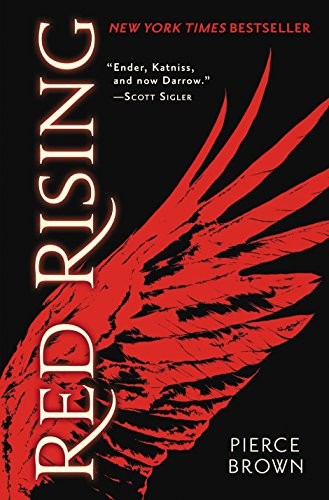
Talk to Red Rising like its author wrote you back.
Get the ideas that fit your life — not generic summaries.
- Chat with the book
- Audiobook-style main ideas
- Adapts to your life and goals
- Helps you take action
Red Rising, in detail
Red Rising is set on Mars in a far-future humanity stratified by color-coded caste: Golds rule, Reds mine the deep rock, and everyone in between occupies a precisely ordered place. Darrow is a Red miner who discovers that everything his people have been told — that their mining work is necessary before the surface of Mars can be colonized — is a lie. The surface has been inhabited by higher-caste people for generations. Reds are slaves who don't know they're slaves. Darrow is recruited by a resistance movement, surgically remade to pass as a Gold, and inserted into the brutal competitive process by which Gold elites sort themselves: a years-long war game in the highlands called the Institute.
The Institute section, which constitutes most of the novel, operates as a brutal crucible. Darrow must not only survive but rise to lead, and the novel is genuinely interested in what leadership requires — not just tactics and strength, but reading people, building loyalty, understanding the psychology of submission and alliance. Brown draws on Ender's Game, The Hunger Games, and classical military history (Caesar, Alexander), but the execution has enough specific texture and intellectual content to stand on its own. The cast system is elaborated with care: each color has its own culture, prejudices, and assigned place, and the novel's critique of caste ideology is embedded in how the characters think rather than delivered as explicit argument.
Brown's prose is kinetic and first-person present tense — immediate, action-forward, occasionally breathless. The novel is designed to be consumed; readers report finishing it in a day or two. The plotting is efficient and the reveals are well-timed. The social satire has genuine teeth: the Golds' ideology is a parody of meritocratic mythology (they believe they rule because they are superior; the evidence for this is circular), and Darrow's infiltration exposes how that ideology sustains itself through performance and social reproduction.
Red Rising works best as propulsive science fiction with something to say about class and legitimacy. It works less well if you're scrutinizing the world-building for internal consistency or expecting the kind of psychological depth you'd find in literary fiction. The sequels, Golden Son and Morning Star, expand the world significantly; most readers who enjoy the first book continue straight through the trilogy.
The big ideas
- 1.
The caste system's genius is that most of its members internalize it — the Colors police themselves and each other, which is how the Gold elite sustains power with minimal direct enforcement.
- 2.
Darrow's transformation is not just physical — he has to perform Goldness so convincingly that he risks becoming what he pretended to be.
- 3.
The Institute war game is a socialization mechanism: it doesn't just select leaders, it teaches them to naturalize hierarchy and command.
