Science · Book club
Salt Sugar Fat book club questions
Here are 12 book club questions for Salt Sugar Fat by Michael Moss, ordered to open easily and end somewhere worth arguing about. Copy them, print them, or bring them up one at a time.
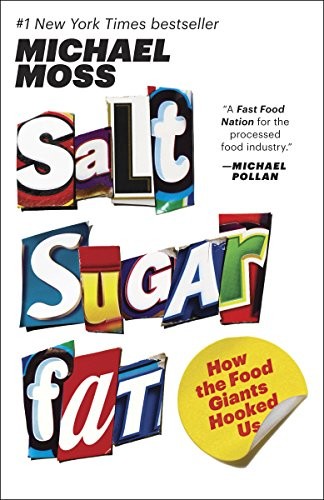
Michael Moss, a Pulitzer Prize-winning investigative journalist, spent four years inside the processed food industry to produce Salt Sugar Fat.
Michael Moss · 2013 · 6h 45m
Full summary and key takeaways →The 12 questions
- 1.
Moss argues that individual willpower is essentially overmatched by the engineering behind processed food. Do you find that argument convincing, or does it too easily excuse personal responsibility?
- 2.
The bliss point concept treats human biology as a system to be exploited for profit. What ethical framework would you apply to companies that operate this way?
- 3.
Do you think people's food preferences are genuinely their own, or substantially manufactured by the food industry? How would you even know?
- 4.
The book documents executives who had doubts but continued anyway. What pressures do you think explain that, and how common is that dynamic in other industries?
- 5.
Should food companies that market addictive products to children face the same kind of regulatory response that tobacco companies eventually did?
- 6.
Moss found that many processed food executives ate differently at home from what their companies sold. What does that tell you?
- 7.
Have you ever caught yourself unable to stop eating a specific processed food? What do you think was happening physiologically?
- 8.
Salt Sugar Fat doesn't tell you what to eat instead. Is that the right journalistic approach, or should investigative books about public health take a position?
- 9.
The book was published in 2013. Has the processed food industry changed its practices in the years since, or do you think the incentive structure is essentially the same?
- 10.
Reformulating products to reduce salt, sugar, or fat almost always reduces sales, at least short-term. Is there a plausible mechanism by which the industry could change without regulatory pressure?
- 11.
Which of the three ingredients — salt, sugar, or fat — do you think has the most outsized role in your own eating, and why?
- 12.
How does reading about the food industry change your relationship to specific products you regularly consume?
How to run the discussion
- Pick six to eight, not all of them. An hour of real discussion covers fewer questions than anyone expects, and racing the list is what makes a book club feel like homework.
- Open with what people noticed, not what they concluded. Asking for a verdict first hardens opinions before anyone has heard each other.
- Let the disagreement run. The questions below that split a room are the ones worth the time; the ones everyone answers the same way can be skipped.
- Ask the quiet person a specific question. A direct, narrow question is far easier to answer than an open invitation to contribute.
Themes worth steering toward
If the conversation stalls, these are the threads that usually restart it.
Common questions
What are good book club questions for Salt Sugar Fat?
Here are 12 book club questions for Salt Sugar Fat by Michael Moss, ordered to open easily and end somewhere worth arguing about. The strongest openers ask what each reader noticed rather than what they concluded, and the discussion usually turns on food industry, addiction, public health.
How long should a book club discussion of Salt Sugar Fat last?
Most groups run 60 to 90 minutes of actual discussion. That is roughly six to eight questions, not all of them, so pick the ones that suit your group rather than working down the list in order.
What are the main themes in Salt Sugar Fat?
Food industry, Addiction, Public health, Corporate strategy, Consumer manipulation. Those are the threads most likely to divide a room, which makes them the useful places to steer a discussion that has gone quiet.
Picking the next one? See books like Salt Sugar Fat or questions for other book club picks.
