Seabiscuit: An American Legend by Laura Hillenbrand is a 2001 history book about perseverance, depression-era america, sport. Seabiscuit was undersized and poorly conformed by racing standards — his owners had previously raced him too frequently and with too little care. Tom Smith recognized potential that conventional horsemen had written off.
Summary
Seabiscuit is the story of the undersized, knobby-kneed racehorse who became the most celebrated American athlete of the late 1930s — drawing larger newspaper audiences than Franklin Roosevelt or Joe DiMaggio at his peak. Laura Hillenbrand tells it through the interlocking stories of three men: Charles Howard, the self-made automobile tycoon who bought Seabiscuit; Tom Smith, the reclusive, intuitive trainer who saw what other horsemen missed; and Red Pollard, the half-blind, oversized jockey who formed an inseparable bond with the horse and nearly died twice before their final race together.
Hillenbrand's research is extraordinary. She wrote the book while severely ill with chronic fatigue syndrome, largely from her apartment, using letters, newspapers, and firsthand interviews. The technical detail is convincing — the book is as precise about the biomechanics of a horse's stride as it is about the sociology of Depression-era racetracks — and the writing achieves a sustained tension across races the reader may already know the outcomes of.
The Depression context is not background decoration. Hillenbrand argues that Seabiscuit's appeal was inseparable from the era's economic despair: here was a horse that had been written off, underestimated, and mistreated, that had come back from apparent defeat to beat the most celebrated horses in the country. The parallels were not subtle, and the American public did not require them to be. Radio broadcasts of Seabiscuit's races drew audiences in the tens of millions.
The match race between Seabiscuit and War Admiral — the Triple Crown winner, universally considered unbeatable — is the book's centerpiece, and Hillenbrand's reconstruction of the two minutes and eleven seconds it took is as good as sports writing gets. The subsequent chapter, in which both Seabiscuit and Pollard suffer near-fatal injuries and then return to win the Santa Anita Handicap, gives the book its emotional resolution. Hillenbrand is careful to distinguish the mythology that grew up around Seabiscuit from what the evidence shows, which makes her account more trustworthy rather than less compelling.
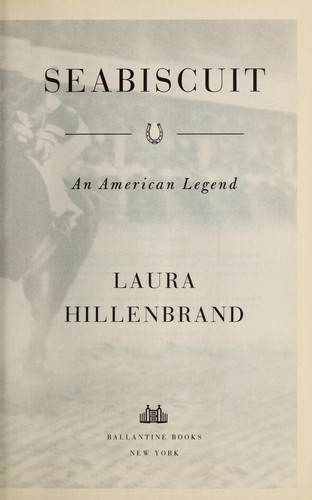
Talk to Seabiscuit: An American Legend like its author wrote you back.
Get the ideas that fit your life — not generic summaries.
- Chat with the book
- Audiobook-style main ideas
- Adapts to your life and goals
- Helps you take action
Key takeaways
- 1.
Seabiscuit was undersized and poorly conformed by racing standards — his owners had previously raced him too frequently and with too little care. Tom Smith recognized potential that conventional horsemen had written off.
- 2.
Red Pollard was too heavy for a jockey and had lost significant vision in one eye from a childhood accident. His insistence on riding Seabiscuit despite these obstacles drove the partnership that defined both their careers.
- 3.
Charles Howard was a car dealer who had essentially created the Ford dealership model in California. His approach to Seabiscuit — marketing him, staging him, managing the public narrative — was borrowed from the automobile business.
- 4.
Depression-era Americans followed Seabiscuit with an intensity that had less to do with horse racing than with the story the horse told about recovery, underestimation, and eventual vindication.
- 5.
The War Admiral match race of 1938 drew an estimated 40 million radio listeners — more than half the American radio audience at the time. It remains one of the most-attended-to sporting events in American broadcast history.
- 6.
Hillenbrand's reconstruction of each major race relies on newspaper accounts, race films, jockeys' oral histories, and timing data. Her method shows how much athletic performance can be documented through patient archival work.
- 7.
Tom Smith's training philosophy was eccentric and largely intuitive — he kept goats and other animals in the stable to calm Seabiscuit, developed unconventional training regimens — but it was built on close, patient observation of the individual horse.
- 8.
Seabiscuit's final race, at age seven after a year of injury recovery, was improbable enough that even his devoted public expected him to fail. The Santa Anita Handicap win closed the narrative arc that Hillenbrand constructs with obvious care.
Discussion questions
Use these on your own, with a book club, or as chat starters in Superbook. Book club version, ready to copy or print →
- 1.
Hillenbrand argues that Seabiscuit's appeal was inseparable from the Depression. What do you think people were really seeing when they watched this horse, and what did they need from the story?
- 2.
Tom Smith is the most enigmatic figure in the book — intuitive, uncommunicative, effective. What kind of expertise does he represent, and how does it differ from conventional knowledge?
- 3.
Red Pollard's half-blindness and excess weight should have ended his riding career. What does his persistence tell us about how people override evidence about their own limitations?
- 4.
Charles Howard approached horse ownership with a car dealer's marketing instincts. Does framing a sport through marketing and narrative make the underlying thing less authentic, or is that always how public spectacle works?
- 5.
Hillenbrand wrote this book from her apartment while seriously ill. Does knowing that change how you read the book, and should it?
- 6.
The book covers multiple near-fatal injuries — to both Seabiscuit and Pollard — and subsequent recoveries. What does Hillenbrand's treatment of those episodes say about how we construct narratives of resilience?
- 7.
The War Admiral match race was framed as a class conflict — the establishment champion versus the people's horse. How accurate is that framing, and who benefits when sport gets read as class allegory?
- 8.
Hillenbrand is careful to distinguish mythology from evidence throughout the book. What myths about Seabiscuit does she explicitly correct, and does the true story lose anything in the process?
- 9.
The match race was set up through a prolonged negotiation between the two horses' camps. What do the logistics of elite sporting events tell us about power, leverage, and the economics of spectacle?
- 10.
How has horse racing changed since the 1930s — in public profile, in ethics, in the role of the individual horse as a media figure? What does that change say about American sports culture?
- 11.
The final race is almost too narratively satisfying — the injured horse, the injured jockey, the improbable win. How do you evaluate a true story that fits a classical narrative arc this precisely?
- 12.
Seabiscuit inspired enormous public devotion during his lifetime and faded from cultural memory afterward. What determines whether a sporting hero stays culturally significant over time?
Themes
Frequently asked questions
-
Is Seabiscuit worth reading?
Yes. It is one of the best sports narratives in American nonfiction — technically precise, historically grounded, and paced like a thriller. Readers who think they are not interested in horse racing typically find that the book's real subject is the Depression and the people in it.
-
How long is Seabiscuit?
Around 400 pages, or roughly seven hours of reading time at average pace. The chapters covering individual races are dense with detail but read quickly due to Hillenbrand's command of narrative tension.
-
What makes Seabiscuit historically significant?
At his peak in 1938, Seabiscuit received more newspaper column inches than Franklin Roosevelt, Joe DiMaggio, or any other American public figure. The match race against War Admiral drew one of the largest radio audiences in American broadcast history to that point.
-
Do I need to know anything about horse racing to enjoy Seabiscuit?
No. Hillenbrand explains the sport from the ground up — betting structures, track conditions, the mechanics of a horse's stride — without condescension. The book works as well for people who have never attended a race as for those who follow the sport.
-
How does Seabiscuit compare to Unbroken?
Both are Hillenbrand books with similar qualities: exhaustive research, strong narrative propulsion, Depression or wartime context. Unbroken covers more brutal material. Seabiscuit is more elegiac and works harder to build the world around the central figure. Most readers who love one find the other equally strong.
Similar books
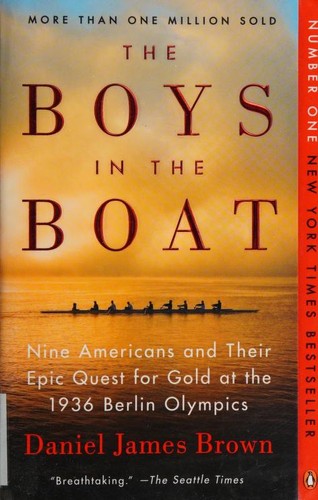
The Boys in the Boat: Nine Americans and Their Epic Quest for Gold at the 1936 Berlin Olympics
Daniel James Brown
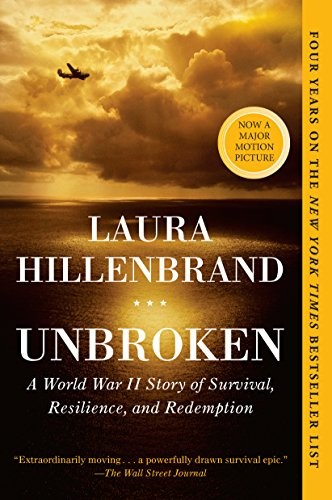
Unbroken: A World War II Story of Survival, Resilience, and Redemption
Laura Hillenbrand
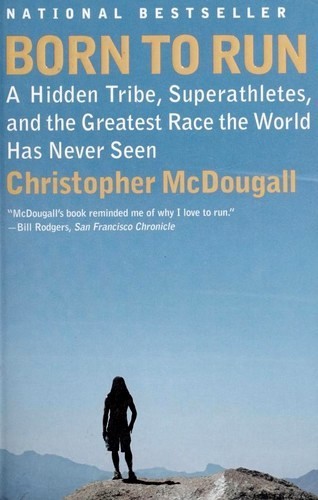
Born to Run
Christopher McDougall
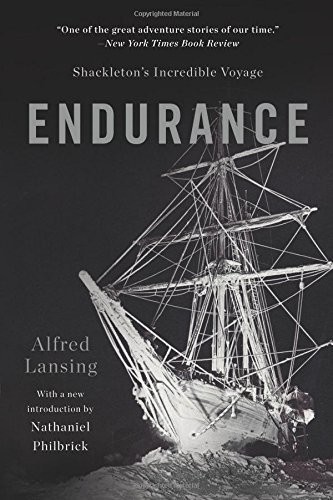
Endurance: Shackleton's Incredible Voyage
Alfred Lansing
