The Boys in the Boat: Nine Americans and Their Epic Quest for Gold at the 1936 Berlin Olympics by Daniel James Brown is a 2013 history book about teamwork, perseverance, depression-era america. Competitive rowing at the elite level requires the subordination of individual timing to collective rhythm. 'Swing' — the condition Pocock described — is both a technical and a psychological state.
Summary
The Boys in the Boat is the story of the University of Washington crew team that won the gold medal at the 1936 Berlin Olympics, defeating Nazi Germany's squad on Hitler's home course. Daniel James Brown focuses primarily on Joe Rantz, a rower who had been effectively abandoned by his family during the Great Depression and who found, in the boat, a form of belonging he had never known. The book moves between Rantz's personal history, the technical world of competitive rowing, and the political theater of the Berlin Games.
Brown's portrait of Depression-era Washington State is one of the book's most affecting elements. These were not boys from wealthy families, as most college rowers of the era were. Many had worked in lumber camps and on farms, living in poverty while maintaining eligibility. Al Ulbrickson, their coach, is drawn as a reserved, demanding figure who saw in the Washington crew a particular quality — something beyond individual talent — that became visible only when all nine men found what the master boatbuilder George Pocock called "swing": the moment when individual effort disappears into collective motion.
The Berlin section introduces the political context with appropriate weight but does not overwhelm the sports narrative. Brown documents the Nazi staging of the Games — the removal of antisemitic signs, the theatrical pageantry — while keeping attention on the water. The American crew's path to the final involved illness, lane disadvantage, and a slow start that made their eventual win seem impossible until the final strokes.
Brown is a skilled storyteller working with genuinely compelling material, and the book has been a major commercial success. It occasionally shades toward sentimentality — particularly in the framing around Joe Rantz and the idea of the boat as family — but the rowing sequences are some of the most technically vivid in popular sports literature. Readers who respond to stories about teamwork, working-class grit, and the particular discipline of a sport that requires the complete subordination of individual ego will find it rewarding.
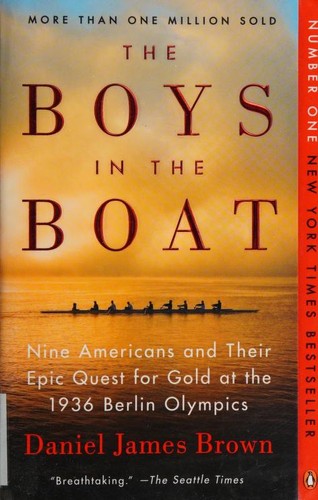
Talk to The Boys in the Boat: Nine Americans and Their Epic Quest for Gold at the 1936 Berlin Olympics like its author wrote you back.
Get the ideas that fit your life — not generic summaries.
- Chat with the book
- Audiobook-style main ideas
- Adapts to your life and goals
- Helps you take action
Key takeaways
- 1.
Competitive rowing at the elite level requires the subordination of individual timing to collective rhythm. 'Swing' — the condition Pocock described — is both a technical and a psychological state.
- 2.
The 1936 Washington crew was composed almost entirely of working-class boys from the Pacific Northwest who had been shaped by Depression poverty, logging work, and physical labor rather than prep school training.
- 3.
George Pocock, the English-born boatbuilder who made the Washington shells, served as a mentor to Joe Rantz and articulated a philosophy of rowing that the book treats as its moral center.
- 4.
The Berlin Olympics were staged by the Nazi government as a propaganda spectacle. The removal of antisemitic signage and the emphasis on international goodwill was deliberate and temporary.
- 5.
The Washington crew's victory came from the back of the pack in the final race, after a slow start, illness, and a disadvantaged lane draw. The win required both physical capacity and the psychological ability to row through apparent defeat.
- 6.
Al Ulbrickson's coaching was disciplined, emotionally reserved, and deeply attentive to crew chemistry. Brown's portrait suggests that the best coaching often involves recognizing which combinations of people work together rather than maximizing individual performance.
- 7.
Joe Rantz's personal history — abandoned by his stepmother, forced to fend for himself as a teenager — shaped his relationship to the boat as a form of belonging, which Brown argues was both his greatest vulnerability and his greatest asset.
- 8.
The Depression-era context gives the book its moral stakes. These were young men for whom failure would have real material consequences, rowing for a university education during years when many of their peers couldn't afford school.
Discussion questions
Use these on your own, with a book club, or as chat starters in Superbook. Book club version, ready to copy or print →
- 1.
George Pocock talks about 'swing' as the moment when individual effort disappears into collective motion. Have you ever experienced something like that in a team, workplace, or relationship?
- 2.
Joe Rantz's childhood abandonment shaped his relationship to the crew. How does personal history shape our relationship to belonging, and what do we look for in groups to fill what we've lacked?
- 3.
The Washington crew was unusual among college rowers for its working-class composition. How much did shared economic background contribute to the particular team chemistry Brown documents?
- 4.
Al Ulbrickson is a reserved, unsentimental coach who rarely praised his rowers directly. What kind of leadership does that represent, and when does reserve become withholding?
- 5.
The Nazi government staged the Berlin Olympics as international propaganda. At what point do individual athletes — or their governments — have a responsibility to refuse to participate in a political spectacle?
- 6.
The final race begins poorly for the Americans, with illness, a bad lane draw, and a slow start. What does the recovery tell us about the relationship between preparation and performance under adverse conditions?
- 7.
Brown clearly loves this material and the people in it. Where do you see his affection shading into sentimentality, and does it affect how much you trust his account?
- 8.
The book is structured around Joe Rantz specifically because Brown met him in old age. How does the structure of survivor testimony — one person's memory as the anchor — shape what kind of history gets written?
- 9.
Rowing requires a complete submission of individual ego to the timing of the crew. What other disciplines require that kind of subordination, and what makes it psychologically difficult for high performers?
- 10.
The Washington boys beat Germany on Germany's home course, in front of Hitler. Brown frames this as meaningful beyond sport. Do sporting outcomes have political significance, and should they?
- 11.
How does The Boys in the Boat compare to other sports narratives you've read? What does it do better or worse than Seabiscuit, Unbroken, or other books in the genre?
- 12.
Joe Rantz told Brown this story at the end of his life. What does it mean that people return, in old age, to the experiences that defined them at twenty?
Themes
Frequently asked questions
-
Is The Boys in the Boat worth reading?
Yes, particularly for readers who enjoy sports narrative with historical depth. The rowing sequences are among the most technically vivid in popular nonfiction, and the Depression-era context gives the book genuine stakes beyond athletic achievement.
-
How long is The Boys in the Boat?
Around 400 pages, or roughly seven hours of reading time at average pace. The pacing is controlled throughout, and the final section — the Berlin Games — reads very quickly.
-
What makes the 1936 Washington crew historically significant?
They were a group of working-class American rowers who defeated Germany's crew at the Berlin Olympics — a propaganda event staged by the Nazi government — in a race widely described as one of the most dramatic upsets in Olympic rowing history.
-
Do I need to know anything about rowing to enjoy the book?
No. Brown is careful to explain technical concepts without condescension. If anything, readers who don't know rowing will find the most to learn. Brown's explanation of what 'swing' is and why it matters is one of the book's most memorable sections.
-
Is there a film version of The Boys in the Boat?
Yes. A feature film directed by George Clooney was released in December 2023. Readers who see the film first may want to note that the book is significantly more detailed on the Depression-era background, the technical world of boatbuilding, and the coaching philosophy.
Similar books
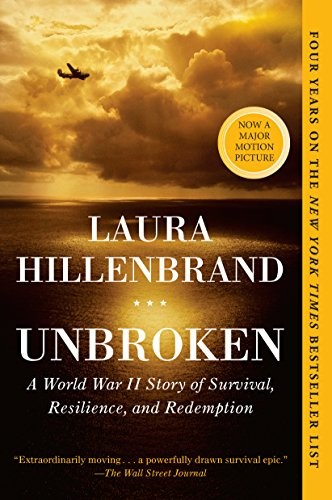
Unbroken: A World War II Story of Survival, Resilience, and Redemption
Laura Hillenbrand

Seabiscuit: An American Legend
Laura Hillenbrand

Endurance: Shackleton's Incredible Voyage
Alfred Lansing
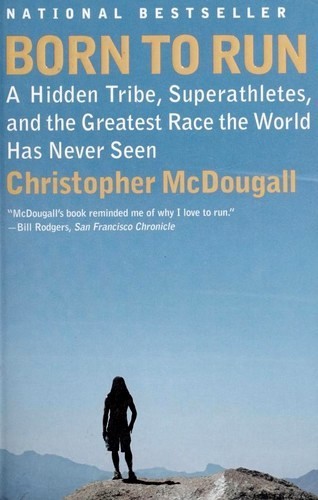
Born to Run
Christopher McDougall
