Philosophy · Book club
Seeking Wisdom: From Darwin to Munger book club questions
Here are 12 book club questions for Seeking Wisdom: From Darwin to Munger by Peter Bevelin, ordered to open easily and end somewhere worth arguing about. Copy them, print them, or bring them up one at a time.
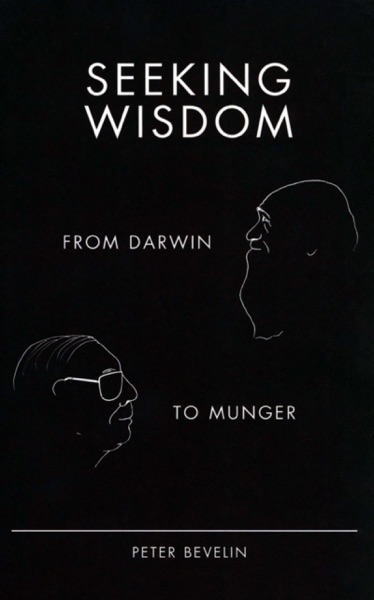
Seeking Wisdom is Peter Bevelin's distillation of ideas from Charles Darwin, Charlie Munger, and a wide range of scientific and philosophical disciplines — assembled into a practical guide for better thinking and decision-making.
Peter Bevelin · 2003 · 5h 30m
Full summary and key takeaways →The 12 questions
- 1.
Munger argues that multiple mental models are necessary for clear thinking. Which mental model from outside your primary field has been most useful to you, and where did you pick it up?
- 2.
Bevelin emphasizes inversion — working backward from failure rather than forward from goals. Which current problem in your life might benefit most from inversion?
- 3.
The book lists social proof as one of the most powerful biases. Can you think of a time you followed a crowd and later realized the crowd was wrong?
- 4.
Incentive-caused bias shapes how professionals advise clients in ways clients often don't notice. Where in your life might you be receiving advice that is subtly distorted by the advisor's incentives?
- 5.
Darwin is held up as a model of rigorous intellectual honesty. What would it mean, concretely, to apply the same discipline to a belief you hold strongly today?
- 6.
The book argues that evolution explains many of our irrational tendencies. Does that explanation change how much you hold yourself or others responsible for cognitive errors?
- 7.
Bevelin quotes Munger extensively on the dangers of ideology. Where in your own thinking do you rely on ideological frameworks as shortcuts rather than examining cases individually?
- 8.
Probabilistic thinking suggests you should update beliefs as new evidence arrives. What is a belief you've held for years that you've never seriously stress-tested?
- 9.
The concept of a latticework of models implies that specialists without breadth are at a systematic disadvantage. Do you think this applies in your field?
- 10.
The book treats simplicity as a goal. What is something you currently think about in a complicated way that might actually be simple once the right framework is applied?
- 11.
How do you personally guard against the confirmation bias — the tendency to notice evidence that supports your views and discount evidence that doesn't?
- 12.
Munger and Bevelin both emphasize learning from the mistakes of others rather than your own. What's the most useful thing you've learned from someone else's mistake?
How to run the discussion
- Pick six to eight, not all of them. An hour of real discussion covers fewer questions than anyone expects, and racing the list is what makes a book club feel like homework.
- Open with what people noticed, not what they concluded. Asking for a verdict first hardens opinions before anyone has heard each other.
- Let the disagreement run. The questions below that split a room are the ones worth the time; the ones everyone answers the same way can be skipped.
- Ask the quiet person a specific question. A direct, narrow question is far easier to answer than an open invitation to contribute.
Themes worth steering toward
If the conversation stalls, these are the threads that usually restart it.
Common questions
What are good book club questions for Seeking Wisdom: From Darwin to Munger?
Here are 12 book club questions for Seeking Wisdom: From Darwin to Munger by Peter Bevelin, ordered to open easily and end somewhere worth arguing about. The strongest openers ask what each reader noticed rather than what they concluded, and the discussion usually turns on mental models, decision-making, rationality.
How long should a book club discussion of Seeking Wisdom: From Darwin to Munger last?
Most groups run 60 to 90 minutes of actual discussion. That is roughly six to eight questions, not all of them, so pick the ones that suit your group rather than working down the list in order.
What are the main themes in Seeking Wisdom: From Darwin to Munger?
Mental models, Decision-making, Rationality, Cognitive biases, Investing. Those are the threads most likely to divide a room, which makes them the useful places to steer a discussion that has gone quiet.
Picking the next one? See books like Seeking Wisdom: From Darwin to Munger or questions for other book club picks.
