Talk to Setting the Table like its author wrote you back.
Get the ideas that fit your life — not generic summaries.
- Chat with the book
- Audiobook-style main ideas
- Adapts to your life and goals
- Helps you take action
Setting the Table, in detail
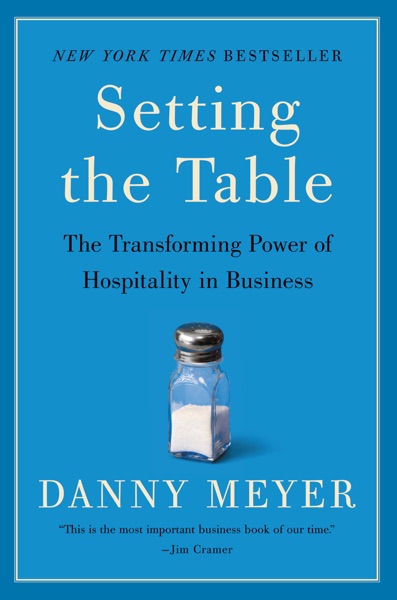
Setting the Table is Danny Meyer's account of building Union Square Hospitality Group, the company behind Union Square Cafe, Gramercy Tavern, Shake Shack, and more than a dozen other New York restaurants. Meyer opened Union Square Cafe in 1985 at age 27 with no formal culinary training, and the book follows his evolution from a first-time restaurateur into one of the most successful operators in the American restaurant industry.
The organizing idea is what Meyer calls "enlightened hospitality," a term he deliberately distinguishes from mere service. Service, in his framing, is the technical act of delivering what a guest ordered correctly and on time. Hospitality is making the guest feel genuinely seen, welcomed, and cared for. The difference is the difference between a transaction and a relationship. Meyer argues that businesses that master the emotional component of hospitality — not just the mechanical one — build durable loyalty that transcends price and competition.
Meyer is notably specific about the internal culture that makes hospitality possible. He ranks his stakeholders in a deliberate order: employees first, guests second, community third, suppliers fourth, investors fifth. This isn't anti-investor; it's an argument that if you take exceptional care of the people doing the work, they will take exceptional care of guests, and financial results follow. Meyer spends considerable time on hiring — what he calls looking for "51 percenters," people whose natural warmth and emotional intelligence outweigh their technical skills, because technical skills can be taught and emotional intelligence largely cannot.
The book is candid about failures alongside successes. Meyer describes restaurants that didn't work, partnerships that fell apart, and the humbling learning curve of a first-time restaurateur. He's also honest about the tension between growth and culture — as Union Square Hospitality Group expanded, maintaining the warmth of a small operation became harder, and he describes the deliberate structures he built to try to preserve it. Setting the Table is most useful for anyone running a team or business where customer experience is the core product, but the hospitality framework applies beyond restaurants.
The big ideas
- 1.
Hospitality is making guests feel genuinely welcomed and seen. Service is technical execution. Meyer argues that hospitality — the emotional component — is the harder and more valuable thing to get right.
- 2.
Meyer's stakeholder priority order: employees first, guests second, community third, suppliers fourth, investors fifth. Happy employees produce the hospitality that produces financial results.
- 3.
Hire for emotional intelligence over technical skill. Meyer looks for '51 percenters' — people whose natural warmth slightly outweighs their competence, because warmth is harder to teach.
