Seven and a Half Lessons About the Brain by Lisa Feldman Barrett is a 2020 psychology book about neuroscience, brain science, evolution. The brain did not evolve primarily to think or feel. It evolved to manage the body's biological resources — to regulate the metabolic budget of the body in a changing environment.
Summary
Lisa Feldman Barrett wrote this short book — genuinely short at under thirty thousand words — as an accessible introduction to seven core findings of modern neuroscience, each presented as a lesson that overturns something most people believe. Published in 2020, it distills the perspective that animates her larger work while requiring far less commitment from the reader.
The first and longest lesson concerns the brain's evolutionary origins: it did not evolve to think, reason, or feel, but primarily to manage the body's resources in a changing world. The brain is fundamentally a body-budgeting organ, and virtually everything else it does — including thought, emotion, and social cognition — is built on that base. This reframes cognition as something the brain does to manage biological efficiency rather than an autonomous rational process operating above the body's needs.
Other lessons challenge specific popular myths: the triune brain model is wrong, there is no single emotion circuit in the brain, the left and right hemispheres do not divide neatly into emotional and rational functions, and the human brain is not simply an upgraded version of a primate brain. Each lesson is documented with precision but written with accessibility — the prose is engaging without being condescending.
The book makes the case for a more coherent view of the brain as a prediction machine that continuously models the causes of its interoceptive signals and runs the body's metabolic budget. This perspective, which Barrett developed at length in How Emotions Are Made, is presented here in its simplest form. The book is best suited as a first encounter with Barrett's work or as a corrective for readers who have absorbed popularized neuroscience myths — the triune brain, the right-brain/left-brain split, the amygdala as the fear center — and want a clear account of what the science actually says.

Talk to Seven and a Half Lessons About the Brain like its author wrote you back.
Get the ideas that fit your life — not generic summaries.
- Chat with the book
- Audiobook-style main ideas
- Adapts to your life and goals
- Helps you take action
Key takeaways
- 1.
The brain did not evolve primarily to think or feel. It evolved to manage the body's biological resources — to regulate the metabolic budget of the body in a changing environment.
- 2.
The triune brain model is a myth. There is no evolutionary layering of reptilian, limbic, and cortical brain regions; the brain is a highly interconnected system, not a stack of modules.
- 3.
The brain is a prediction machine, not a reactive system. It constantly generates models of the causes of its sensory and interoceptive inputs, and perception is as much prediction as detection.
- 4.
The left brain/right brain split is largely false. There are some lateralized functions, but the idea that one hemisphere is logical and the other emotional is not supported by neuroscience.
- 5.
Neurons in the brain are highly multifunctional. The same neurons participate in very different tasks depending on context. There are no dedicated emotion circuits, memory circuits, or reason circuits.
- 6.
Your brain is running your body's budget constantly. Fatigue, hunger, social disconnection, and physical illness all affect what feels like your emotional state — because they are affecting your body budget.
- 7.
The human brain is not simply a primate brain with a bigger prefrontal cortex. The ratio of brain size to body size, the wiring, and the developmental trajectory all differ in ways that make simple evolutionary comparisons misleading.
Discussion questions
Use these on your own, with a book club, or as chat starters in Superbook. Book club version, ready to copy or print →
- 1.
Barrett argues the brain evolved primarily as a body-budgeting organ. Does that reframing change how you think about cognitive performance — as something that depends on physical state?
- 2.
The triune brain myth is widespread in popular culture and education. Where did you first encounter it, and how embedded is it in how you talk about emotion and reason?
- 3.
The prediction machine model means perception is at least partly generated rather than received. Can you think of an example from your own experience where your prediction shaped what you perceived?
- 4.
The body budget concept links physical state to emotional experience. How closely does your emotional state track your physical state — sleep, hunger, exercise, illness?
- 5.
Barrett argues there are no dedicated emotion circuits in the brain. What are the implications for how we think about treating specific emotions — grief, anxiety, anger — as if they are located somewhere specific?
- 6.
The left-brain/right-brain split is one of the most persistent neuromyths in education. What would change in how we teach and organize learning if that myth were comprehensively corrected?
- 7.
This book is very short — seven lessons. Does the format leave you wanting more depth, or is the distillation itself the value?
- 8.
She describes the brain's wiring as highly connective and multifunctional. How does that challenge attempts to localize specific personality traits, abilities, or disorders to specific brain regions?
- 9.
Barrett ends with implications for how we treat each other: if the brain is a body-budget organ, then chronic stress from social environments directly affects brain function. What does that imply about inequality and health?
- 10.
Which of the seven lessons was the most surprising to you, and which confirmed something you already suspected?
- 11.
How does this short book change how you would read popular neuroscience claims — the kinds you encounter in headlines and productivity advice?
Themes
Frequently asked questions
-
How long is this book?
Around 150 pages, less than thirty thousand words. It reads in roughly two hours. It is a genuine short book, not a long book with padding removed.
-
Does this book require reading How Emotions Are Made first?
No. Seven and a Half Lessons is the accessible entry point; How Emotions Are Made is the full scientific treatment. Either works as a starting point. Readers who want more depth after the short book should continue to How Emotions Are Made.
-
What is the body budget?
Barrett's term for the brain's ongoing regulation of the body's metabolic resources: glucose, oxygen, water, salt. She argues the brain's primary job is managing this budget, and that virtually everything else — including emotion, thought, and social behavior — serves this regulatory function.
-
What is the half lesson?
A brief observation that the brain is a social organ — it co-regulates with the brains around it. Our nervous systems are not isolated; they are continuously affected by and affect the people we are near. It is presented as a half-lesson because it is brief and speculative.
-
Is this appropriate for classroom use?
Yes. The short format, clear writing, and direct correction of widely taught myths make it well-suited for high school biology or psychology, introductory college neuroscience, or any context where students have absorbed popular neuroscience that needs correcting.
Similar books
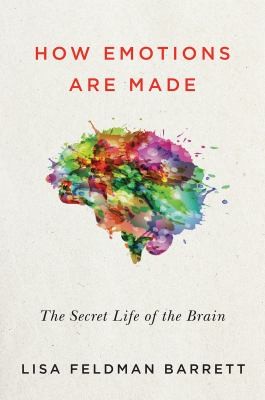
How Emotions Are Made: The Secret Life of the Brain
Lisa Feldman Barrett
Incognito: The Secret Lives of the Brain
David Eagleman
Behave: The Biology of Humans at Our Best and Worst
Robert M. Sapolsky
Phantoms in the Brain: Probing the Mysteries of the Human Mind
V. S. Ramachandran and Sandra Blakeslee
