Thriller · Book club
Sharp Objects book club questions
Here are 11 book club questions for Sharp Objects by Gillian Flynn, ordered to open easily and end somewhere worth arguing about. Copy them, print them, or bring them up one at a time.
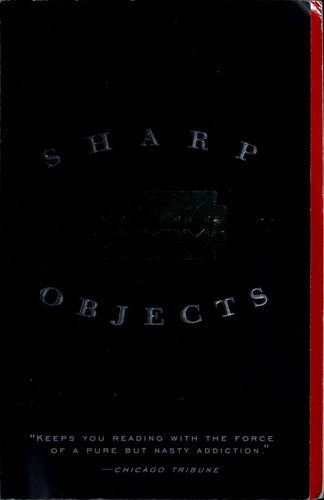
Reporter Camille Preaker is sent back to Wind Gap, Missouri — the small town she escaped a decade earlier — to cover the murders of two young girls.
Gillian Flynn · 2006 · 6h 15m
Full summary and key takeaways →The 11 questions
- 1.
Adora's harm of her children is framed in the novel as a form of love — the only kind she knows how to give. Does that framing make her more or less monstrous?
- 2.
Camille's scars are words — she didn't scratch randomly but wrote. What do you make of that detail? What was she doing that other forms of expression couldn't do?
- 3.
Wind Gap's women — the society matrons, the girl gangs — enforce a specific version of femininity. What are its characteristics, and who pays the highest price for failing to perform it?
- 4.
Camille is a reporter who keeps secrets, notices everything, and drinks herself into numbness. Is she a reliable narrator in the way that, say, Gone Girl's narrators aren't — or is she unreliable in a quieter way?
- 5.
Amma's reveal at the novel's end changes how you read her retroactively. Which earlier scene, on reflection, looks most different?
- 6.
The novel is Flynn's debut and rougher than her later work. Does that roughness hurt it, or does it give Sharp Objects an intensity her more polished books lack?
- 7.
Flynn places Wind Gap in Missouri but the book feels Southern Gothic — Faulkner, O'Connor country. What does that register add to the story?
- 8.
Camille's mother Adora performs perfect, visible suffering while causing invisible harm. What does Flynn seem to be saying about performance and care?
- 9.
The HBO series with Amy Adams is widely praised. For those who've seen both — what does the book give you that the show doesn't?
- 10.
Flynn's three novels all center damaged women who are difficult to sympathize with. Is that a feminist project, a commercial calculation, or both?
- 11.
What does Sharp Objects say about what daughters inherit from mothers, and whether inheritance can be refused?
How to run the discussion
- Pick six to eight, not all of them. An hour of real discussion covers fewer questions than anyone expects, and racing the list is what makes a book club feel like homework.
- Open with what people noticed, not what they concluded. Asking for a verdict first hardens opinions before anyone has heard each other.
- Let the disagreement run. The questions below that split a room are the ones worth the time; the ones everyone answers the same way can be skipped.
- Ask the quiet person a specific question. A direct, narrow question is far easier to answer than an open invitation to contribute.
Themes worth steering toward
If the conversation stalls, these are the threads that usually restart it.
Common questions
What are good book club questions for Sharp Objects?
Here are 11 book club questions for Sharp Objects by Gillian Flynn, ordered to open easily and end somewhere worth arguing about. The strongest openers ask what each reader noticed rather than what they concluded, and the discussion usually turns on maternal violence, self-harm and the body, small-town suffocation.
How long should a book club discussion of Sharp Objects last?
Most groups run 60 to 90 minutes of actual discussion. That is roughly six to eight questions, not all of them, so pick the ones that suit your group rather than working down the list in order.
What are the main themes in Sharp Objects?
Maternal violence, Self-harm and the body, Small-town suffocation, Female competition and cruelty, Trauma transmitted across generations. Those are the threads most likely to divide a room, which makes them the useful places to steer a discussion that has gone quiet.
Picking the next one? See books like Sharp Objects or questions for other book club picks.
