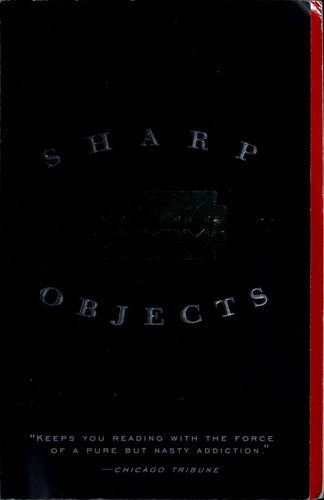
Sharp Objects by Gillian Flynn is a 2006 thriller book about maternal violence, self-harm and the body, small-town suffocation. Munchausen by proxy — Adora's form of harm — is explored here not as a twist but as a texture, present throughout the novel in Adora's language and behavior before it's named.
Summary
Reporter Camille Preaker is sent back to Wind Gap, Missouri — the small town she escaped a decade earlier — to cover the murders of two young girls. She moves back into her mother Adora's gothic Victorian house, into the suffocating orbit of a woman who has always controlled Camille through illness and appearance. Camille has her own history: words carved into her skin, every inch of her body a lexicon of self-harm. She drinks too much, trusts no one, and begins to piece together what Wind Gap is hiding while navigating the pull of a town and a family she has very good reasons to have left.
Sharp Objects is Flynn's debut and the most Southern Gothic of her three novels — Wind Gap has the heat, the decay, and the female cruelty of that tradition without its nostalgia. Flynn is interested in how small towns use gossip and hierarchy to enforce conformity, and in the specific ways mothers can harm daughters while performing love. The novel builds toward a revelation about Adora that arrives as confirmation of what the reader has suspected rather than as surprise, and then adds a final twist that is genuinely shocking and reframes the entire book.
What makes Sharp Objects distinctive even among Flynn's work is the body writing — the physical fact of Camille's scars, the words she cut into herself as a teenager, and how that history sits under every scene. Flynn doesn't use it as shock value; it's the externalization of what Camille couldn't say, and the novel keeps returning to what it means to write on your own skin rather than in words.
Flynn's debut is rougher than her later books — the pace drags in places and Wind Gap's secondary characters are sketched thinner than her later ensembles. But the core of Camille and Adora is as precisely observed as anything Flynn has written. Readers interested in female Gothic, maternal ambivalence, or the specific violence of the domestic sphere will find this one of the decade's most unnerving psychological portraits. The HBO adaptation with Amy Adams captures the mood but the novel's interiority — Camille's voice — is the richer version.
Talk to Sharp Objects like its author wrote you back.
Get the ideas that fit your life — not generic summaries.
- Chat with the book
- Audiobook-style main ideas
- Adapts to your life and goals
- Helps you take action
Key takeaways
- 1.
Munchausen by proxy — Adora's form of harm — is explored here not as a twist but as a texture, present throughout the novel in Adora's language and behavior before it's named.
- 2.
Camille's self-harm is treated as a private language, a way of marking experience when other forms of expression failed. Flynn doesn't moralize it or resolve it neatly.
- 3.
Wind Gap functions as a collective antagonist: the town's social order, its gossip, its enforcement of femininity is as dangerous as any individual character.
- 4.
Female cruelty is Flynn's consistent subject, but Sharp Objects is where it's most visceral — Amma's gang of middle-school girls is genuinely menacing.
- 5.
The novel follows the logic of Gothic literature: the house, the mother, the return of the repressed. Flynn is doing something classical under the crime-fiction surface.
- 6.
Camille is a journalist who can observe everything except herself clearly. Her professional habit of watching collides with what she's been trained not to see in her own family.
- 7.
The final twist reconfigures who Amma is — retroactively changing nearly every scene she appears in. It's a proper late reveal rather than a midpoint structural pivot.
- 8.
Flynn's portrait of Adora is the novel's central achievement: a woman who genuinely loves her children and causes them grave harm without contradiction.
Discussion questions
Use these on your own, with a book club, or as chat starters in Superbook. Book club version, ready to copy or print →
- 1.
Adora's harm of her children is framed in the novel as a form of love — the only kind she knows how to give. Does that framing make her more or less monstrous?
- 2.
Camille's scars are words — she didn't scratch randomly but wrote. What do you make of that detail? What was she doing that other forms of expression couldn't do?
- 3.
Wind Gap's women — the society matrons, the girl gangs — enforce a specific version of femininity. What are its characteristics, and who pays the highest price for failing to perform it?
- 4.
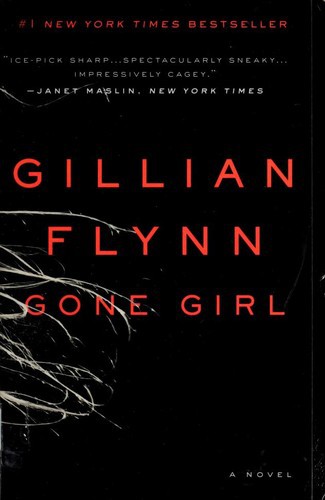
Camille is a reporter who keeps secrets, notices everything, and drinks herself into numbness. Is she a reliable narrator in the way that, say, Gone Girl's narrators aren't — or is she unreliable in a quieter way?
- 5.
Amma's reveal at the novel's end changes how you read her retroactively. Which earlier scene, on reflection, looks most different?
- 6.
The novel is Flynn's debut and rougher than her later work. Does that roughness hurt it, or does it give Sharp Objects an intensity her more polished books lack?
- 7.
Flynn places Wind Gap in Missouri but the book feels Southern Gothic — Faulkner, O'Connor country. What does that register add to the story?
- 8.
Camille's mother Adora performs perfect, visible suffering while causing invisible harm. What does Flynn seem to be saying about performance and care?
- 9.
The HBO series with Amy Adams is widely praised. For those who've seen both — what does the book give you that the show doesn't?
- 10.
Flynn's three novels all center damaged women who are difficult to sympathize with. Is that a feminist project, a commercial calculation, or both?
- 11.
What does Sharp Objects say about what daughters inherit from mothers, and whether inheritance can be refused?
Themes
Frequently asked questions
-
Is Sharp Objects worth reading if I've watched the HBO series?
Yes. The series is faithful and visually striking, but Camille's interiority — her voice, the body-writing passages — is the novel's strongest element. The book gives you access to her thinking that the camera can only approximate.
-
Is Sharp Objects Flynn's best book?
Most readers consider Gone Girl the more accomplished novel structurally. But Sharp Objects has its defenders — it's rawer, more Gothic in feel, and its central portrait of Adora is arguably Flynn's most complex character work.
-
What is Sharp Objects about without spoilers?
A reporter with a history of self-harm returns to her hometown to cover a series of girl murders, and finds herself pulled back into her mother's house and her own past. The investigation and the family story collapse into each other.
-
How disturbing is Sharp Objects?
Quite. The self-harm content is detailed and present throughout, not a single incident. The maternal harm toward children is protracted and specific. Flynn doesn't look away. Readers sensitive to these subjects should know what they're walking into.
-
Who shouldn't read Sharp Objects?
Readers sensitive to detailed depictions of self-harm, child abuse, or maternal violence. Also readers who want a brisk, plot-driven thriller — Sharp Objects' horror is slow and atmospheric, not kinetic. The pace is deliberate to the point of languid in places.