Shoe Dog: A Memoir by the Creator of Nike by Phil Knight is a 2016 memoir book about entrepreneurship, perseverance, risk-taking. Knight borrowed $50 from his father and started by selling Japanese running shoes from the trunk of his car at track meets. The business almost collapsed multiple times before it became a real company.
Summary
Shoe Dog is Phil Knight's account of the first two decades of Nike, from the $50 loan he borrowed from his father in 1964 to fund his first shipment of Japanese running shoes to the company's IPO in 1980. Knight tells the story in roughly chronological order, and the voice is looser and more personal than most business memoirs — less a guide to entrepreneurship than a confession of how improvised and frightening the whole thing was at the time.
The early years are dominated by money problems. Knight is perpetually one missed payment away from losing the company entirely. His Japanese supplier, Onitsuka Tiger, could have cut him off at any moment. His American bank, First National of Oregon, eventually forces a crisis that nearly ends the whole enterprise. Through it all Knight and his small team — the original "Buttfaces," as he calls them — hold the business together through loyalty, obsession, and a shared belief that what they are doing matters. The portrait of that founding group, especially co-founder Bill Bowerman tinkering with waffle irons to make better shoe soles, is one of the book's lasting images.
Knight is candid about his own limitations as a manager and husband. He misses his sons' childhoods. He avoids confrontation until it becomes unavoidable. He is more comfortable with ideas and vision than with the daily work of running a company. These admissions give the book weight that most founder memoirs lack. Knight does not write like someone who has figured everything out in retrospect; he writes like someone still trying to understand what happened to him.
The book works best as a portrait of a particular kind of obsession. Knight argues, early on, that a calling is not a career — it is something you cannot imagine not doing, and that if you find yours you should protect it at almost any cost. Whether that argument holds up against the personal sacrifices the book documents is a question Knight leaves open. Shoe Dog will not teach you how to build a company. It will make you feel the weight of what building one actually costs.
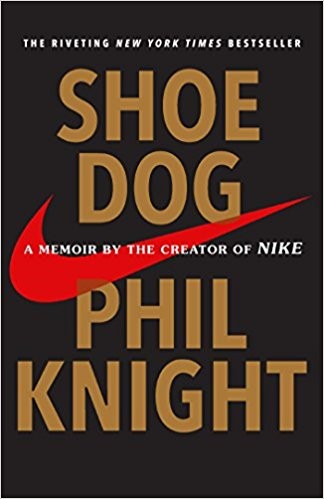
Talk to Shoe Dog: A Memoir by the Creator of Nike like its author wrote you back.
Get the ideas that fit your life — not generic summaries.
- Chat with the book
- Audiobook-style main ideas
- Adapts to your life and goals
- Helps you take action
Key takeaways
- 1.
Knight borrowed $50 from his father and started by selling Japanese running shoes from the trunk of his car at track meets. The business almost collapsed multiple times before it became a real company.
- 2.
The founding team's loyalty and shared obsession carried Nike through years when rational analysis would have suggested quitting. Culture at a startup is often just the character of the people who stay.
- 3.
Knight repeatedly chose to grow faster than his cash flow could support. The bet paid off, but it was a bet — not a strategy — and it nearly destroyed the company at least twice.
- 4.
Bill Bowerman's relentless tinkering with shoe design, including the famous waffle sole, shows that product obsession at the founder level can be a genuine competitive advantage.
- 5.
Knight's relationship with his Japanese suppliers, especially Onitsuka Tiger, reveals how dependent early Nike was on external goodwill and how fragile that dependence made the company.
- 6.
Finding a calling, in Knight's framing, means choosing work you cannot imagine abandoning, even when the rewards are uncertain and the costs are concrete. He applied this standard to hiring as well as to his own career.
- 7.
Going public was not a triumphant exit for Knight — it was a reluctant necessity to escape the perpetual cash crisis. Many of the things founders treat as milestones were for Knight mainly solutions to immediate problems.
- 8.
Knight's admitted failures as a present father and husband are treated honestly rather than explained away. The book is unusual in letting the reader decide whether the trade-offs were worth it.
Discussion questions
Use these on your own, with a book club, or as chat starters in Superbook. Book club version, ready to copy or print →
- 1.
Knight describes his feeling toward running and shoes as a calling rather than a career. What is the difference, and have you experienced anything you would describe the same way?
- 2.
The founding team called themselves the Buttfaces and valued honesty and argument over harmony. What does your own experience tell you about the trade-offs between candor and cohesion in a small group?
- 3.
Knight borrowed heavily and grew faster than his cash flow could support for more than a decade. At what point does that kind of risk-taking become recklessness rather than vision?
- 4.
Bowerman and Knight had a teacher-student relationship that became a partnership. How much of your own professional identity traces back to a specific person who challenged or shaped you?
- 5.
Knight is candid that he was often absent as a father. How do you weigh professional obsession against the relationships it displaces, and does your answer change depending on what the work produces?
- 6.
The bank that nearly destroyed Nike saw only the financial risk. Knight saw the brand he was building. How do you make decisions when the people with power over your situation cannot see what you see?
- 7.
Knight writes that he was not a natural manager — he preferred vision to execution. How do the best teams you have been part of compensate for the blind spots of their leaders?
- 8.
Several of the original Nike employees gave the company their best years for relatively modest financial return. What do you think kept them there, and what does that suggest about what people actually want from work?
- 9.
Nike eventually replaced Onitsuka Tiger with its own manufacturing relationships and brand. When is dependence on a partner a temporary necessity, and when does it become a structural weakness worth addressing?
- 10.
Knight's account makes it clear that luck — timing, relationships, a few decisions that could have gone either way — shaped the outcome as much as any strategy. How do you factor luck into how you evaluate your own success or failure?
- 11.
The book ends at the IPO, before Nike became a global giant. Knight barely mentions the controversies around labor practices that came later. Does that omission change how you read the earlier story?
- 12.
Knight chose to write a memoir rather than a how-to book. What does that choice tell you about what he thought the experience was actually worth passing on?
Themes
Frequently asked questions
-
Is Shoe Dog worth reading?
Yes, and unusually so for a business memoir. Knight writes honestly about failure, debt, fear, and personal cost in a way that most founder stories avoid. The book is less useful as a business guide and more useful as a portrait of what obsessive commitment to a company actually looks and feels like from the inside.
-
How long does it take to read Shoe Dog?
Around six hours at an average reading pace for the 400-page book. The narrative style moves quickly — it reads more like a novel than a business book — so many readers finish it in two or three sittings.
-
What is Shoe Dog about?
It is Phil Knight's memoir of building Nike from 1964 to the company's IPO in 1980. Knight covers his early years selling Japanese running shoes out of his car, the formation of his founding team, the constant cash crises, and the relationships and risks that shaped the company's first two decades.
-
Who should read Shoe Dog?
Anyone interested in entrepreneurship, sports business, or what it actually costs to build something from nothing. It appeals to founders who have experienced similar financial stress, to runners and sports history fans, and to readers who want a business memoir that is honest about failure and personal trade-offs.
-
What is the most memorable idea in Shoe Dog?
Knight's distinction between a calling and a career — the idea that the work you cannot imagine abandoning is different in kind from a job you chose for sensible reasons. He applies it to himself and to the people he hired, and it explains much of how he made decisions under conditions that would have seemed irrational from the outside.
Similar books
Zero to One: Notes on Startups, or How to Build the Future
Peter Thiel
The Hard Thing About Hard Things
Ben Horowitz
Outliers: The Story of Success
Malcolm Gladwell
Start with Why
Simon Sinek
