Memoir · Book club
Shoe Dog: A Memoir by the Creator of Nike book club questions
Here are 12 book club questions for Shoe Dog: A Memoir by the Creator of Nike by Phil Knight, ordered to open easily and end somewhere worth arguing about. Copy them, print them, or bring them up one at a time.
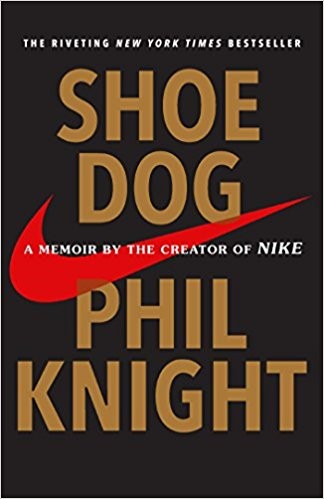
Shoe Dog is Phil Knight's account of the first two decades of Nike, from the $50 loan he borrowed from his father in 1964 to fund his first shipment of Japanese running shoes to the company's IPO in 1980.
Phil Knight · 2016 · 6h 0m
Full summary and key takeaways →The 12 questions
- 1.
Knight describes his feeling toward running and shoes as a calling rather than a career. What is the difference, and have you experienced anything you would describe the same way?
- 2.
The founding team called themselves the Buttfaces and valued honesty and argument over harmony. What does your own experience tell you about the trade-offs between candor and cohesion in a small group?
- 3.
Knight borrowed heavily and grew faster than his cash flow could support for more than a decade. At what point does that kind of risk-taking become recklessness rather than vision?
- 4.
Bowerman and Knight had a teacher-student relationship that became a partnership. How much of your own professional identity traces back to a specific person who challenged or shaped you?
- 5.
Knight is candid that he was often absent as a father. How do you weigh professional obsession against the relationships it displaces, and does your answer change depending on what the work produces?
- 6.
The bank that nearly destroyed Nike saw only the financial risk. Knight saw the brand he was building. How do you make decisions when the people with power over your situation cannot see what you see?
- 7.
Knight writes that he was not a natural manager — he preferred vision to execution. How do the best teams you have been part of compensate for the blind spots of their leaders?
- 8.
Several of the original Nike employees gave the company their best years for relatively modest financial return. What do you think kept them there, and what does that suggest about what people actually want from work?
- 9.
Nike eventually replaced Onitsuka Tiger with its own manufacturing relationships and brand. When is dependence on a partner a temporary necessity, and when does it become a structural weakness worth addressing?
- 10.
Knight's account makes it clear that luck — timing, relationships, a few decisions that could have gone either way — shaped the outcome as much as any strategy. How do you factor luck into how you evaluate your own success or failure?
- 11.
The book ends at the IPO, before Nike became a global giant. Knight barely mentions the controversies around labor practices that came later. Does that omission change how you read the earlier story?
- 12.
Knight chose to write a memoir rather than a how-to book. What does that choice tell you about what he thought the experience was actually worth passing on?
How to run the discussion
- Pick six to eight, not all of them. An hour of real discussion covers fewer questions than anyone expects, and racing the list is what makes a book club feel like homework.
- Open with what people noticed, not what they concluded. Asking for a verdict first hardens opinions before anyone has heard each other.
- Let the disagreement run. The questions below that split a room are the ones worth the time; the ones everyone answers the same way can be skipped.
- Ask the quiet person a specific question. A direct, narrow question is far easier to answer than an open invitation to contribute.
Themes worth steering toward
If the conversation stalls, these are the threads that usually restart it.
Common questions
What are good book club questions for Shoe Dog: A Memoir by the Creator of Nike?
Here are 12 book club questions for Shoe Dog: A Memoir by the Creator of Nike by Phil Knight, ordered to open easily and end somewhere worth arguing about. The strongest openers ask what each reader noticed rather than what they concluded, and the discussion usually turns on entrepreneurship, perseverance, risk-taking.
How long should a book club discussion of Shoe Dog: A Memoir by the Creator of Nike last?
Most groups run 60 to 90 minutes of actual discussion. That is roughly six to eight questions, not all of them, so pick the ones that suit your group rather than working down the list in order.
What are the main themes in Shoe Dog: A Memoir by the Creator of Nike?
Entrepreneurship, Perseverance, Risk-taking, Identity, Competition. Those are the threads most likely to divide a room, which makes them the useful places to steer a discussion that has gone quiet.
Picking the next one? See books like Shoe Dog: A Memoir by the Creator of Nike or questions for other book club picks.
