Thriller · Book club
Shutter Island book club questions
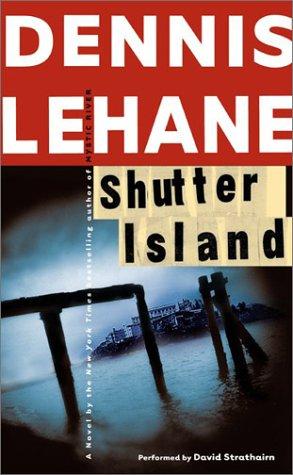
Here are 12 book club questions for Shutter Island by Dennis Lehane, ordered to open easily and end somewhere worth arguing about. Copy them, print them, or bring them up one at a time.
The 12 questions
- 1.
The novel gives Teddy's version of events enough internal logic to be temporarily convincing. At what point did you stop believing him?
- 2.
Once you know the revelation, is re-reading a better or worse experience? What did you miss on the first pass?
- 3.
The doctors have a theory about treatment that requires Teddy's participation. Is their approach ethical, and does the novel think it is?
- 4.
Teddy's war trauma is woven through the novel as flashback. How does Lehane use Dachau to frame what Teddy is capable of and what he cannot accept about himself?
- 5.
The 1954 setting means lobotomy and experimental drugs are legitimate institutional options. How does that historical context change the moral weight of the ending?
- 6.
Chuck Aule is Teddy's partner and the person who knows him best. How do you read Chuck's behavior once you know the full picture?
- 7.
The island's Gothic atmosphere — storms, locked wards, underground caves — is very deliberately literary. Is Lehane engaging with the Gothic tradition seriously, or using it as genre decoration?
- 8.
The final lines of the novel are among the most debated in recent American thrillers. What do you think Teddy chooses, and why?
- 9.
Compared to Gone, Baby, Gone, which ends on a moral ambiguity about doing the right thing — how does Shutter Island's ending differ in what it asks of the reader?
- 10.
Scorsese's film uses visual unreliability (the ferry scene, the lighthouse) in ways the novel uses prose unreliability. Which version of the deception do you find more effective?
- 11.
The novel was widely criticized on first publication as a genre exercise rather than serious fiction. Having read it, do you think that dismissal was fair?
- 12.
If Teddy is fully aware of what he is choosing at the end — what does that choice say about the value he places on a bearable story versus an unbearable truth?
How to run the discussion
- Pick six to eight, not all of them. An hour of real discussion covers fewer questions than anyone expects, and racing the list is what makes a book club feel like homework.
- Open with what people noticed, not what they concluded. Asking for a verdict first hardens opinions before anyone has heard each other.
- Let the disagreement run. The questions below that split a room are the ones worth the time; the ones everyone answers the same way can be skipped.
- Ask the quiet person a specific question. A direct, narrow question is far easier to answer than an open invitation to contribute.
Themes worth steering toward
If the conversation stalls, these are the threads that usually restart it.
Common questions
What are good book club questions for Shutter Island?
Here are 12 book club questions for Shutter Island by Dennis Lehane, ordered to open easily and end somewhere worth arguing about. The strongest openers ask what each reader noticed rather than what they concluded, and the discussion usually turns on reality and delusion, trauma and denial, institutional power.
How long should a book club discussion of Shutter Island last?
Most groups run 60 to 90 minutes of actual discussion. That is roughly six to eight questions, not all of them, so pick the ones that suit your group rather than working down the list in order.
What are the main themes in Shutter Island?
Reality and delusion, Trauma and denial, Institutional power, Identity and memory, Complicity and guilt. Those are the threads most likely to divide a room, which makes them the useful places to steer a discussion that has gone quiet.
Picking the next one? See books like Shutter Island or questions for other book club picks.
