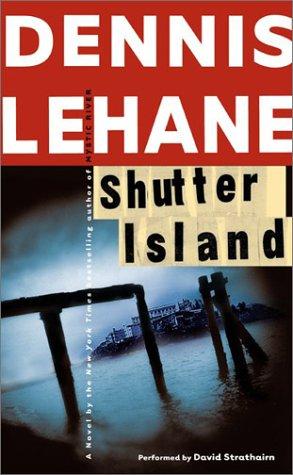
Shutter Island by Dennis Lehane is a 2003 thriller book about reality and delusion, trauma and denial, institutional power. Unreliable narration in Shutter Island is not a trick — the entire structure of the novel is built so that re-reading reveals what is present on every page.
Summary
It is 1954, and U.S. Marshal Teddy Daniels has been assigned to investigate the disappearance of a patient from Ashecliffe Hospital, a federal psychiatric facility on a remote Massachusetts island. The patient — a woman who drowned her three children — has apparently escaped from a locked room, and Teddy and his new partner Chuck Aule are tasked with finding her before a hurricane locks the island down. The investigation begins to unravel almost immediately, and Teddy starts to suspect that Ashecliffe is hiding something much larger than one missing woman.
Shutter Island is a Gothic thriller with a psychiatric setting and a mid-century American backdrop of Cold War anxiety, Nazi war crimes, and the emerging discipline of psychopharmacology. Lehane uses all of those elements deliberately — the island, the storm, the menacing institution, the narrator who sees patterns everywhere — to build a novel that is operating on two levels simultaneously from the first chapter. The question is not whether you trust Teddy, but when you decide you don't, and what you do with that decision.
The prose is faster than Mystic River and more genre-forward, and the plotting is tighter than it might appear on a first read. Some readers will see the revelation coming; others will not; and a third group will spot the signals and second-guess themselves until the end. Lehane is playing with reader complicity deliberately: the novel wants you to share Teddy's certainties before dismantling them, and how well it does that depends partly on how much you want to be fooled.
Shutter Island is Lehane's most commercial novel and his most formally daring. Readers who want realism and working-class Boston should read Mystic River or Gone, Baby, Gone first. But as a sustained exercise in unreliable narration and Gothic atmosphere, it is exceptionally well-executed. Martin Scorsese's 2010 film is faithful and strong, but the novel handles Teddy's interiority in ways the film's visual medium cannot.
Talk to Shutter Island like its author wrote you back.
Get the ideas that fit your life — not generic summaries.
- Chat with the book
- Audiobook-style main ideas
- Adapts to your life and goals
- Helps you take action
Key takeaways
- 1.
Unreliable narration in Shutter Island is not a trick — the entire structure of the novel is built so that re-reading reveals what is present on every page.
- 2.
The 1954 setting is not incidental: the novel is partly about the Cold War American mind, the legacy of Nazi medical experiments, and the moment before psychiatry changed its understanding of human identity.
- 3.
Teddy's obsession with conspiracy mirrors the structure of his delusion — both are systems for organizing experience that feel true from the inside.
- 4.
The island is a classic Gothic enclosure, and Lehane uses the literary history of that setting — isolated mansion, locked rooms, impossible escape — entirely on purpose.
- 5.
The central ethical question is not about Teddy's sanity but about what his doctors decide to do about it, and whether their reasoning is humane or convenient.
- 6.
Lehane builds dread through accumulation of detail rather than sudden revelation. The discomfort starts on page one if you are reading carefully.
- 7.
The hurricane as plot mechanism is structural, not incidental — it removes the option to leave and removes the institutions that normally organize reality.
- 8.
The ending forces a question about whether genuine belief in a fiction is better than a painful truth, and leaves the reader to answer it without guidance.
Discussion questions
Use these on your own, with a book club, or as chat starters in Superbook. Book club version, ready to copy or print →
- 1.
The novel gives Teddy's version of events enough internal logic to be temporarily convincing. At what point did you stop believing him?
- 2.
Once you know the revelation, is re-reading a better or worse experience? What did you miss on the first pass?
- 3.
The doctors have a theory about treatment that requires Teddy's participation. Is their approach ethical, and does the novel think it is?
- 4.
Teddy's war trauma is woven through the novel as flashback. How does Lehane use Dachau to frame what Teddy is capable of and what he cannot accept about himself?
- 5.
The 1954 setting means lobotomy and experimental drugs are legitimate institutional options. How does that historical context change the moral weight of the ending?
- 6.
Chuck Aule is Teddy's partner and the person who knows him best. How do you read Chuck's behavior once you know the full picture?
- 7.
The island's Gothic atmosphere — storms, locked wards, underground caves — is very deliberately literary. Is Lehane engaging with the Gothic tradition seriously, or using it as genre decoration?
- 8.
The final lines of the novel are among the most debated in recent American thrillers. What do you think Teddy chooses, and why?
- 9.
Compared to Gone, Baby, Gone, which ends on a moral ambiguity about doing the right thing — how does Shutter Island's ending differ in what it asks of the reader?
- 10.
Scorsese's film uses visual unreliability (the ferry scene, the lighthouse) in ways the novel uses prose unreliability. Which version of the deception do you find more effective?
- 11.
The novel was widely criticized on first publication as a genre exercise rather than serious fiction. Having read it, do you think that dismissal was fair?
- 12.
If Teddy is fully aware of what he is choosing at the end — what does that choice say about the value he places on a bearable story versus an unbearable truth?
Themes
Frequently asked questions
-
Is Shutter Island worth reading if I've seen the film?
Yes, for different reasons. The film is very faithful to the plot but Scorsese tells it visually. The novel handles Teddy's interiority — his dreams, his certainties, his rationalizations — with more space and intimacy. The experience of being inside the deception is different in prose.
-
Is the big twist really surprising?
Readers vary widely. Some see it coming early; others don't until the reveal; a third group suspect it, doubt themselves, and are still surprised. The signals are present from the beginning. How much you pick up depends on how actively you distrust the narrator.
-
Is Shutter Island hard to read?
No — it is Lehane's most propulsive novel and the most conventionally genre-shaped. The prose is clear and the plot moves quickly. The difficulty is retrospective: re-reading with full knowledge is disorienting in a productive way.
-
Who shouldn't read Shutter Island?
Readers who find narrative deception fundamentally frustrating rather than pleasurable. If you feel retroactively cheated by unreliable narrators, this novel will not convert you.
-
Is Shutter Island set in a real place?
The island and hospital are fictional, but Ashecliffe Hospital draws on real institutions including the Boston State Hospital and the history of federal forensic psychiatric facilities. The historical details about post-war psychiatric practice are accurate in outline.