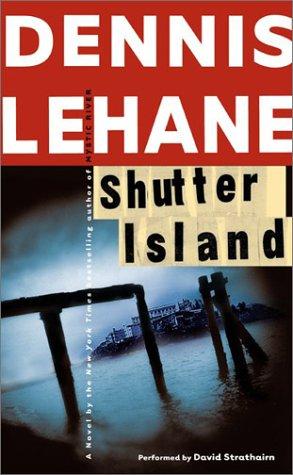
Talk to Shutter Island like its author wrote you back.
Get the ideas that fit your life — not generic summaries.
- Chat with the book
- Audiobook-style main ideas
- Adapts to your life and goals
- Helps you take action
Shutter Island, in detail
It is 1954, and U.S. Marshal Teddy Daniels has been assigned to investigate the disappearance of a patient from Ashecliffe Hospital, a federal psychiatric facility on a remote Massachusetts island. The patient — a woman who drowned her three children — has apparently escaped from a locked room, and Teddy and his new partner Chuck Aule are tasked with finding her before a hurricane locks the island down. The investigation begins to unravel almost immediately, and Teddy starts to suspect that Ashecliffe is hiding something much larger than one missing woman.
Shutter Island is a Gothic thriller with a psychiatric setting and a mid-century American backdrop of Cold War anxiety, Nazi war crimes, and the emerging discipline of psychopharmacology. Lehane uses all of those elements deliberately — the island, the storm, the menacing institution, the narrator who sees patterns everywhere — to build a novel that is operating on two levels simultaneously from the first chapter. The question is not whether you trust Teddy, but when you decide you don't, and what you do with that decision.
The prose is faster than Mystic River and more genre-forward, and the plotting is tighter than it might appear on a first read. Some readers will see the revelation coming; others will not; and a third group will spot the signals and second-guess themselves until the end. Lehane is playing with reader complicity deliberately: the novel wants you to share Teddy's certainties before dismantling them, and how well it does that depends partly on how much you want to be fooled.
Shutter Island is Lehane's most commercial novel and his most formally daring. Readers who want realism and working-class Boston should read Mystic River or Gone, Baby, Gone first. But as a sustained exercise in unreliable narration and Gothic atmosphere, it is exceptionally well-executed. Martin Scorsese's 2010 film is faithful and strong, but the novel handles Teddy's interiority in ways the film's visual medium cannot.
The big ideas
- 1.
Unreliable narration in Shutter Island is not a trick — the entire structure of the novel is built so that re-reading reveals what is present on every page.
- 2.
The 1954 setting is not incidental: the novel is partly about the Cold War American mind, the legacy of Nazi medical experiments, and the moment before psychiatry changed its understanding of human identity.
- 3.
Teddy's obsession with conspiracy mirrors the structure of his delusion — both are systems for organizing experience that feel true from the inside.
