Religion & Spirituality · Book club
Siddhartha book club questions
Here are 11 book club questions for Siddhartha by Hermann Hesse, ordered to open easily and end somewhere worth arguing about. Copy them, print them, or bring them up one at a time.
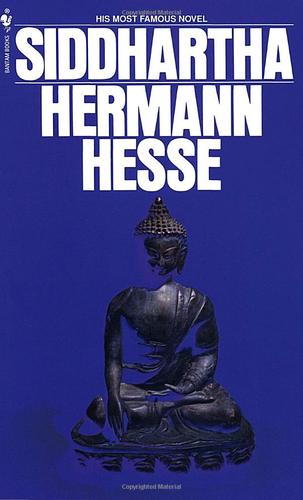
Siddhartha is Hermann Hesse's 1922 novel of spiritual seeking, written at a time when Hesse was deeply studying Buddhist and Hindu texts.
Hermann Hesse · 1922 · 3h 20m
Full summary and key takeaways →The 11 questions
- 1.
Siddhartha leaves the Buddha, though he recognizes the truth and beauty of his teaching. Do you find that choice admirable or perverse?
- 2.
He argues that direct experience cannot be transmitted through doctrine. Is that true of the most important things you know — were they taught or discovered?
- 3.
The years of worldly pleasure are presented as spiritually necessary. Does Hesse convince you that suffering through experience of desire is genuinely more educational than renunciation?
- 4.
Siddhartha's son refuses his wisdom and leaves, just as Siddhartha once left his own father. How do you read the symmetry of that moment?
- 5.
The river holds all times simultaneously. Is that a metaphysical claim Hesse is making, or a psychological description of a certain quality of awareness?
- 6.
The novel is set in ancient India but Hesse was a 20th-century German writer. What is the effect of that displacement — is it a strength or a limitation?
- 7.
Vasudeva, the ferryman, achieves enlightenment in almost complete silence. Is silence necessary for the depth the novel describes, or can it be found within ordinary speech and activity?
- 8.
Kamala dies shortly after rediscovering Siddhartha. What does her death contribute to the novel's spiritual logic?
- 9.
The smile on Siddhartha's face at the end — which Govinda recognizes without being able to explain it — is described as containing all of human experience. Is that image satisfying or frustrating?
- 10.
Siddhartha is short enough to read in a single sitting. Does its brevity seem like a strength or does it feel like too much is left out?
- 11.
What is the difference between Hesse's vision of enlightenment and what you understand Buddhist or Hindu enlightenment to actually be?
How to run the discussion
- Pick six to eight, not all of them. An hour of real discussion covers fewer questions than anyone expects, and racing the list is what makes a book club feel like homework.
- Open with what people noticed, not what they concluded. Asking for a verdict first hardens opinions before anyone has heard each other.
- Let the disagreement run. The questions below that split a room are the ones worth the time; the ones everyone answers the same way can be skipped.
- Ask the quiet person a specific question. A direct, narrow question is far easier to answer than an open invitation to contribute.
Themes worth steering toward
If the conversation stalls, these are the threads that usually restart it.
Common questions
What are good book club questions for Siddhartha?
Here are 11 book club questions for Siddhartha by Hermann Hesse, ordered to open easily and end somewhere worth arguing about. The strongest openers ask what each reader noticed rather than what they concluded, and the discussion usually turns on enlightenment, self-discovery, the river.
How long should a book club discussion of Siddhartha last?
Most groups run 60 to 90 minutes of actual discussion. That is roughly six to eight questions, not all of them, so pick the ones that suit your group rather than working down the list in order.
What are the main themes in Siddhartha?
Enlightenment, Self-discovery, The river, Time, Unity. Those are the threads most likely to divide a room, which makes them the useful places to steer a discussion that has gone quiet.
Picking the next one? See books like Siddhartha or questions for other book club picks.