Philosophy · Book club
Skin in the Game: Hidden Asymmetries in Daily Life book club questions
Here are 12 book club questions for Skin in the Game: Hidden Asymmetries in Daily Life by Nassim Nicholas Taleb, ordered to open easily and end somewhere worth arguing about. Copy them, print them, or bring them up one at a time.
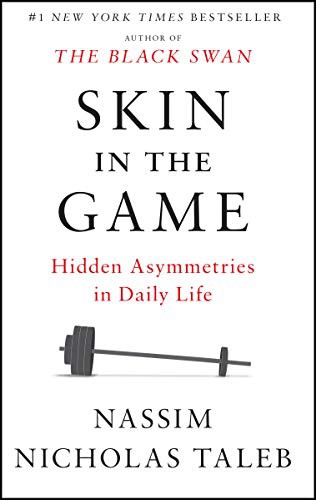
Skin in the Game is Taleb's argument that people who don't bear the consequences of their decisions should not be trusted, respected, or given power over others.
Nassim Nicholas Taleb · 2018 · 5h 20m
Full summary and key takeaways →The 12 questions
- 1.
Think of a major decision in your life that was shaped by advice from someone with no personal stake in the outcome. How did it go, and what would have changed if they bore the same risk as you?
- 2.
Taleb says credentials and track records are different things. Who in your field is trusted mostly on credentials? Is that trust earned?
- 3.
The minority rule says a small inflexible group often sets the terms for everyone. Where have you seen this play out — in a workplace, a family, a community?
- 4.
Taleb is harsh about consultants, economists, and journalists. Is that fair? Are there domains where people without skin in the game can still give reliable advice?
- 5.
He distinguishes between those who talk and those who do. Where in your own life are you more of a talker than a doer on something that matters?
- 6.
What risks are you currently bearing that someone else is benefiting from? What risks is someone else bearing that you benefit from?
- 7.
Taleb argues that systems without skin in the game become fragile over time. Can you identify a system — a company, a government policy, a social institution — where this dynamic is visibly at work?
- 8.
The book is polemical and sometimes unfair in its characterizations. Where did you find yourself pushing back? Does the argument survive your objections?
- 9.
Via negativa suggests removing things is often wiser than adding them. What in your life or work should you subtract rather than add to?
- 10.
Taleb values the practitioner over the theorist. Are there domains where you think the opposite is true — where practice without theory leads people astray?
- 11.
If the people advising your government, hospital, or company were required to live under the policies they recommend, which policies do you think would change?
- 12.
Taleb's golden rule is: do not impose on others what you would not accept for yourself. Name a situation where you or someone you know violated that rule without noticing.
How to run the discussion
- Pick six to eight, not all of them. An hour of real discussion covers fewer questions than anyone expects, and racing the list is what makes a book club feel like homework.
- Open with what people noticed, not what they concluded. Asking for a verdict first hardens opinions before anyone has heard each other.
- Let the disagreement run. The questions below that split a room are the ones worth the time; the ones everyone answers the same way can be skipped.
- Ask the quiet person a specific question. A direct, narrow question is far easier to answer than an open invitation to contribute.
Themes worth steering toward
If the conversation stalls, these are the threads that usually restart it.
Common questions
What are good book club questions for Skin in the Game: Hidden Asymmetries in Daily Life?
Here are 12 book club questions for Skin in the Game: Hidden Asymmetries in Daily Life by Nassim Nicholas Taleb, ordered to open easily and end somewhere worth arguing about. The strongest openers ask what each reader noticed rather than what they concluded, and the discussion usually turns on risk, accountability, decision-making.
How long should a book club discussion of Skin in the Game: Hidden Asymmetries in Daily Life last?
Most groups run 60 to 90 minutes of actual discussion. That is roughly six to eight questions, not all of them, so pick the ones that suit your group rather than working down the list in order.
What are the main themes in Skin in the Game: Hidden Asymmetries in Daily Life?
Risk, Accountability, Decision-making, Ethics, Asymmetry. Those are the threads most likely to divide a room, which makes them the useful places to steer a discussion that has gone quiet.
Picking the next one? See books like Skin in the Game: Hidden Asymmetries in Daily Life or questions for other book club picks.
