Psychology · Book club
Social Intelligence: The New Science of Human Relationships book club questions
Here are 12 book club questions for Social Intelligence: The New Science of Human Relationships by Daniel Goleman, ordered to open easily and end somewhere worth arguing about. Copy them, print them, or bring them up one at a time.
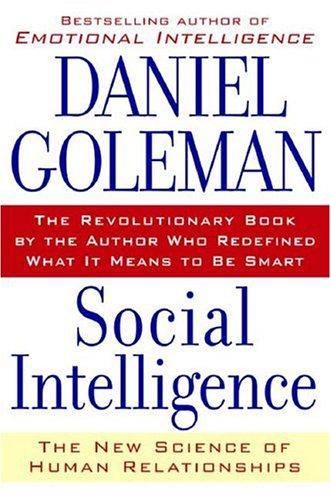
Daniel Goleman's follow-up to Emotional Intelligence shifts focus from the inner world to the social.
Daniel Goleman · 2006 · 6h 15m
Full summary and key takeaways →The 12 questions
- 1.
Goleman argues that other people literally reshape our biology over time. Who in your life has had that kind of effect on you — in either direction — and were you aware of it at the time?
- 2.
The book distinguishes accurate empathy from projection. Think of a recent conflict: were you feeling what the other person actually felt, or were you projecting what you would feel in their situation?
- 3.
Emotional contagion suggests we absorb the emotional states of people around us without choosing to. How has your mood been systematically affected by someone in your environment whose emotional state you didn't consciously register as influential?
- 4.
If relationships are as biologically consequential as Goleman argues, how would you prioritize differently the relationships you currently maintain, tolerate, or avoid?
- 5.
Goleman draws on mirror neuron research to explain empathy, but that research has since been disputed in some of its claims. How much does the scientific credibility of a book's neuroscience affect how much you trust its broader message?
- 6.
The book argues that leaders are emotional radiators whose moods spread rapidly through groups. When have you experienced this effect — either as a leader or as someone in a leader's orbit?
- 7.
What does genuine listening look like, as opposed to waiting to speak while tracking the emotional content of what's being said? How often do you actually do it?
- 8.
Goleman suggests social intelligence can be developed deliberately. What specific practice would make the biggest difference in how you show up in relationships?
- 9.
The book describes a high road and low road of emotional processing — slow deliberate and fast automatic. When does your low road override your better judgment in social situations?
- 10.
Loneliness as a biological stressor is a theme Goleman returns to throughout. Where in your life, if anywhere, does loneliness operate at a low level that you don't fully acknowledge?
- 11.
How did the relationships you observed between your parents or caregivers shape your own model of what relationships are supposed to feel like?
- 12.
Goleman claims that parental attunement physically shapes children's nervous systems. What does that imply about how we should prioritize the quality of presence versus the quantity of time in caregiving?
How to run the discussion
- Pick six to eight, not all of them. An hour of real discussion covers fewer questions than anyone expects, and racing the list is what makes a book club feel like homework.
- Open with what people noticed, not what they concluded. Asking for a verdict first hardens opinions before anyone has heard each other.
- Let the disagreement run. The questions below that split a room are the ones worth the time; the ones everyone answers the same way can be skipped.
- Ask the quiet person a specific question. A direct, narrow question is far easier to answer than an open invitation to contribute.
Themes worth steering toward
If the conversation stalls, these are the threads that usually restart it.
Common questions
What are good book club questions for Social Intelligence: The New Science of Human Relationships?
Here are 12 book club questions for Social Intelligence: The New Science of Human Relationships by Daniel Goleman, ordered to open easily and end somewhere worth arguing about. The strongest openers ask what each reader noticed rather than what they concluded, and the discussion usually turns on social neuroscience, empathy, relationships.
How long should a book club discussion of Social Intelligence: The New Science of Human Relationships last?
Most groups run 60 to 90 minutes of actual discussion. That is roughly six to eight questions, not all of them, so pick the ones that suit your group rather than working down the list in order.
What are the main themes in Social Intelligence: The New Science of Human Relationships?
Social neuroscience, Empathy, Relationships, Emotional contagion, Brain and behavior. Those are the threads most likely to divide a room, which makes them the useful places to steer a discussion that has gone quiet.
Picking the next one? See books like Social Intelligence: The New Science of Human Relationships or questions for other book club picks.
