Health · Book club
Spark book club questions
Here are 12 book club questions for Spark by John J. Ratey, ordered to open easily and end somewhere worth arguing about. Copy them, print them, or bring them up one at a time.
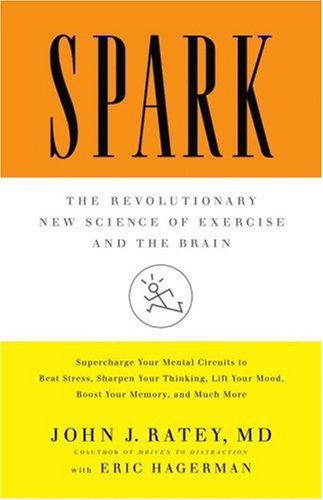
Spark is John Ratey's argument, grounded in neuroscience, that aerobic exercise is the single most powerful thing most people can do for their brain.
John J. Ratey · 2008 · 6h 0m
Full summary and key takeaways →The 12 questions
- 1.
Ratey argues that exercise is as effective as antidepressants for depression. If that's true, why do you think it's not standard first-line treatment in psychiatry?
- 2.
The Naperville school moved PE to first period and saw academic results improve. What would it take to adopt that model in schools near you? What are the obstacles?
- 3.
He makes a strong case that exercise generates new neurons. Does knowing that physical movement literally builds brain tissue change your motivation to exercise? Why or why not?
- 4.
Ratey covers exercise as treatment for anxiety, ADHD, addiction, and aging. Which application is most personally relevant to you, and does the evidence he presents convince you?
- 5.
The book is written with infectious enthusiasm. Did you notice it presenting weaker evidence with the same confidence as stronger evidence? How did that affect your trust in the overall argument?
- 6.
Ratey argues that the human body evolved to move and that sedentary life is biologically aberrant. What would your life look like if movement were as natural as it was for your ancestors?
- 7.
Exercise is a free, accessible intervention with no side effects and evidence of broad benefit. What actually prevents most people from doing enough of it?
- 8.
He covers the cognitive benefits of play — varied, spontaneous movement — versus structured exercise. How much of your physical activity involves genuine play versus obligation?
- 9.
BDNF is elevated by vigorous aerobic exercise but also by learning new physical skills (dance, martial arts, sport). Does that change what kind of exercise you would choose?
- 10.
Ratey covers the role of exercise in aging, particularly in protecting against Alzheimer's and cognitive decline. Does that long-term framing change how you think about exercise in your current life?
- 11.
The book opens with privileged high-school students in suburban Illinois. Are the benefits of exercise equally accessible across income and health status?
- 12.
If you could take a pill that produced all the brain benefits of thirty minutes of aerobic exercise, would you take it instead? What does your answer tell you about your relationship with physical activity?
How to run the discussion
- Pick six to eight, not all of them. An hour of real discussion covers fewer questions than anyone expects, and racing the list is what makes a book club feel like homework.
- Open with what people noticed, not what they concluded. Asking for a verdict first hardens opinions before anyone has heard each other.
- Let the disagreement run. The questions below that split a room are the ones worth the time; the ones everyone answers the same way can be skipped.
- Ask the quiet person a specific question. A direct, narrow question is far easier to answer than an open invitation to contribute.
Themes worth steering toward
If the conversation stalls, these are the threads that usually restart it.
Common questions
What are good book club questions for Spark?
Here are 12 book club questions for Spark by John J. Ratey, ordered to open easily and end somewhere worth arguing about. The strongest openers ask what each reader noticed rather than what they concluded, and the discussion usually turns on exercise, brain health, mental health.
How long should a book club discussion of Spark last?
Most groups run 60 to 90 minutes of actual discussion. That is roughly six to eight questions, not all of them, so pick the ones that suit your group rather than working down the list in order.
What are the main themes in Spark?
Exercise, Brain health, Mental health, Neuroscience, Learning. Those are the threads most likely to divide a room, which makes them the useful places to steer a discussion that has gone quiet.
Picking the next one? See books like Spark or questions for other book club picks.
