Business · Book club
Startup book club questions
Here are 11 book club questions for Startup by Jerry Kaplan, ordered to open easily and end somewhere worth arguing about. Copy them, print them, or bring them up one at a time.
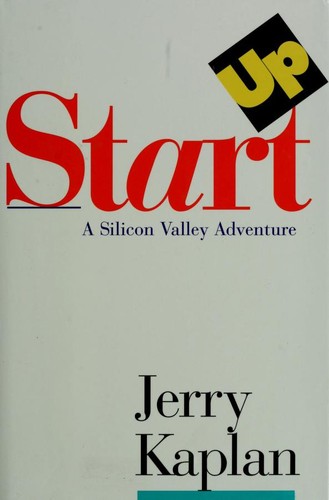
Startup is Jerry Kaplan's account of GO Corporation, the pen-computing company he co-founded in 1987 and ran until it collapsed in 1994.
Jerry Kaplan · 1994 · 6h 0m
Full summary and key takeaways →The 11 questions
- 1.
Kaplan argues that timing is a strategic variable. Think of a project or venture you've been part of. How much of its outcome was determined by timing versus execution?
- 2.
GO was technically ahead of its time. Is it better to be early with a right idea or late with a refined one? What does the GO story suggest?
- 3.
Kaplan describes the fundraising process in unusual social detail. Does knowing how deals actually get made change how you think about the startup mythology of the meritocratic idea?
- 4.
Microsoft and IBM used platform power to undermine GO without necessarily building a better pen OS. How do you distinguish legitimate competition from predatory behavior?
- 5.
The board eventually diverged from Kaplan's vision. Have you ever been in an institution where the interests of founders and investors (or founders and shareholders) came apart? How did it resolve?
- 6.
GO raised $75 million and failed. What obligations does a company have to the people it hired and the investors it took money from when it fails?
- 7.
Kaplan is notably candid about his own mistakes. What decisions does he describe that you think you would have made differently, and why?
- 8.
The pen computing vision GO had was vindicated by the iPad fifteen years later. Does that posthumous vindication change how you evaluate Kaplan's leadership?
- 9.
Silicon Valley tends to celebrate the swings-and-misses ethos — fail fast, learn, repeat. Does Startup reinforce or challenge that narrative?
- 10.
What does Kaplan's account suggest about what founders owe their employees, especially when a company is likely to fail?
- 11.
The book was published in 1994. Which parts of the Silicon Valley culture it describes feel like history, and which feel like a description of something still very much present?
How to run the discussion
- Pick six to eight, not all of them. An hour of real discussion covers fewer questions than anyone expects, and racing the list is what makes a book club feel like homework.
- Open with what people noticed, not what they concluded. Asking for a verdict first hardens opinions before anyone has heard each other.
- Let the disagreement run. The questions below that split a room are the ones worth the time; the ones everyone answers the same way can be skipped.
- Ask the quiet person a specific question. A direct, narrow question is far easier to answer than an open invitation to contribute.
Themes worth steering toward
If the conversation stalls, these are the threads that usually restart it.
Common questions
What are good book club questions for Startup?
Here are 11 book club questions for Startup by Jerry Kaplan, ordered to open easily and end somewhere worth arguing about. The strongest openers ask what each reader noticed rather than what they concluded, and the discussion usually turns on entrepreneurship, silicon valley, venture capital.
How long should a book club discussion of Startup last?
Most groups run 60 to 90 minutes of actual discussion. That is roughly six to eight questions, not all of them, so pick the ones that suit your group rather than working down the list in order.
What are the main themes in Startup?
Entrepreneurship, Silicon Valley, Venture capital, Technology failure, Hubris. Those are the threads most likely to divide a room, which makes them the useful places to steer a discussion that has gone quiet.
Picking the next one? See books like Startup or questions for other book club picks.
