Psychology · Book club
Strangers to Ourselves: Discovering the Adaptive Unconscious book club questions
Here are 12 book club questions for Strangers to Ourselves: Discovering the Adaptive Unconscious by Timothy D. Wilson, ordered to open easily and end somewhere worth arguing about. Copy them, print them, or bring them up one at a time.
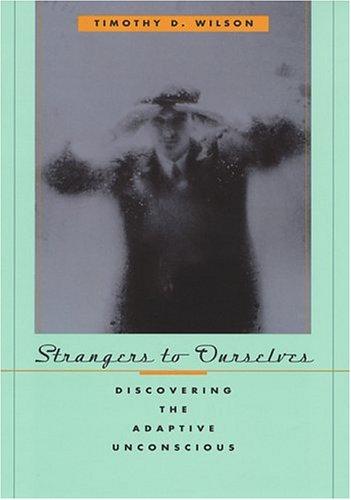
Timothy Wilson's central argument is uncomfortable: we don't know ourselves as well as we think we do.
Timothy D. Wilson · 2002 · 4h 20m
Full summary and key takeaways →The 12 questions
- 1.
Wilson argues that introspection often produces post-hoc rationalization rather than genuine self-knowledge. Can you think of a recent example where your explanation for your own behavior might have been wrong?
- 2.
If we're poor judges of our own motivations, what are the practical implications for how much weight we should put on self-reflection as a personal development tool?
- 3.
Wilson shows that introspecting on reasons can worsen decisions for some choices. Which decisions in your own life might fall into that category?
- 4.
How would you treat another person's explanation of their own behavior differently if you took Wilson's argument seriously?
- 5.
The book distinguishes the adaptive unconscious from the Freudian unconscious. Does that distinction change how you think about the mind below conscious awareness?
- 6.
Wilson argues that what we repeatedly do shapes who we are more than what we believe about ourselves. Is there a gap between your behavior and your self-concept that this framing makes uncomfortable?
- 7.
If people in studies couldn't identify the real causes of their mood or preferences even minutes after the fact, what does that imply for practices like journaling or talk therapy?
- 8.
The adaptive unconscious is described as fast and efficient but inaccessible. Does thinking of it as a tool rather than a threat change how you feel about it?
- 9.
Wilson says we know others partly through their behavior over time, not through their reports about themselves. How does that change how you observe and interpret the people close to you?
- 10.
Which of your own strongly held beliefs about yourself do you think are most likely to be inaccurate, given Wilson's framework?
- 11.
The book suggests that acting 'as if' you are the person you want to be can eventually make you that person through the unconscious. Does that strike you as hopeful or unsettling?
- 12.
If self-knowledge is this limited, what tools beyond introspection do you use to understand yourself — and how reliable do you think they are?
How to run the discussion
- Pick six to eight, not all of them. An hour of real discussion covers fewer questions than anyone expects, and racing the list is what makes a book club feel like homework.
- Open with what people noticed, not what they concluded. Asking for a verdict first hardens opinions before anyone has heard each other.
- Let the disagreement run. The questions below that split a room are the ones worth the time; the ones everyone answers the same way can be skipped.
- Ask the quiet person a specific question. A direct, narrow question is far easier to answer than an open invitation to contribute.
Themes worth steering toward
If the conversation stalls, these are the threads that usually restart it.
Common questions
What are good book club questions for Strangers to Ourselves: Discovering the Adaptive Unconscious?
Here are 12 book club questions for Strangers to Ourselves: Discovering the Adaptive Unconscious by Timothy D. Wilson, ordered to open easily and end somewhere worth arguing about. The strongest openers ask what each reader noticed rather than what they concluded, and the discussion usually turns on unconscious mind, self-knowledge, introspection.
How long should a book club discussion of Strangers to Ourselves: Discovering the Adaptive Unconscious last?
Most groups run 60 to 90 minutes of actual discussion. That is roughly six to eight questions, not all of them, so pick the ones that suit your group rather than working down the list in order.
What are the main themes in Strangers to Ourselves: Discovering the Adaptive Unconscious?
Unconscious mind, Self-knowledge, Introspection, Behavior, Identity. Those are the threads most likely to divide a room, which makes them the useful places to steer a discussion that has gone quiet.
Picking the next one? See books like Strangers to Ourselves: Discovering the Adaptive Unconscious or questions for other book club picks.
