Psychology · Book club
Stumbling on Happiness book club questions
Here are 12 book club questions for Stumbling on Happiness by Daniel Gilbert, ordered to open easily and end somewhere worth arguing about. Copy them, print them, or bring them up one at a time.
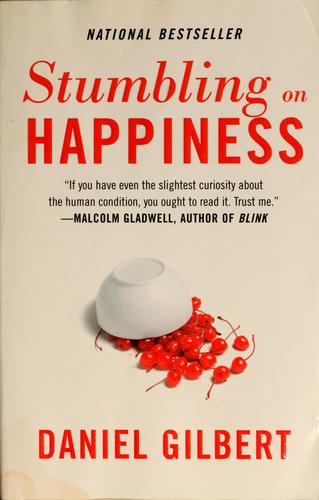
Daniel Gilbert is a Harvard psychologist whose central finding, after decades of studying affective forecasting, is that humans are systematically wrong about what will make them happy.
Daniel Gilbert · 2006 · 5h 0m
Full summary and key takeaways →The 12 questions
- 1.
Gilbert argues that we are consistently wrong about what will make us happy. What is your reaction to that claim — does it match your experience, or do you resist it?
- 2.
The psychological immune system generates good feelings about bad outcomes. Can you think of a time when you adapted to a disappointment better than you expected? What did that feel like from the inside?
- 3.
Gilbert shows that irreversible choices tend to feel better than reversible ones. Has this played out in your own decisions? Does knowing this change how you think about keeping options open?
- 4.
Impact bias means we overestimate how much good news will improve our lives. What anticipated good outcome are you currently imagining will change everything — and what do you think will actually happen?
- 5.
Surrogation is more accurate than imagination, but we resist it. Why do you think people believe their cases are unique enough that others' experiences don't apply?
- 6.
Gilbert writes that we imagine events without imagining the full context around them. Can you reconstruct a case where that context gap produced a big forecasting error for you?
- 7.
How does the psychological immune system interact with things like grief, loss, and major setbacks? Does Gilbert's framework feel too optimistic about human resilience?
- 8.
The book implies that we should trust others' emotional reports more than our own predictions. What would that look like in practice when making a major decision?
- 9.
Gilbert argues that adaptation works even for serious losses, including bereavement. Is there anything you think people should not adapt to, and what would that mean for his framework?
- 10.
He ends without a strong prescriptive message — mostly that we should use surrogation more. Is that enough of a takeaway, or do you want more from a book about happiness research?
- 11.
What is one decision you are currently facing where you think your affective forecasting might be unreliable?
- 12.
Does knowing about impact bias actually help? Or does understanding these biases leave you just as susceptible to them?
How to run the discussion
- Pick six to eight, not all of them. An hour of real discussion covers fewer questions than anyone expects, and racing the list is what makes a book club feel like homework.
- Open with what people noticed, not what they concluded. Asking for a verdict first hardens opinions before anyone has heard each other.
- Let the disagreement run. The questions below that split a room are the ones worth the time; the ones everyone answers the same way can be skipped.
- Ask the quiet person a specific question. A direct, narrow question is far easier to answer than an open invitation to contribute.
Themes worth steering toward
If the conversation stalls, these are the threads that usually restart it.
Common questions
What are good book club questions for Stumbling on Happiness?
Here are 12 book club questions for Stumbling on Happiness by Daniel Gilbert, ordered to open easily and end somewhere worth arguing about. The strongest openers ask what each reader noticed rather than what they concluded, and the discussion usually turns on happiness, imagination, forecasting.
How long should a book club discussion of Stumbling on Happiness last?
Most groups run 60 to 90 minutes of actual discussion. That is roughly six to eight questions, not all of them, so pick the ones that suit your group rather than working down the list in order.
What are the main themes in Stumbling on Happiness?
Happiness, Imagination, Forecasting, Cognitive bias, Well-being. Those are the threads most likely to divide a room, which makes them the useful places to steer a discussion that has gone quiet.
Picking the next one? See books like Stumbling on Happiness or questions for other book club picks.
