Talk to Talent like its author wrote you back.
Get the ideas that fit your life — not generic summaries.
- Chat with the book
- Audiobook-style main ideas
- Adapts to your life and goals
- Helps you take action
Talent, in detail
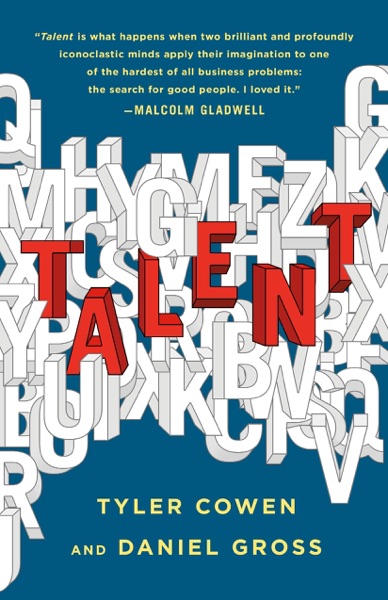
Talent is Tyler Cowen and Daniel Gross's guide to identifying exceptional people — the kind who will accomplish far more than their current track record or credentials suggest. Cowen is an economist and public intellectual; Gross is a venture capitalist and former YC partner who has spent his career betting on founding teams before the evidence is complete. Together they argue that talent identification is one of the most consequential and underinvested skills in the modern economy, and that most organizations are systematically bad at it in ways that can be improved.
The book makes a distinction between two kinds of talent judgment: filtering (identifying whether someone meets a threshold) and scouting (identifying who will become exceptional given the right context and opportunity). Most hiring processes are built for filtering and are therefore ill-suited to scouting. The authors argue that the highest-value talent decisions — early-stage hires, key promotions, investment bets on founders — require scouting instincts that standard interview processes actively impede.
Cowen and Gross are particularly interested in the signals that identify exceptional future performance: the texture of curiosity, the willingness to engage with hard questions without social lubricant, the specific shape of someone's obsessions, the evidence of internal motivation versus compliance. They propose interview questions designed to elicit these signals rather than rehearsed answers — including questions borrowed from personality research (the Big Five traits), unconventional conversational techniques, and attention to behavior outside the formal interview context.
The book is also notably direct about the traits that predict exceptional performance but are often penalized in institutional settings: odd intensities, unconventional backgrounds, high openness to experience that manifests as instability, and the kind of difficult personality that tends to accompany genuine originality. Cowen and Gross argue that organizations systematically under-select for these traits because they are personally uncomfortable to manage — and that this is a correctable mistake. The book is practical, opinionated, and unusually honest about the gap between what institutions say they value and what actually produces exceptional outcomes.
The big ideas
- 1.
Talent identification is underinvested relative to its importance. The decisions that most affect an organization's trajectory — key early hires, partnership choices, investment bets — depend on talent judgment, yet most people receive little training in it.
- 2.
The distinction between filtering and scouting matters enormously. Filtering checks whether someone meets a standard; scouting identifies who will exceed all reasonable standards given the right opportunity.
- 3.
The Big Five personality traits (openness, conscientiousness, extraversion, agreeableness, neuroticism) are one of the most empirically validated tools for predicting performance, and most interviewers assess them poorly or not at all.
