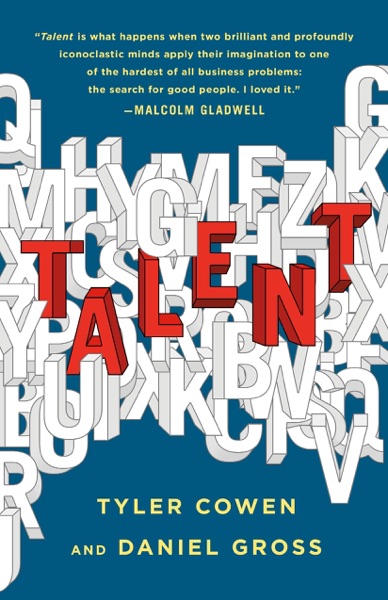
Talent by Tyler Cowen & Daniel Gross is a 2022 business book about talent identification, hiring, human potential. Talent identification is underinvested relative to its importance. The decisions that most affect an organization's trajectory — key early hires, partnership choices, investment bets — depend on talent judgment, yet most people receive little training in it.
Summary
Talent is Tyler Cowen and Daniel Gross's guide to identifying exceptional people — the kind who will accomplish far more than their current track record or credentials suggest. Cowen is an economist and public intellectual; Gross is a venture capitalist and former YC partner who has spent his career betting on founding teams before the evidence is complete. Together they argue that talent identification is one of the most consequential and underinvested skills in the modern economy, and that most organizations are systematically bad at it in ways that can be improved.
The book makes a distinction between two kinds of talent judgment: filtering (identifying whether someone meets a threshold) and scouting (identifying who will become exceptional given the right context and opportunity). Most hiring processes are built for filtering and are therefore ill-suited to scouting. The authors argue that the highest-value talent decisions — early-stage hires, key promotions, investment bets on founders — require scouting instincts that standard interview processes actively impede.
Cowen and Gross are particularly interested in the signals that identify exceptional future performance: the texture of curiosity, the willingness to engage with hard questions without social lubricant, the specific shape of someone's obsessions, the evidence of internal motivation versus compliance. They propose interview questions designed to elicit these signals rather than rehearsed answers — including questions borrowed from personality research (the Big Five traits), unconventional conversational techniques, and attention to behavior outside the formal interview context.
The book is also notably direct about the traits that predict exceptional performance but are often penalized in institutional settings: odd intensities, unconventional backgrounds, high openness to experience that manifests as instability, and the kind of difficult personality that tends to accompany genuine originality. Cowen and Gross argue that organizations systematically under-select for these traits because they are personally uncomfortable to manage — and that this is a correctable mistake. The book is practical, opinionated, and unusually honest about the gap between what institutions say they value and what actually produces exceptional outcomes.
Talk to Talent like its author wrote you back.
Get the ideas that fit your life — not generic summaries.
- Chat with the book
- Audiobook-style main ideas
- Adapts to your life and goals
- Helps you take action
Key takeaways
- 1.
Talent identification is underinvested relative to its importance. The decisions that most affect an organization's trajectory — key early hires, partnership choices, investment bets — depend on talent judgment, yet most people receive little training in it.
- 2.
The distinction between filtering and scouting matters enormously. Filtering checks whether someone meets a standard; scouting identifies who will exceed all reasonable standards given the right opportunity.
- 3.
The Big Five personality traits (openness, conscientiousness, extraversion, agreeableness, neuroticism) are one of the most empirically validated tools for predicting performance, and most interviewers assess them poorly or not at all.
- 4.
High conscientiousness is the single most reliable predictor of success in most roles. High openness to experience predicts creativity but can come with instability. The combination matters as much as any individual trait.
- 5.
Exceptional people often have odd, intense, somewhat antisocial qualities that are uncomfortable in institutions. Cowen and Gross argue organizations systematically under-select these people, to their own detriment.
- 6.
Curiosity is one of the hardest traits to fake and one of the most predictive of future performance. Interview questions that probe real intellectual engagement — not what candidates have prepared — reveal it quickly.
- 7.
The authors recommend asking about someone's stalled ambitions, their relationship to failure, and what they're most excited about right now — not because the answers are right or wrong but because the texture of engagement reveals character.
- 8.
Context shapes talent expression. Someone who is mediocre in one environment can be extraordinary in another. The best talent judges evaluate fit with context, not just abstract capability.
Discussion questions
Use these on your own, with a book club, or as chat starters in Superbook. Book club version, ready to copy or print →
- 1.
Cowen and Gross distinguish filtering from scouting. Which type of judgment does most of your organization's hiring actually do, and what would it take to shift toward scouting?
- 2.
Think of the most talented person you've identified correctly in advance. What did you actually see that others missed, and would you have been able to articulate it at the time?
- 3.
The book argues that unusual personalities — difficult, intense, unconventional — are systematically undervalued in institutions. Have you seen this? What made the difference when it worked out?
- 4.
High conscientiousness is the most reliable predictor of success in most roles. But conscientiousness can also look like compliance. How do you distinguish the two in an interview?
- 5.
The authors suggest probing for genuine curiosity by asking questions candidates haven't prepared. What question have you found most revealing in this way?
- 6.
If organizations systematically under-select for traits that produce exceptional outcomes because those traits are personally difficult to manage, what institutional changes would correct this?
- 7.
Cowen argues that a person's early obsessions are highly revealing. If someone asked you what you were obsessed with before you learned what the socially acceptable answer was, what would you say?
- 8.
The book discusses talent identification in the context of venture capital, hiring, and organizational building. How does the framework apply to less explicitly commercial contexts — education, coaching, mentorship?
- 9.
What is the best interview question you've ever been asked, in the sense that it revealed something real about you that other questions hadn't?
- 10.
Cowen and Gross argue that the talent market is inefficient — many excellent people are systematically missed. Where do you think the best overlooked talent is right now, and why is it being overlooked?
- 11.
The book is partly a defense of intuitive judgment in talent decisions. How do you calibrate when to trust that intuition and when to distrust it?
- 12.
The authors discuss how context changes talent expression. Has your own performance varied significantly across different contexts? What did the better contexts do differently?
Themes
Frequently asked questions
-
Is Talent useful for people who aren't investors or executives?
Yes. The framework applies to anyone who makes consequential decisions about people: managers, teachers, coaches, founders, and individual contributors choosing collaborators. The talent identification principles work at every level of scale.
-
How long is Talent?
Around 240 pages, roughly four hours at average reading pace. It's organized by topic rather than sequentially, so it can be read section by section. The chapter on interview questions is one of the most practically useful.
-
What's the most actionable idea in the book?
Redesign your interview questions to probe for genuine engagement rather than preparation. Ask about real obsessions, stalled ambitions, and genuine intellectual interests. Watch for the difference between someone talking to impress you and someone talking because they care about the topic.
-
Does the book cover how to evaluate founders specifically?
Yes — Gross's venture capital background is heavily present, and several chapters address the specific qualities that predict founder success. The discussion of 'sturdiness' (the ability to function under adversity without structural collapse) is particularly sharp for founder evaluation.
-
What does the book say about diversity in talent identification?
It addresses the topic but briefly. The main argument is that broadening the contexts and backgrounds you're willing to consider is itself a talent-scouting advantage — there's untapped potential in unconventional backgrounds that institutions with rigid credential filters miss.
Similar books
Outliers: The Story of Success
Malcolm Gladwell
Range: Why Generalists Triumph in a Specialized World
David Epstein
Grit: The Power of Passion and Perseverance
Angela Duckworth
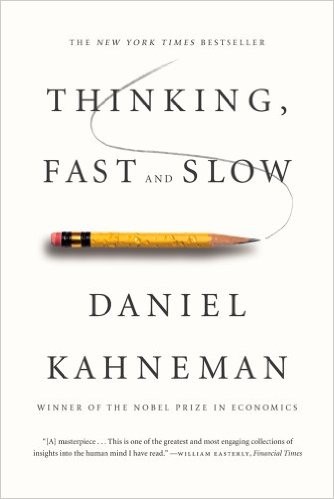
Thinking, Fast and Slow
Daniel Kahneman
