Philosophy · Book club
Tao Te Ching book club questions
Here are 11 book club questions for Tao Te Ching by Laozi, ordered to open easily and end somewhere worth arguing about. Copy them, print them, or bring them up one at a time.
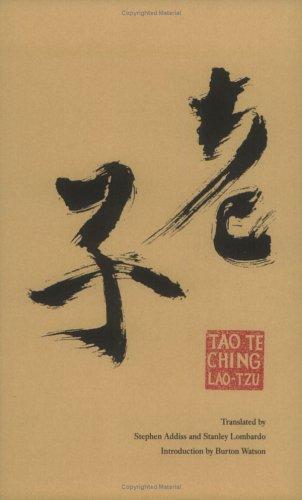
The Tao Te Ching is one of the most translated texts in world literature and the foundational scripture of Taoism.
Laozi · 1972 · 1h 0m
Full summary and key takeaways →The 11 questions
- 1.
The Tao Te Ching insists that the Tao cannot be named or fully described. Does that feel like intellectual honesty or a convenient evasion?
- 2.
Wu wei — accomplishing through non-forcing — is the text's central practical teaching. Can you think of a situation in your own life where doing less would have achieved more?
- 3.
The book argues that visible strength is often a sign of weakness and that yielding is often more powerful than resistance. Does your experience in relationships or work confirm or challenge that?
- 4.
Chapters on governance argue that the best rulers are almost invisible. Is that a useful principle for leadership today, or does it romanticize passivity?
- 5.
The text repeatedly counsels reducing desire rather than satisfying it. Is that renunciation or wisdom? Does it depend on what kind of desire?
- 6.
What is the difference between wu wei and laziness? The text seems to distinguish them, but the line is not always obvious.
- 7.
The Tao Te Ching values simplicity and the 'uncarved block.' What in your own life has become overly complicated, and what would simplifying it look like?
- 8.
The text was written in an era of constant warfare and political chaos. How does that context shape the political advice in chapters like 30, 31, and 68?
- 9.
Many chapters are deliberately paradoxical: the Tao that can be named is not the eternal Tao. Is productive ambiguity possible in written language, or does language always pin things down?
- 10.
The Tao Te Ching has been used to justify everything from radical quietism to active governance. How do you interpret the responsibility it places on those who understand the Tao?
- 11.
Which chapter or image in the text resonates most with how you already think about the world? Which one most challenges your assumptions?
How to run the discussion
- Pick six to eight, not all of them. An hour of real discussion covers fewer questions than anyone expects, and racing the list is what makes a book club feel like homework.
- Open with what people noticed, not what they concluded. Asking for a verdict first hardens opinions before anyone has heard each other.
- Let the disagreement run. The questions below that split a room are the ones worth the time; the ones everyone answers the same way can be skipped.
- Ask the quiet person a specific question. A direct, narrow question is far easier to answer than an open invitation to contribute.
Themes worth steering toward
If the conversation stalls, these are the threads that usually restart it.
Common questions
What are good book club questions for Tao Te Ching?
Here are 11 book club questions for Tao Te Ching by Laozi, ordered to open easily and end somewhere worth arguing about. The strongest openers ask what each reader noticed rather than what they concluded, and the discussion usually turns on the tao, wu wei, simplicity.
How long should a book club discussion of Tao Te Ching last?
Most groups run 60 to 90 minutes of actual discussion. That is roughly six to eight questions, not all of them, so pick the ones that suit your group rather than working down the list in order.
What are the main themes in Tao Te Ching?
The Tao, Wu wei, Simplicity, Paradox, Governance. Those are the threads most likely to divide a room, which makes them the useful places to steer a discussion that has gone quiet.
Picking the next one? See books like Tao Te Ching or questions for other book club picks.
