The Tender Bar: A Memoir by J. R. Moehringer is a 2005 memoir book about fatherhood, belonging, working class. Children who grow up without fathers often build surrogate father relationships from whatever is available — and those relationships, however imperfect, leave lasting marks.
Summary
The Tender Bar is J. R. Moehringer's memoir of growing up on Long Island in the 1970s and 1980s without a father, and finding a substitute family in the men who gathered at Publicans, a bar his uncle Charlie tended in Manhasset. Moehringer's father was a radio DJ who disappeared when Moehringer was an infant, occasionally audible on the radio but essentially absent. His mother moved back to her family home — a crowded house full of relatives — and the bar down the street became the place where Moehringer learned how to be a man, or at least how men talked about what that meant.
The book is structured around three phases: childhood, in which the bar is a place of wonder seen from the outside; adolescence, when Moehringer begins drinking and talking with the men there in earnest; and his attempts in early adulthood to escape Manhasset and make something of himself at Yale and then as a journalist. The ambition to leave and the pull to stay create the book's central tension, and Moehringer is honest about how much of his adult struggle — with alcohol, with relationships, with self-worth — can be traced back to the fatherless hole that the bar's men tried and only partially managed to fill.
The character of Uncle Charlie is the book's emotional heart. Charlie is generous, funny, loyal, and also alcoholic in a way that the younger Moehringer admires before he can see it clearly. The bar itself functions as a kind of village — it has regulars who look after each other, a code of conduct, and a collective memory. Moehringer's writing about it is affectionate without being naive; he understands what the bar gave him and what it cost him.
The Tender Bar won the Los Angeles Times Book Prize for Best Memoir in 2005. Moehringer went on to ghostwrite Andre Agassi's Open and Prince Harry's Spare, and readers of those books will recognize the warm, propulsive prose style that he developed partly through the long work of telling his own story.

Talk to The Tender Bar: A Memoir like its author wrote you back.
Get the ideas that fit your life — not generic summaries.
- Chat with the book
- Audiobook-style main ideas
- Adapts to your life and goals
- Helps you take action
Key takeaways
- 1.
Children who grow up without fathers often build surrogate father relationships from whatever is available — and those relationships, however imperfect, leave lasting marks.
- 2.
Moehringer's portrait of the bar as a community challenges the assumption that bars are merely places of avoidance; for him, it was also a place of genuine mentorship and belonging.
- 3.
The book traces a direct line between fatherlessness, a craving for male approval, and a pattern of self-sabotage that follows Moehringer into adulthood.
- 4.
Uncle Charlie embodies the tension between the gifts of unconditional love and the damage of modeling alcoholism as a coping strategy.
- 5.
Moehringer's account of Yale shows how class origins follow people into elite institutions, shaping their sense of legitimacy in ways that achievement doesn't fully resolve.
- 6.
The pull to return to a place of childhood comfort, even when it is also a place of stagnation, is one of the book's most honestly examined themes.
- 7.
The men of Publicans are neither heroes nor cautionary figures; they are specific people, and the book's refusal to simplify them is part of its strength.
- 8.
The book is partly a meditation on how stories — the ones we hear as children, the ones we tell ourselves — become the material we use to construct identity.
Discussion questions
Use these on your own, with a book club, or as chat starters in Superbook. Book club version, ready to copy or print →
- 1.
Moehringer finds father figures at the bar rather than in formal mentors or institutions. What does that suggest about where boys find models for manhood when fathers are absent?
- 2.
How does Moehringer's ambivalence about Manhasset — longing to leave and longing to belong — mirror experiences you've had about the places you grew up?
- 3.
Charlie is a loving figure and also an alcoholic. How does Moehringer handle the complexity of admiring someone whose habits were harmful?
- 4.
The men at Publicans talk constantly about what it means to be a man. What is their collective answer, and how does Moehringer's life test it?
- 5.
Moehringer attends Yale on a scholarship from a place of financial precarity. How does class difference operate in the book — what is visible to him and what isn't?
- 6.
The book argues implicitly that belonging to a community, even an imperfect one, is necessary for healthy development. Do you agree?
- 7.
Which character at the bar besides Charlie felt most real to you? What made them specific rather than a type?
- 8.
Moehringer is harsh on himself in many parts of the book. Does that self-criticism feel earned, or does it sometimes feel like self-justification in disguise?
- 9.
How does the absent father function in the book — is he a villain, a wound, a mystery, or something else?
- 10.
The book ends with Moehringer having achieved professional success but still marked by his origins. Is that a resolution or an honest acknowledgment that some things don't resolve?
- 11.
Moehringer later ghostwrote Open and Spare. Knowing that, how does reading The Tender Bar change your understanding of his voice as a writer?
- 12.
What does the title mean to you? What is the bar tender for, in the memoir's logic?
Themes
Frequently asked questions
-
Is The Tender Bar worth reading?
Yes, particularly if you are drawn to memoirs about place, belonging, and complicated father-son dynamics. Moehringer is a skilled writer — his journalism background is evident — and the book is richer than most coming-of-age memoirs because he is willing to examine his own culpability honestly.
-
How long does it take to read The Tender Bar?
Around seven to eight hours. At over 350 pages it's a substantial memoir, but the narrative momentum is strong and most readers find it moves quickly.
-
What is The Tender Bar mainly about?
Moehringer's childhood and young adulthood without a father, and the community of men at a Long Island bar who provided the mentorship, company, and belonging that his father did not.
-
Does The Tender Bar glorify drinking?
Not really. Moehringer is clear-eyed about the costs of the bar culture — Charlie's alcoholism, his own drinking problems, the men who stayed too long — while also being honest about what the bar gave him. The affection is real and so is the reckoning.
-
Who should read The Tender Bar?
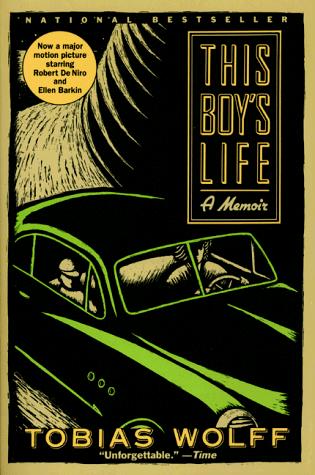
Readers who respond to memoirs about working-class upbringings and absent parents, and anyone interested in how community and place shape identity. It pairs well with This Boy's Life and The Glass Castle.