Self-help · Book club
The Achievement Habit book club questions
Here are 11 book club questions for The Achievement Habit by Bernard Roth, ordered to open easily and end somewhere worth arguing about. Copy them, print them, or bring them up one at a time.
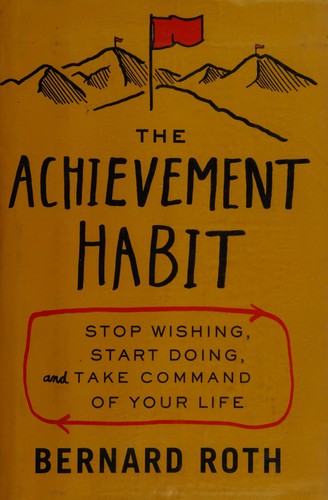
The Achievement Habit is Bernard Roth's attempt to bring the principles of Stanford's d.school — the design school he co-founded — into the domain of personal effectiveness.
Bernard Roth · 2015 · 4h 0m
Full summary and key takeaways →The 11 questions
- 1.
Roth argues that most people are solving the wrong problem. Think of something you've been stuck on for a long time. What's the stated problem — and what might the actual one be?
- 2.
He distinguishes 'can't' from 'won't.' Pick something you regularly say you can't do. Is it actually a won't? What's the honest version of the sentence?
- 3.
Roth is skeptical of reasons — he sees them as largely self-serving stories. When have you offered a reason for something that, on reflection, was more about protecting your image than explaining what happened?
- 4.
The d.school asks students to investigate the actual problem thoroughly before generating solutions. Where in your own life are you jumping to solutions before you've fully diagnosed what's wrong?
- 5.
Achievement is described as a habit. Which of your daily habits actively contribute to your long-term goals, and which ones are neutral or quietly working against them?
- 6.
Roth's classroom exercises push students into discomfort as a design tool. When was the last time you deliberately put yourself in an uncomfortable situation to learn something? What happened?
- 7.
He applies design thinking to personal effectiveness. What other domains from your professional life might improve if you applied a design-thinking lens to them at home?
- 8.
The book argues that self-awareness is the primary tool. What aspect of your own behavior do you understand least, and what would it take to understand it better?
- 9.
Roth says people often don't commit because they're afraid of the cost of full commitment. What is something you're half-committed to right now, and what's the honest reason you're not fully in?
- 10.
The book has a philosophical directness that some readers find bracing and others find preachy. Where did you feel challenged, and where did you push back?
- 11.
If you applied the 'keep asking why' technique to one area of your life where you feel stuck, what do you think you'd eventually uncover at the bottom of the chain?
How to run the discussion
- Pick six to eight, not all of them. An hour of real discussion covers fewer questions than anyone expects, and racing the list is what makes a book club feel like homework.
- Open with what people noticed, not what they concluded. Asking for a verdict first hardens opinions before anyone has heard each other.
- Let the disagreement run. The questions below that split a room are the ones worth the time; the ones everyone answers the same way can be skipped.
- Ask the quiet person a specific question. A direct, narrow question is far easier to answer than an open invitation to contribute.
Themes worth steering toward
If the conversation stalls, these are the threads that usually restart it.
Common questions
What are good book club questions for The Achievement Habit?
Here are 11 book club questions for The Achievement Habit by Bernard Roth, ordered to open easily and end somewhere worth arguing about. The strongest openers ask what each reader noticed rather than what they concluded, and the discussion usually turns on achievement, design thinking, behavior change.
How long should a book club discussion of The Achievement Habit last?
Most groups run 60 to 90 minutes of actual discussion. That is roughly six to eight questions, not all of them, so pick the ones that suit your group rather than working down the list in order.
What are the main themes in The Achievement Habit?
Achievement, Design thinking, Behavior change, Self-awareness, Problem solving. Those are the threads most likely to divide a room, which makes them the useful places to steer a discussion that has gone quiet.
Picking the next one? See books like The Achievement Habit or questions for other book club picks.
