History · Book club
The Age of Wonder: The Romantic Generation and the Discovery of the Beauty and Terror of Science book club questions
Here are 12 book club questions for The Age of Wonder: The Romantic Generation and the Discovery of the Beauty and Terror of Science by Richard Holmes, ordered to open easily and end somewhere worth arguing about. Copy them, print them, or bring them up one at a time.
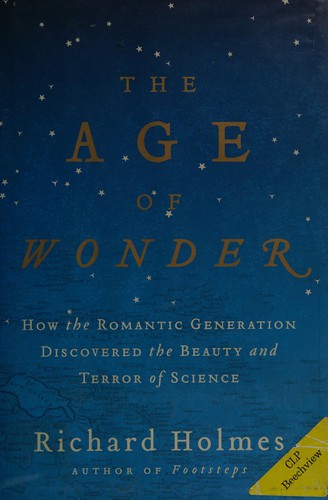
Richard Holmes is a British literary biographer best known for his two-volume life of Shelley, and The Age of Wonder brings that literary sensibility to the history of science during the Romantic period — roughly 1769 to 1832.
Richard Holmes · 2008 · 12h 0m
Full summary and key takeaways →The 12 questions
- 1.
Holmes argues that Romantic poetry and Romantic science were drawing from the same cultural sources. Do you find that argument convincing? What evidence in the book was most persuasive?
- 2.
Caroline Herschel's career is embedded in her brother's story rather than told on its own terms. How does Holmes handle the institutional constraints on her work, and how would you tell that story differently?
- 3.
Humphry Davy treated his own consciousness as data in his nitrous oxide experiments. What does that approach to self-experimentation suggest about the relationship between scientific and subjective knowledge?
- 4.
The discovery of Uranus in 1781 demonstrated that the solar system was larger than anyone had assumed. What discovery in your lifetime has had a similarly disorienting effect on what seemed settled?
- 5.
Holmes writes biographical history rather than analytical history. What does that choice allow him to do that a more argument-driven approach would not?
- 6.
The book has been criticized for being too celebratory and for not adequately addressing who was excluded from Romantic science. How much does that criticism change your reading of it?
- 7.
Coleridge and Keats both engaged with science as readers and observers, not practitioners. What does their engagement suggest about how scientific ideas move into culture?
- 8.
Frankenstein is read here as a response to specific scientific experiments of the period. Does knowing that context change how you read the novel, or how you think it should be taught?
- 9.
Holmes describes the Romantic scientists as experiencing wonder alongside their discoveries. Is that an emotion you associate with modern science as it's publicly presented? What changed?
- 10.
The book covers roughly sixty years. Which of the individual figures Holmes profiles did you find most compelling, and what does their story illuminate about the period?
- 11.
What would it look like today for scientists and artists to inhabit the same intellectual territory as Holmes claims they did in the Romantic period? Where do you see that happening?
- 12.
Holmes is primarily a literary biographer. How does that background shape the strengths and limitations of The Age of Wonder as a history of science?
How to run the discussion
- Pick six to eight, not all of them. An hour of real discussion covers fewer questions than anyone expects, and racing the list is what makes a book club feel like homework.
- Open with what people noticed, not what they concluded. Asking for a verdict first hardens opinions before anyone has heard each other.
- Let the disagreement run. The questions below that split a room are the ones worth the time; the ones everyone answers the same way can be skipped.
- Ask the quiet person a specific question. A direct, narrow question is far easier to answer than an open invitation to contribute.
Themes worth steering toward
If the conversation stalls, these are the threads that usually restart it.
Common questions
What are good book club questions for The Age of Wonder: The Romantic Generation and the Discovery of the Beauty and Terror of Science?
Here are 12 book club questions for The Age of Wonder: The Romantic Generation and the Discovery of the Beauty and Terror of Science by Richard Holmes, ordered to open easily and end somewhere worth arguing about. The strongest openers ask what each reader noticed rather than what they concluded, and the discussion usually turns on scientific discovery, romanticism, history of science.
How long should a book club discussion of The Age of Wonder: The Romantic Generation and the Discovery of the Beauty and Terror of Science last?
Most groups run 60 to 90 minutes of actual discussion. That is roughly six to eight questions, not all of them, so pick the ones that suit your group rather than working down the list in order.
What are the main themes in The Age of Wonder: The Romantic Generation and the Discovery of the Beauty and Terror of Science?
Scientific discovery, Romanticism, History of science, Exploration, Biography. Those are the threads most likely to divide a room, which makes them the useful places to steer a discussion that has gone quiet.
Picking the next one? See books like The Age of Wonder: The Romantic Generation and the Discovery of the Beauty and Terror of Science or questions for other book club picks.
