Economics · Book club
The Alchemy of Finance book club questions
Here are 11 book club questions for The Alchemy of Finance by George Soros, ordered to open easily and end somewhere worth arguing about. Copy them, print them, or bring them up one at a time.
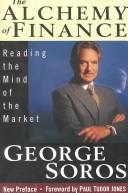
The Alchemy of Finance is George Soros's attempt to explain both the theory behind his investment decisions and the practice of applying it during the years he ran the Quantum Fund.
George Soros · 1987 · 6h 0m
Full summary and key takeaways →The 11 questions
- 1.
Soros argues that all market participants operate with fundamentally biased perceptions. Do you accept this premise? What would it mean for how you make financial decisions?
- 2.
The reflexivity concept challenges the idea that prices reflect fundamentals. What would it mean for investment strategy if prices are always distorted by participant psychology?
- 3.
Soros kept a real-time diary as a public test of his theory. What does that kind of intellectual honesty reveal about how to think rigorously about one's own frameworks?
- 4.
The boom-bust cycle Soros describes is self-reinforcing upward before it collapses. Where do you see that pattern operating right now in any market you follow?
- 5.
Soros argues trend-following is rational because trends are self-reinforcing. At what point does it stop being rational, and how would you know?
- 6.
How does reflexivity theory compare to behavioral economics as a way of explaining market irrationality? What does each framework capture that the other misses?
- 7.
The book was written in 1987, before the rise of algorithmic trading, index funds, and passive investing at scale. Does reflexivity apply differently in a market dominated by passive flows?
- 8.
Soros describes near-equilibrium versus far-from-equilibrium market conditions. How would you know which regime you're in, and does it matter for how you invest?
- 9.
The real-time trading diary is the most concrete part of the book. What does it tell you about the gap between having a good theory and actually profiting from it?
- 10.
Soros argues that economic policy itself is reflexive — interventions change behavior, which requires more intervention. Where do you see that dynamic playing out in today's economy?
- 11.
The book's title invokes alchemy — the pretense of turning base metals into gold. Is Soros saying his own method is somewhat illusory, or is he claiming genuine insight?
How to run the discussion
- Pick six to eight, not all of them. An hour of real discussion covers fewer questions than anyone expects, and racing the list is what makes a book club feel like homework.
- Open with what people noticed, not what they concluded. Asking for a verdict first hardens opinions before anyone has heard each other.
- Let the disagreement run. The questions below that split a room are the ones worth the time; the ones everyone answers the same way can be skipped.
- Ask the quiet person a specific question. A direct, narrow question is far easier to answer than an open invitation to contribute.
Themes worth steering toward
If the conversation stalls, these are the threads that usually restart it.
Common questions
What are good book club questions for The Alchemy of Finance?
Here are 11 book club questions for The Alchemy of Finance by George Soros, ordered to open easily and end somewhere worth arguing about. The strongest openers ask what each reader noticed rather than what they concluded, and the discussion usually turns on financial markets, reflexivity, speculation.
How long should a book club discussion of The Alchemy of Finance last?
Most groups run 60 to 90 minutes of actual discussion. That is roughly six to eight questions, not all of them, so pick the ones that suit your group rather than working down the list in order.
What are the main themes in The Alchemy of Finance?
Financial markets, Reflexivity, Speculation, Economic theory, Investment philosophy. Those are the threads most likely to divide a room, which makes them the useful places to steer a discussion that has gone quiet.
Picking the next one? See books like The Alchemy of Finance or questions for other book club picks.
