Philosophy · Book club
The Art of Travel book club questions
Here are 11 book club questions for The Art of Travel by Alain de Botton, ordered to open easily and end somewhere worth arguing about. Copy them, print them, or bring them up one at a time.
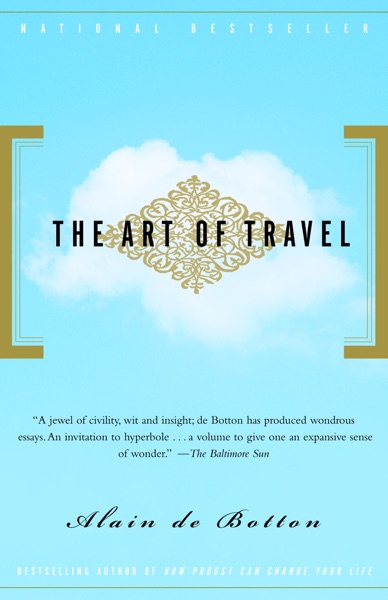
The Art of Travel is Alain de Botton's philosophical meditation on why we travel, what we hope to find, and the gap between anticipation and experience.
Alain de Botton · 2002 · 4h 45m
Full summary and key takeaways →The 11 questions
- 1.
De Botton argues that we travel without imagining ourselves in the destinations we anticipate. Has that been true of your own experience? What did you expect and what did you actually find?
- 2.
The Xavier de Maistre chapter suggests that quality of attention matters more than location. Is there a place in your everyday life you've never really looked at?
- 3.
De Botton uses art and literature to frame each destination. How does reading about a place before visiting change how you experience it, if at all?
- 4.
Ruskin's argument is that drawing teaches seeing. Have you ever done something — drawing, photography, journaling — that changed what you noticed in a new place?
- 5.
The book is often criticized for its solipsism and class assumptions. Does that critique change the value of the philosophical argument for you?
- 6.
What's the most disappointing trip you've taken in terms of the gap between expectation and experience? What do you think caused the gap?
- 7.
De Botton argues that the sublime temporarily quiets ego. Have you had experiences in nature or elsewhere that fit that description? What made them different from ordinary pleasurable experiences?
- 8.
Flaubert was drawn to the exotic as an antidote to bourgeois comfort. Is there a productive version of that dissatisfaction, or does it just produce restlessness?
- 9.
De Botton's travel companions in the book are almost invisible. Is that a philosophical choice or just a blind spot? What does it suggest about the kind of attention he's advocating?
- 10.
If the quality of attention matters more than the destination, what would you do differently before, during, and after a trip?
- 11.
The book was published in 2002, before smartphones and social media changed the visual documentation of travel. Does the argument about attention apply differently in an era when photographing a place is the default mode of engaging with it?
How to run the discussion
- Pick six to eight, not all of them. An hour of real discussion covers fewer questions than anyone expects, and racing the list is what makes a book club feel like homework.
- Open with what people noticed, not what they concluded. Asking for a verdict first hardens opinions before anyone has heard each other.
- Let the disagreement run. The questions below that split a room are the ones worth the time; the ones everyone answers the same way can be skipped.
- Ask the quiet person a specific question. A direct, narrow question is far easier to answer than an open invitation to contribute.
Themes worth steering toward
If the conversation stalls, these are the threads that usually restart it.
Common questions
What are good book club questions for The Art of Travel?
Here are 11 book club questions for The Art of Travel by Alain de Botton, ordered to open easily and end somewhere worth arguing about. The strongest openers ask what each reader noticed rather than what they concluded, and the discussion usually turns on travel, aesthetics, expectation.
How long should a book club discussion of The Art of Travel last?
Most groups run 60 to 90 minutes of actual discussion. That is roughly six to eight questions, not all of them, so pick the ones that suit your group rather than working down the list in order.
What are the main themes in The Art of Travel?
Travel, Aesthetics, Expectation, Attention, Beauty. Those are the threads most likely to divide a room, which makes them the useful places to steer a discussion that has gone quiet.
Picking the next one? See books like The Art of Travel or questions for other book club picks.
