Memoir · Book club
The Autobiography of Malcolm X book club questions
Here are 12 book club questions for The Autobiography of Malcolm X by Malcolm X and Alex Haley, ordered to open easily and end somewhere worth arguing about. Copy them, print them, or bring them up one at a time.
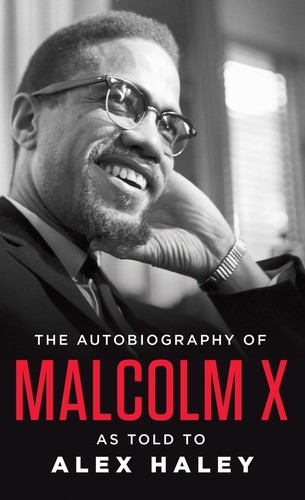
The Autobiography of Malcolm X was assembled from a series of conversations between Malcolm X and the journalist Alex Haley, conducted over two years before Malcolm's assassination in February 1965.
Malcolm X and Alex Haley · 1965 · 8h 40m
Full summary and key takeaways →The 12 questions
- 1.
Malcolm underwent several radical identity transformations. What enabled each one? Were they continuous with each other, or genuinely discontinuous?
- 2.
His critique of integration differs fundamentally from the nonviolent civil rights movement's strategy. Do you find either position more compelling, or does the disagreement reveal something neither side fully grasped?
- 3.
Malcolm describes his prison reading as the most important education of his life. What does that suggest about formal versus informal learning, and about who has access to transformation?
- 4.
The Nation of Islam's theology included racial claims that mainstream science rejected. How should we evaluate a movement whose politics were enabling and whose theology was false?
- 5.
After Mecca, Malcolm said he could no longer describe white people as collectively evil. How do you trace that shift through his final chapters?
- 6.
The autobiography was assembled from interviews rather than composed directly by Malcolm. Does that collaborative mode change what you take it to be — memoir, biography, something else?
- 7.
Malcolm was under FBI surveillance for much of his adult life. Reading the book with that knowledge, what does his public rhetoric look like differently?
- 8.
His father's activism and violent death shaped him profoundly. How much of Malcolm's own politics can be understood as a response to what happened to his father?
- 9.
The book ends before the assassination. Does that absence shape your reading of the final pages? What do you project onto them knowing what came next?
- 10.
Malcolm is often contrasted with Martin Luther King. Is that comparison illuminating or reductive? What does it obscure?
- 11.
The book was controversial when published and is still frequently challenged. What specifically provokes that reaction, and is it the same provocation now as in 1965?
- 12.
What does the book suggest about the relationship between anger and political effectiveness?
How to run the discussion
- Pick six to eight, not all of them. An hour of real discussion covers fewer questions than anyone expects, and racing the list is what makes a book club feel like homework.
- Open with what people noticed, not what they concluded. Asking for a verdict first hardens opinions before anyone has heard each other.
- Let the disagreement run. The questions below that split a room are the ones worth the time; the ones everyone answers the same way can be skipped.
- Ask the quiet person a specific question. A direct, narrow question is far easier to answer than an open invitation to contribute.
Themes worth steering toward
If the conversation stalls, these are the threads that usually restart it.
Common questions
What are good book club questions for The Autobiography of Malcolm X?
Here are 12 book club questions for The Autobiography of Malcolm X by Malcolm X and Alex Haley, ordered to open easily and end somewhere worth arguing about. The strongest openers ask what each reader noticed rather than what they concluded, and the discussion usually turns on racial identity, transformation, religion.
How long should a book club discussion of The Autobiography of Malcolm X last?
Most groups run 60 to 90 minutes of actual discussion. That is roughly six to eight questions, not all of them, so pick the ones that suit your group rather than working down the list in order.
What are the main themes in The Autobiography of Malcolm X?
Racial identity, Transformation, Religion, Self-determination, Radicalization. Those are the threads most likely to divide a room, which makes them the useful places to steer a discussion that has gone quiet.
Picking the next one? See books like The Autobiography of Malcolm X or questions for other book club picks.
