Economics · Book club
The Behavior Gap book club questions
Here are 11 book club questions for The Behavior Gap by Carl Richards, ordered to open easily and end somewhere worth arguing about. Copy them, print them, or bring them up one at a time.
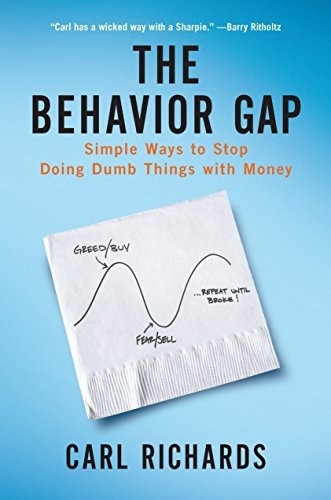
The Behavior Gap names a specific problem: the gap between what we know we should do with our money and what we actually do.
Carl Richards · 2012 · 2h 45m
Full summary and key takeaways →The 11 questions
- 1.
Richards argues that most financial mistakes are emotional, not analytical. Which emotion — fear, greed, or the desire for social approval — has cost you the most financially?
- 2.
Can you identify a financial decision you made to impress others rather than because it was right for you? What did it cost?
- 3.
What's the most complex financial product you own? Do you genuinely understand it well enough to explain it to someone else?
- 4.
Richards confesses to his own behavior gap with his house purchase. Does personal confession from a financial adviser make the advice more or less useful to you?
- 5.
When did you last check your investment accounts? Was checking necessary, or was it anxiety-driven activity masquerading as diligence?
- 6.
What would your written financial plan look like if you created one this week? What's stopping you from having one?
- 7.
The book argues simplicity is undervalued in finance. What are you doing with your money right now that is more complicated than it needs to be?
- 8.
Richards says the gap often widens most during market extremes. What's your plan for the next significant market drop, and how confident are you that you'll follow it?
- 9.
Is there a financial decision you've been avoiding because making it would require admitting a past mistake? What's the cost of continued avoidance?
- 10.
What does 'good enough' look like for your finances? Is your perfectionism or complexity-seeking making things worse?
- 11.
If you stripped your financial life down to the three most important decisions, what would they be and how well are you executing on each?
How to run the discussion
- Pick six to eight, not all of them. An hour of real discussion covers fewer questions than anyone expects, and racing the list is what makes a book club feel like homework.
- Open with what people noticed, not what they concluded. Asking for a verdict first hardens opinions before anyone has heard each other.
- Let the disagreement run. The questions below that split a room are the ones worth the time; the ones everyone answers the same way can be skipped.
- Ask the quiet person a specific question. A direct, narrow question is far easier to answer than an open invitation to contribute.
Themes worth steering toward
If the conversation stalls, these are the threads that usually restart it.
Common questions
What are good book club questions for The Behavior Gap?
Here are 11 book club questions for The Behavior Gap by Carl Richards, ordered to open easily and end somewhere worth arguing about. The strongest openers ask what each reader noticed rather than what they concluded, and the discussion usually turns on investor behavior, financial decisions, emotional bias.
How long should a book club discussion of The Behavior Gap last?
Most groups run 60 to 90 minutes of actual discussion. That is roughly six to eight questions, not all of them, so pick the ones that suit your group rather than working down the list in order.
What are the main themes in The Behavior Gap?
Investor behavior, Financial decisions, Emotional bias, Personal finance, Self-awareness. Those are the threads most likely to divide a room, which makes them the useful places to steer a discussion that has gone quiet.
Picking the next one? See books like The Behavior Gap or questions for other book club picks.
