Thriller · Book club
The Big Sleep book club questions
Here are 12 book club questions for The Big Sleep by Raymond Chandler, ordered to open easily and end somewhere worth arguing about. Copy them, print them, or bring them up one at a time.
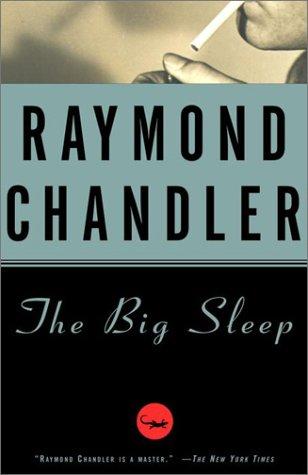
Philip Marlowe is hired by a very old, very rich man to deal with a blackmail situation involving his younger daughter.
Raymond Chandler · 1939 · 4h 0m
Full summary and key takeaways →The 12 questions
- 1.
Chandler couldn't say who killed the chauffeur. Does the unresolved plot feel like a failure or an honest statement about how crime and corruption actually work?
- 2.
Marlowe is hired by an old man who knows the situation is probably unsolvable but wants dignity in its management. Is that a realistic idea of what detectives are actually for?
- 3.
The Sternwood daughters are drawn with considerable contempt. Is Chandler's characterization of women a product of the era, or is it a structural problem with the novel?
- 4.
The hardboiled style — clipped, unsentimental, full of memorable similes — is as much a moral position as a literary style. What is Chandler arguing about the relationship between how you describe a thing and what you think of it?
- 5.
Los Angeles in 1939 is already the city that American mythology was building toward. Does Chandler love it, hate it, or hold it in more complex regard?
- 6.
Marlowe has a code, but it is entirely personal — he decides case by case what he will and won't do. Is that admirable, or is it simply a romanticization of personal discretion dressed up as ethics?
- 7.
Compared to Christie's Poirot, who solves everything and delivers tidy justice, what does Chandler's refusal to tidy up say about the genre — and about America?
- 8.
The novel's title, The Big Sleep, is slang for death. How does that frame — that everyone in this world is either moving toward death or has made peace with moral death — change how you read the action?
- 9.
The pornography subplot connects Hollywood glamour to the underworld. In 1939, that connection was shocking. Does it still feel transgressive, or has it become simply historical?
- 10.
Marlowe's chivalry — he protects Carmen Sternwood even though she is dangerous — costs him almost nothing here but costs other people a great deal. Is his code generous or self-indulgent?
- 11.
The prose is full of one-liners that became so famous they now feel like parody. How do you read sentences you've heard quoted for decades? Does familiarity diminish them?
- 12.
Hard-boiled fiction defined American crime writing for decades. What does The Big Sleep tell you about why it was so influential — and what do you think got lost in its many imitators?
How to run the discussion
- Pick six to eight, not all of them. An hour of real discussion covers fewer questions than anyone expects, and racing the list is what makes a book club feel like homework.
- Open with what people noticed, not what they concluded. Asking for a verdict first hardens opinions before anyone has heard each other.
- Let the disagreement run. The questions below that split a room are the ones worth the time; the ones everyone answers the same way can be skipped.
- Ask the quiet person a specific question. A direct, narrow question is far easier to answer than an open invitation to contribute.
Themes worth steering toward
If the conversation stalls, these are the threads that usually restart it.
Common questions
What are good book club questions for The Big Sleep?
Here are 12 book club questions for The Big Sleep by Raymond Chandler, ordered to open easily and end somewhere worth arguing about. The strongest openers ask what each reader noticed rather than what they concluded, and the discussion usually turns on corruption and power, chivalry in a corrupt world, money and moral decay.
How long should a book club discussion of The Big Sleep last?
Most groups run 60 to 90 minutes of actual discussion. That is roughly six to eight questions, not all of them, so pick the ones that suit your group rather than working down the list in order.
What are the main themes in The Big Sleep?
Corruption and power, Chivalry in a corrupt world, Money and moral decay, Los Angeles and American mythology, Cynicism and code. Those are the threads most likely to divide a room, which makes them the useful places to steer a discussion that has gone quiet.
Picking the next one? See books like The Big Sleep or questions for other book club picks.
