Health · Book club
The Biology of Belief book club questions
Here are 11 book club questions for The Biology of Belief by Bruce H. Lipton, ordered to open easily and end somewhere worth arguing about. Copy them, print them, or bring them up one at a time.
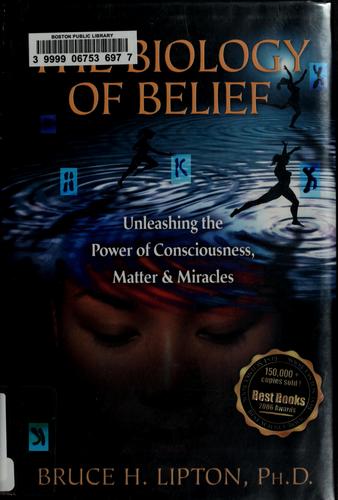
The Biology of Belief is Bruce Lipton's argument that cells are controlled by signals from their environment rather than by genetic programs, and that human beings, as collections of cells, are therefore more powerfully shaped by their beliefs and perceptions than by their DNA.
Bruce H. Lipton · 2005 · 4h 20m
Full summary and key takeaways →The 11 questions
- 1.
Lipton argues that the cell membrane, not the nucleus, is the brain of the cell. How does this reframing challenge or align with how you were taught to think about genetics?
- 2.
The claim that beliefs shape biology is the book's central provocation. What evidence from your own life, if any, suggests that psychological state meaningfully affects physical health?
- 3.
Lipton says the stress response and growth response cannot run simultaneously. What are the conditions in your life that keep you predominantly in stress mode, and what would shifting that require?
- 4.
The book argues that most of your behavioral programs were installed in early childhood before you had agency. How comfortable are you with that claim, and how does it interact with your sense of personal responsibility?
- 5.
Lipton uses the placebo effect as evidence that belief produces biological change. Do you find this convincing, and what are the limits of that evidence?
- 6.
If your subconscious beliefs are running your biology, what do you think they are — and how would you even find out?
- 7.
The book has been criticized by mainstream biologists for overstating its claims. How do you navigate books that make provocative scientific arguments that sit outside the mainstream?
- 8.
Lipton argues that reprogramming subconscious beliefs (through hypnotherapy, energy psychology, etc.) is more effective than willpower. Have you tried anything like that, and what was your experience?
- 9.
The connection between early childhood experience and adult biological patterns is a theme across several fields. Where do you see your own childhood programming operating in your adult health or behavior?
- 10.
Does framing health problems as rooted in subconscious belief feel empowering or like it places too much blame on the individual?
- 11.
What one belief about your own body or health might be worth examining — not necessarily changing, but examining — after reading this book?
How to run the discussion
- Pick six to eight, not all of them. An hour of real discussion covers fewer questions than anyone expects, and racing the list is what makes a book club feel like homework.
- Open with what people noticed, not what they concluded. Asking for a verdict first hardens opinions before anyone has heard each other.
- Let the disagreement run. The questions below that split a room are the ones worth the time; the ones everyone answers the same way can be skipped.
- Ask the quiet person a specific question. A direct, narrow question is far easier to answer than an open invitation to contribute.
Themes worth steering toward
If the conversation stalls, these are the threads that usually restart it.
Common questions
What are good book club questions for The Biology of Belief?
Here are 11 book club questions for The Biology of Belief by Bruce H. Lipton, ordered to open easily and end somewhere worth arguing about. The strongest openers ask what each reader noticed rather than what they concluded, and the discussion usually turns on epigenetics, mind-body connection, cell biology.
How long should a book club discussion of The Biology of Belief last?
Most groups run 60 to 90 minutes of actual discussion. That is roughly six to eight questions, not all of them, so pick the ones that suit your group rather than working down the list in order.
What are the main themes in The Biology of Belief?
Epigenetics, Mind-body connection, Cell biology, Consciousness, Belief. Those are the threads most likely to divide a room, which makes them the useful places to steer a discussion that has gone quiet.
Picking the next one? See books like The Biology of Belief or questions for other book club picks.
